Capital Region Risk Level Rises to 'Very High' and Nationwide to 'High'
Experts Urge "Emergency Plan-Level Measures Needed"
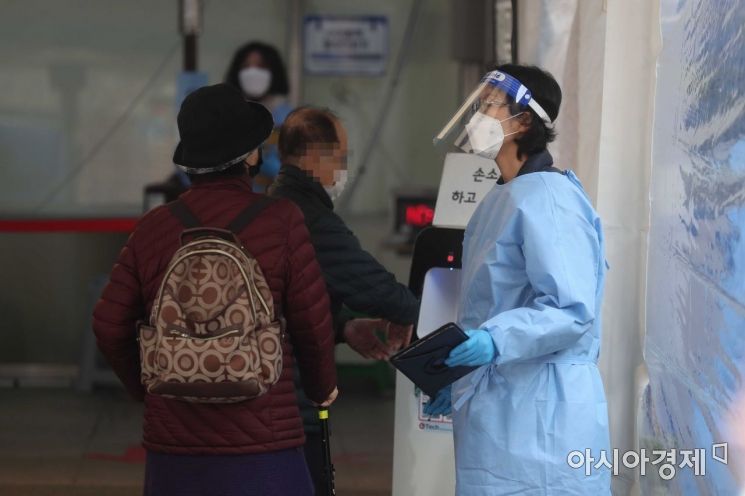
[Asia Economy Reporter Seo So-jeong] Among domestic COVID-19 confirmed cases, the number of critically ill patients reached a record high of 549, raising concerns about the continued shortage of hospital beds in the metropolitan area. According to the COVID-19 risk assessment results, last week the metropolitan area was rated as "very high" and nationwide as "high," causing fears that the "gradual recovery to daily life (With COVID-19)" could be suspended.
According to the Central Disease Control Headquarters on the 23rd, as of midnight, the number of new confirmed cases was 2,699, marking the highest ever for a Monday case count (announced on Tuesday). Although the number of confirmed cases decreased by 128 from the previous day, the rapid increase in critically ill patients to 549 is putting additional strain on the medical response system.
On this day, a total of 836 COVID-19 patients in the metropolitan area were waiting for hospital beds for more than one day. Among them, 122 have been waiting for more than 4 days, 138 for more than 3 days, 257 for more than 2 days, and 319 for more than 1 day. Of those waiting, 404 are elderly aged 70 or older, and 425 have underlying conditions such as hypertension or diabetes. Additionally, 4 bedridden or disabled patients, 2 pregnant women, and 1 patient with severe incurable disease are also waiting for beds.
As of 5 p.m. the previous day, the intensive care unit (ICU) bed occupancy rate in the metropolitan area reached 83.3%. The rates were 84.3% in Seoul, 81.6% in Gyeonggi, and 83.5% in Incheon, exceeding 80%, indicating that bed capacity has reached its limit. Only 116 ICU beds remain in the metropolitan area: 54 in Seoul, 49 in Gyeonggi, and 13 in Incheon.
Professor Jeong Ki-seok of the Department of Respiratory Medicine at Hallym University Sacred Heart Hospital expressed concern, saying, "A large number of elderly and patients with underlying diseases are among those waiting for beds, so emergency situations can arise at any time. The transfer of beds for elderly and patients with underlying diseases reduces their chances of survival, so securing ICU beds is urgently needed." He added, "Since all beds in tertiary hospitals are currently full, it is necessary to designate general hospitals that can supplement this. Facilities capable of intensive care for COVID-19 critically ill patients are needed."
The health authorities stated that it is not yet time to activate emergency plans, but due to the rapid deterioration of risk indicators such as ICU bed availability and new confirmed cases in the metropolitan area, the activation of emergency plans is under consideration. Jeong Eun-kyung, head of the Central Disease Control Headquarters, said, "It is necessary to consider strengthening quarantine measures, including the application of emergency plans," adding, "Discussions are underway centered on the Central Disaster and Safety Countermeasures Headquarters, and decisions will be made after review by the Daily Life Recovery Support Committee."
The government plans to hold a Daily Life Recovery Support Committee meeting at 10 a.m. on the 25th, chaired by Prime Minister Kim Boo-kyum and private co-chair Choi Jae-chun, to review and evaluate the COVID-19 situation following the implementation of gradual recovery to daily life. Professor Jeong Jae-hoon of Gachon University College of Medicine's Department of Preventive Medicine said, "To avoid the worst-case scenario of strengthened social distancing after the difficult start of recovery to daily life, it is important to strengthen quarantine in nursing hospitals and facilities and expand medical capacity." He added, "It is necessary to accelerate additional vaccinations for the elderly, monitor the trend of confirmed cases among migrants and response capacity, and prepare measures equivalent to emergency plans."
© The Asia Business Daily(www.asiae.co.kr). All rights reserved.

















