Average Korean Intake Exceeds WHO Recommendations
Osmotic Pressure Regulates Cell Function, Proper Consumption Needed for Health
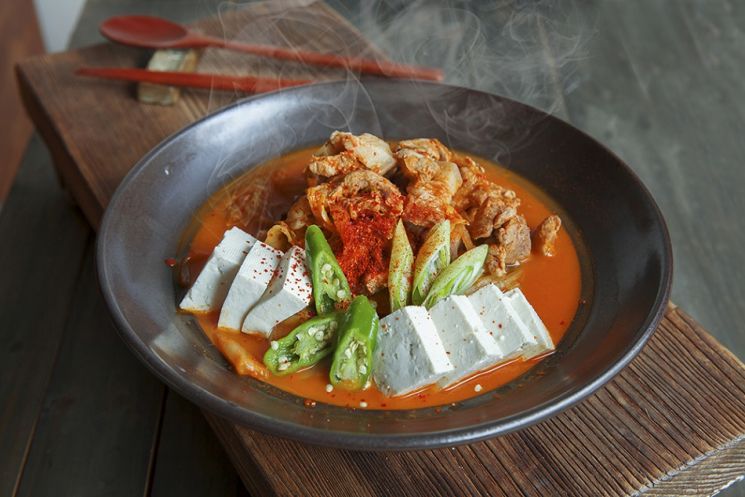
[Asia Economy Yeongnam Reporting Headquarters Reporter Lee Seryeong] In the chilly season, hot soup dishes make your mouth water.
Fish cake soup, kimchi stew, soybean paste stew, hangover soup, and sundae gukbap are dishes that warm the body and fill the stomach, but most tend to contain a lot of sodium, so caution is needed when consuming them.
According to the announcement by the Ministry of Food and Drug Safety's Food Safety Evaluation Institute, the average daily sodium intake of Koreans is about 1.6 times higher than the World Health Organization's recommended amount of 5g of salt.
Compared to the sodium intake of 3,669 mg in 2016, it decreased by 10.8% to 3,274 mg in 2018, but this is still a large amount compared to the WHO's daily recommended intake of 2,000 mg.
Foods that are hard to miss on the Korean table, such as soups, stews, noodles, and kimchi, were found to have the highest sodium content.
Because of stories that excessive intake adversely affects health, sodium is easily misunderstood as a public enemy.
Sodium, along with potassium, is an essential mineral that regulates the amount of water and osmotic pressure in body fluids, allowing cells to maintain normal function.
It helps muscle contraction and relaxation and balances acids and bases to maintain nerve tissue function.
About 60% of our body weight is made up of water, and 30% of that water consists of body fluids such as blood.
In body fluids, sodium must be maintained at a concentration of about 0.9%, and if this is not maintained, body temperature may not be sustained, or appetite loss and fatigue may occur.
The contraction of the heart muscle felt as a "thump thump" may not proceed smoothly, causing blood pressure to drop or kidney function to decrease, so appropriate sodium intake is necessary.
Excessive intake of the essential nutrient sodium increases osmotic pressure inside blood vessels, increasing blood volume and causing blood vessels to expand.
Expanded blood vessels raise the pressure inside the vessels, promoting arteriosclerosis and becoming a risk factor for cardiovascular and cerebrovascular diseases such as myocardial infarction, heart failure, and stroke.
Excess sodium is excreted through urine by the kidneys, and calcium is excreted along with it.
If calcium is deficient in the blood due to this, calcium from the bones is discharged, causing osteopenia or osteoporosis.
To eat less sodium, it is better to make broth with natural seasonings such as anchovies, shrimp, kelp, and onions rather than soy sauce when making soup dishes.
Reducing the amount served by using smaller bowls or changing eating habits by eating soup, which generally contains less sodium than stews, is also a way to reduce sodium intake.
It is good to accompany fresh vegetables and eat mainly the solid ingredients rather than the broth, and it is best to avoid the habit of mixing rice into the soup.
Pickled foods such as jangajji and salted seafood, processed meat products like ham, sausage, cheese, and convenience foods have very high salt content and should not be eaten frequently.
Dr. Kim Suhyeong, a cardiology specialist at Daedong Hospital Cardiovascular Center, said, "Warm and spicy dishes stimulate the appetite in the cold winter, but eating too much is harmful to health," adding, "With just a little caution, you can enjoy delicious food healthily."
© The Asia Business Daily(www.asiae.co.kr). All rights reserved.
![Clutching a Stolen Dior Bag, Saying "I Hate Being Poor but Real"... The Grotesque Con of a "Human Knockoff" [Slate]](https://cwcontent.asiae.co.kr/asiaresize/183/2026021902243444107_1771435474.jpg)
















