Weekly Apartment Price Trends by Korea Real Estate Board
Daegu Falls for First Time in 1.5 Years... Burden of Unsold Units
Seoul and Other Capital Areas Continue to Narrow Price Gains
Buying Demand Drops, Listings Accumulate... Changing Market Sentiment
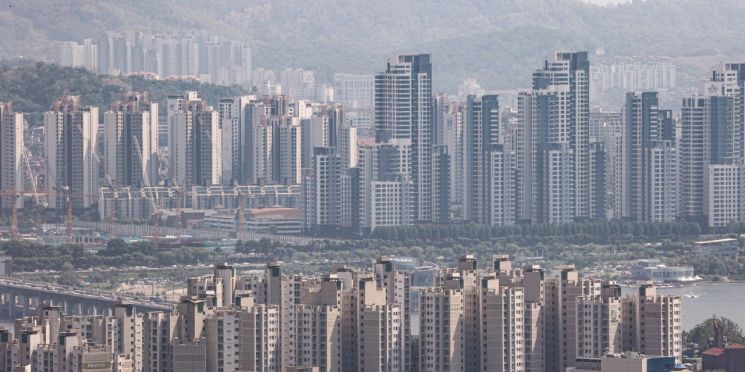
Apartment prices in Daegu have turned to a downward trend for the first time in about a year and a half since May last year. Seoul continued to see a narrowing of the price increase for the fourth consecutive week. Analysts suggest that changes are occurring in the real estate market as perceptions of peak housing prices spread and buying demand weakens.
According to the weekly apartment price trend for the third week of November announced by the Korea Real Estate Board on the 18th, as of the 15th, apartment prices in Seoul rose by 0.13%, a smaller increase compared to the previous week (0.14%). Seoul has seen a slowdown in the rate of increase for four consecutive weeks since mid-last month.
The Real Estate Board explained, "With various downward pressures such as strengthened household debt management policies, concerns over interest rate hikes, and seasonal off-season effects, buying sentiment has weakened, and transaction activity has decreased, leading to a reduced rate of increase."
In Seoul, Yongsan-gu (0.25%) rose relatively more due to expectations for redevelopment projects, and Mapo-gu (0.20%), Seocho-gu (0.21%), Songpa-gu (0.19%), and Gangnam-gu (0.18%) also continued their upward trends. However, some transactions showed declines, resulting in a reduced overall increase for the Gangnam 4 districts (0.19→0.18%).
Incheon (0.33%→0.29%) and Gyeonggi-do (0.27%→0.24%) also saw their upward momentum slow down. In Incheon, Yeonsu-gu (0.43%), which has favorable living conditions, still experienced a sharp rise in housing prices, and in Gyeonggi-do, Anseong-si (0.55%) rose significantly due to expectations of improved transportation infrastructure. Icheon-si (0.53%) and Osan-si (0.39%) also maintained their upward trends.
In the provinces, apartment prices in Daegu fell by 0.02% this week. This marks the first decline in housing prices in 80 weeks since the first week of May last year. The Real Estate Board stated, "Due to the burden of new housing supply and unsold units, prices shifted from stable last week to a decline this week," explaining that "Dong-gu (-0.05%) declined mainly in newly built areas in Bongmu-dong, Seo-gu (-0.04%) declined mainly in some older complexes in Naedang and Pyeongni-dong, and Nam-gu (-0.03%) declined due to seasonal off-season effects."
Sejong City also saw its decline widen from -0.10% last week to -0.12% this week. Amid growing cautious sentiment due to new housing supply and additional public land development burdens, the decline expanded mainly in Goun and Bangok-dong.
The jeonse (long-term lease) market also shows signs of slowing growth. Seoul apartment jeonse prices rose by 0.11% this week, a smaller increase compared to last week (0.12%). While the upward trend continued mainly in school district and subway station areas and complexes with mid-to-low price demand, jeonse demand decreased due to reduced loan sizes and seasonal off-season effects.
Incheon (0.23%→0.20%) and Gyeonggi-do (0.19%→0.17%) also saw a slowdown in jeonse price increases. In Yeonsu-gu, Incheon (0.44%), jeonse prices rose significantly mainly in school districts within Songdo New City, and in Gyeonggi-do, Icheon-si (0.47%) had strong jeonse demand centered on mid-to-low price complexes.
© The Asia Business Daily(www.asiae.co.kr). All rights reserved.

















