[Seoul District News] Fundraising Campaign with Seoul Social Welfare Community Chest Aiming for 1.352 Billion KRW, Running for 3 Months Until February 14 Next Year Supporting Basic Livelihood Recipients and Elderly Living Alone... Gangbuk-gu Shares Neighborly Love with ‘Love Kimchi Making’... Gwangjin-gu Hosts ‘Gwangjin Jangdokdae Experience Event’ Making Traditional Jang for Residents Including Children, Parents, and Market Merchants Until the 18th Promoting Traditional Food and Healthy Eating Culture, Practicing Sharing with Vulnerable Groups... Yangcheon-gu Advances Self-Reliance Support Project for Children Aging Out of Care, Utility Bill Payment,
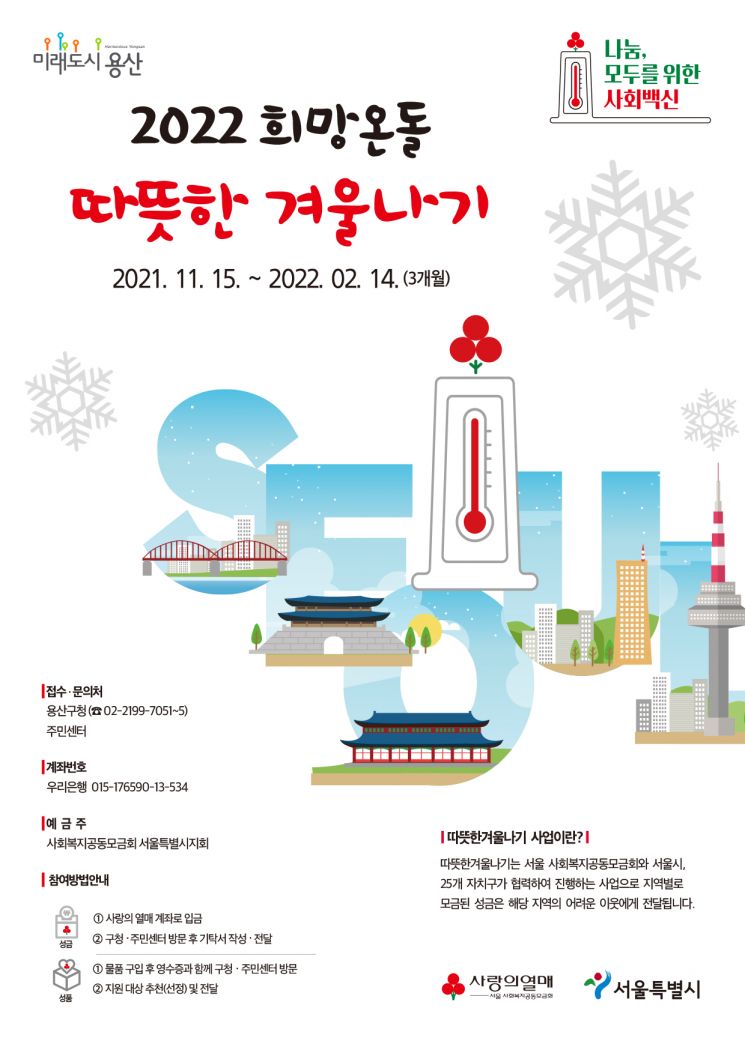
[Asia Economy Reporter Park Jong-il] Yongsan-gu (Mayor Seong Jang-hyun) will officially launch the ‘2022 Hope Ondol Warm Winter (Daggyeo) Project’ starting from the 15th.
Daggyeo is a public-private cooperative fundraising campaign in partnership with the Seoul Social Welfare Community Chest.
Since 2001, the district has continued related projects to support low-income groups in need within the community. Especially this year, due to the economic downturn caused by COVID-19, the expansion of welfare recipients, and increased welfare expenditures, greater attention is required.
The fundraising period is three months until February 14 next year, with a fundraising goal of 1.352 billion KRW. Considering the difficult economy, the target amount was maintained at the previous year’s level.
Recipients of donations include basic livelihood security recipients, elderly living alone, disabled persons, and multicultural families.
Last year, the district achieved 118.6% of the fundraising goal (1,527 cases, 1.635 billion KRW).
Major donors included IOK Company (200 million KRW), MMBH (62.35 million KRW), Yongyeon Textile (35.21 million KRW), MiraeN (34.68 million KRW), HDC Hyundai Development Company (30 million KRW), AmorePacific (25 million KRW), Booyoung Housing (20 million KRW), and 289 district office employees including Mayor Seong Jang-hyun donated 12 million KRW to the district.
Residents and companies wishing to donate can contact the Yongsan-gu Welfare Policy Division (Welfare Resources Team) or the local community service centers.
For monetary donations, after depositing into the ‘Fruit of Love’ account, submitting a donation certificate and deposit slip (transfer slip) will allow the district to issue a donation receipt. If the donor’s name and depositor’s name or donation date and deposit date differ, the relevant information should be noted on the donation certificate.
If there are multiple donors, it is possible to deposit the fundraising details collectively and still receive individual receipts.
An official from the district said, “Donations are supported year-round for low-income residents’ living expenses, medical expenses, etc. Last year, about 800 million KRW of donations were distributed for living and medical expenses, kimchi-making projects, academy linkage projects, and hope funds.”
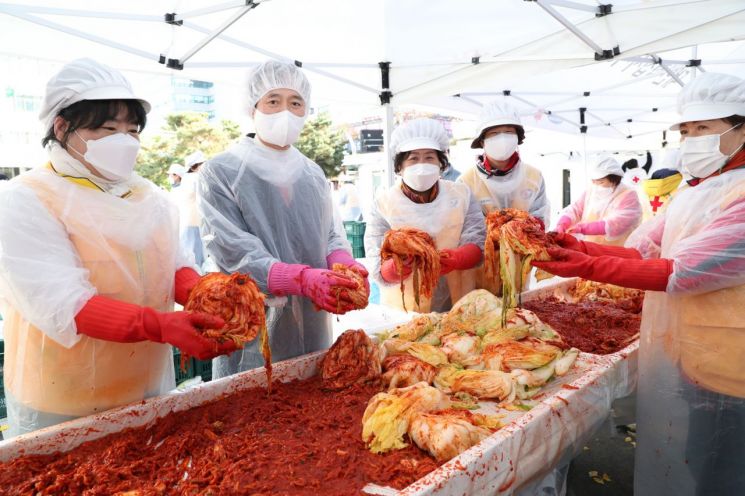
Gangbuk-gu (Mayor Park Gyeom-su) started the ‘2021 Love Kimchi Sharing’ event with local organizations.
On the 12th, the Korean Red Cross Volunteer Society Gangbuk District Council held a kimchi sharing event at the outdoor plaza of the district office. Volunteers gathered at the district office plaza and carefully prepared 1,000 heads of kimchi cabbage. Despite the chilly weather, they personally trimmed prepared cabbages and radishes and mixed them with various seasoning ingredients.
On the 17th, the Gangbuk-gu Saemaul Women’s Association will continue the event. About 150 women members and officials will gather at the Gangbuk Culture and Arts Center plaza to prepare 2,600 heads of kimchi. The kimchi packed by members of the two organizations will be delivered to local community service centers to share warm feelings with the community. The centers will distribute about 9 kg of kimchi per household to 1,090 low-income households, including elderly living alone and single-parent families.
Finally, on the 23rd, the Seoul Gangbuk Advisory Council of the National Unification Advisory Council will participate. The council members will prepare 300 boxes of kimchi to be distributed to North Korean defectors’ households. The community service centers and Gangbuk Police Station will receive the kimchi from the council and distribute 10 kg (one box) per household.
Mayor Park Gyeom-su of Gangbuk-gu said, “Every year around this time, the wave of sharing kimchi with love for neighbors continues. I thank the volunteer organizations that share warm affection and raise the temperature of hope in the community.”
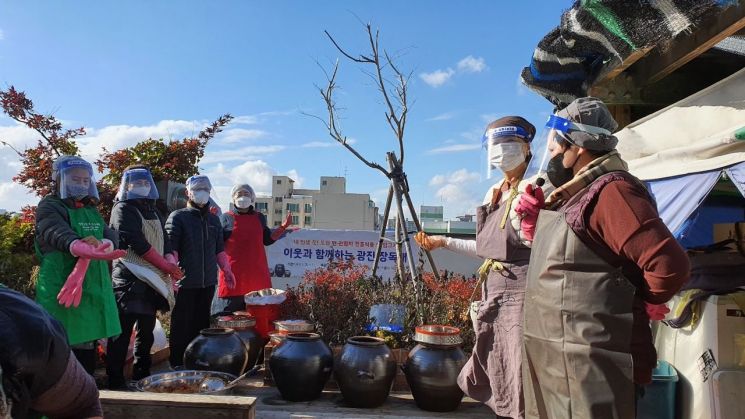
Gwangjin-gu (Mayor Kim Seon-gap) is conducting the ‘Gwangjin Jangdokdae Experience Event’ until the 18th of this month, where residents make traditional sauces and practice sharing.
This event provides an opportunity to make traditional sauces, which are difficult to experience in the city, and aims to spread a healthy food culture of traditional foods. About 150 local residents, including daycare children, parents, and market merchants, are participating.
The Jangdokdae experience event began in March this year with making sauces using meju (fermented soybean blocks) and salt. In May, participants separated the maturing soy sauce and doenjang (soybean paste), and this month, they visited the jangdokdae (traditional sauce pots) to share and taste the completed sauces.
The carefully made doenjang and soy sauce will be delivered to about 80 vulnerable households, including participants and elderly living alone, after safety verification by the Seoul Metropolitan Government’s Health and Environment Research Institute.
Additionally, a traditional gochujang (red chili paste) making experience will be held for daycare children this month to help form healthy eating habits from early childhood.
Mayor Kim Seon-gap of Gwangjin-gu said, “I hope the Jangdokdae experience event has provided an opportunity to appreciate the value of traditional foods and to feel various values such as healthy food and sharing culture.”
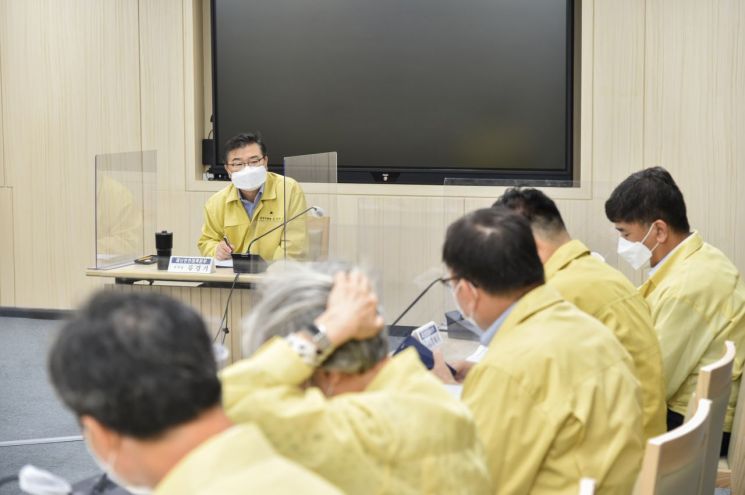
Jungnang-gu (Mayor Ryu Gyeong-gi) will strengthen its quarantine response system by forming a Jungnang-gu TF team on the 18th to prepare for the 2022 College Scholastic Ability Test (CSAT).
There are 3,049 examinees in Jungnang-gu, including repeaters, and eight schools (Myeonmok High School, Songgok High School, Songgok Girls’ High School, Sinhyeon High School, Wonmuk High School, Junghwa High School, Taereung High School, Hyewon Girls’ High School) have examination sites.
The district explained that, in addition to the test, university-specific screenings such as practical exams and interviews are scheduled next month, so many students are expected to visit universities. To minimize infection risks for examinees and the community and create a safe testing environment, this quarantine plan was implemented.
First, a TF team of 10 members from four departments?Education Support, Health Administration, Health Promotion, and Hygiene?will operate. The TF team will support students who are confirmed positive or quarantined to take the exam without issues.
The day before the CSAT, the Jungnang-gu Public Health Center’s screening clinic will extend its operation until 10 p.m. to notify results before the exam and prepare separate testing sites for confirmed or quarantined examinees to take the exam promptly. Since the 4th, the district has been checking whether there are examinees among confirmed or quarantined individuals based on COVID-19 test results.
Additionally, considering visits by students and families, disinfection and quarantine will be strengthened at the eight CSAT test sites and around Seoil University. The district is also conducting focused inspections on compliance with quarantine rules at 4,588 restaurants, 115 entertainment facilities, 330 karaoke rooms, 93 PC rooms, 3 movie theaters, 560 academies and tutoring centers, and 43 study cafes near schools.
Mayor Ryu Gyeong-gi of Jungnang-gu said, “I hope the efforts of examinees who have worked tirelessly for the CSAT and their families bear fruit. We will do our best to ensure a safe environment for all examinees by focusing on quarantine through the TF team.”
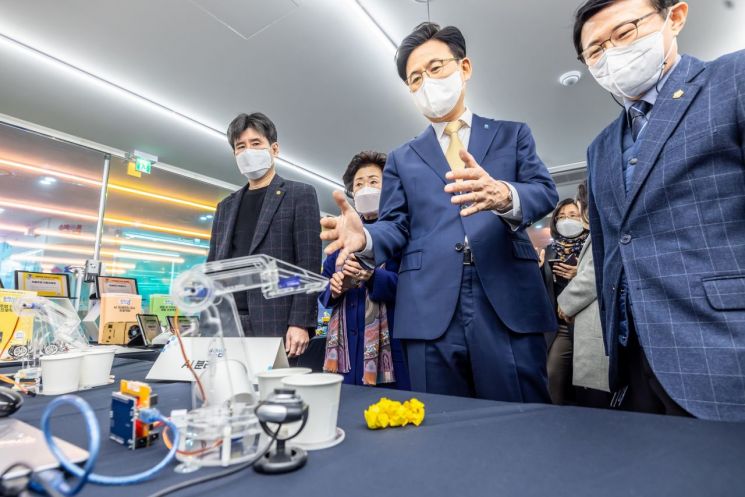
Songpa-gu (Mayor Park Seong-su) is accelerating efforts to make Songpa-gu the largest school in the world through ‘Songpa SSEM’.
To this end, the district opened the ‘Songpa SSEM Future Education Center (hereinafter Future Education Center) Jamsil (Building 10)’ on the 12th and began full-scale operation.
The Future Education Center is a community-based future education infrastructure where residents can learn the basic literacy of rapidly changing advanced technologies. Since the start of the 7th term of the mayor, the district has built its own education support system called ‘Songpa SSEM (Songpa Smart Education Model)’ to provide more learning opportunities to residents and is establishing future education centers at key locations throughout the district.
The newly opened ‘Future Education Center Jamsil’ is located on the second floor of the Jamsil Youth Center (22 Olympic-ro 8-gil). It features advanced science and technology education and customized college admission and learning consulting all in one place.
The 260㎡ space was remodeled to create a creative convergence room, media room, and studio. Using these facilities, the district plans to provide future education in AI, 3D printing, VR, and media fields to students.
Along with the Future Education Center, the Admission and Learning Support Center also opened its doors. Reflecting the high demand for admission and learning information, the district created an admission information lounge and consultation room inside the center to quickly provide the latest admission information, including 1:1 customized admission consulting.
Notably, Samsung SDS, a leading local company, supported digital and IT specialized educational equipment for the establishment of the Future Education Center Jamsil, contributing to reducing educational gaps and nurturing future talents. Samsung SDS has been actively contributing to the community since 2019, including establishing six Songpa SSEM Future Education Centers.
Additionally, through ‘Songpa SSEM,’ the district provides educational services such as a character library, musical instrument library and music creation studio, and an online education portal. About 170,000 people have used these services this year alone. In December, the district plans to open a ‘Head Center’ near the district office to serve as the central hub of the Future Education Center.
Mayor Park Seong-su of Songpa-gu said, “Our district’s unique education support system, ‘Songpa SSEM,’ ultimately aims to make Songpa-gu the largest school in the world. Through the Future Education Center and ‘Songpa SSEM,’ we will give children dreams and hope and provide adults with leisure and happiness in life.”
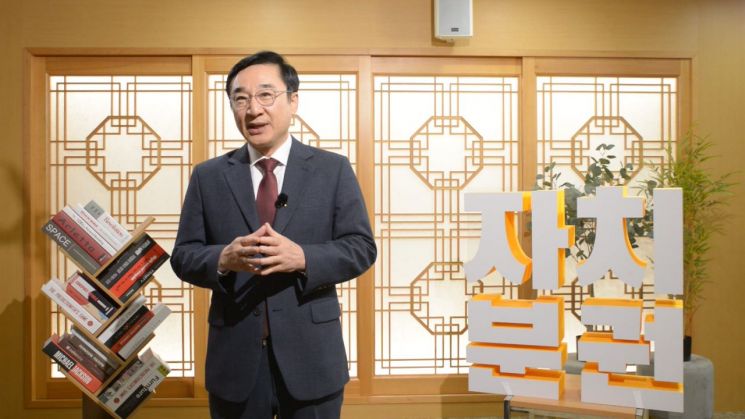
Dobong-gu (Mayor Lee Dong-jin) will open the autumn semester of the Autonomous Decentralization University ‘Dobong Campus’ on the 18th.
The Autonomous Decentralization University has been operating educational programs to enhance understanding of local autonomy since 2017, mainly among member cities of the Local Autonomy and Decentralization Government Council. Especially after the full revision of the Local Autonomy Act passed the National Assembly in December last year and marking the 30th anniversary of the revival of local autonomy this year, the university prepared a ‘30th Anniversary Special Education Course on Local Autonomy’ for citizens.
Last spring semester, about 4,500 citizens participated in courses at 37 regional campuses. From this autumn semester, the target audience has been expanded beyond council member cities to 53 regional campuses nationwide to provide more residents with opportunities to participate and raise awareness of local autonomy.
The courses, held from November 18 to December 21 over five weeks, will start with an opening greeting by Lee Dong-jin, Dobong-gu mayor and university president. Topics include the philosophical foundation and essence of resident autonomy, basics of local finance, securing resident autonomy funds, participatory budgeting, resident autonomy and ordinances, and resident autonomy and community.
Lectures can be accessed anytime after the opening by subscribing to the YouTube channel ‘Autonomous Decentralization University,’ even without prior registration.
Mayor Lee Dong-jin of Dobong-gu said, “Now is the time for a resident-centered local autonomy 2.0 era, recognizing residents as subjects of participation and partners in governance. I expect all students to play a central role in revitalizing resident autonomy in their regions through these lectures.”
Since its establishment in 2017, the Dobong Campus of the Autonomous Decentralization University has operated educational programs annually to enhance understanding of local autonomy among citizens and public officials. About 580 residents and officials participated until last spring semester, and about 230 applied for this autumn semester.
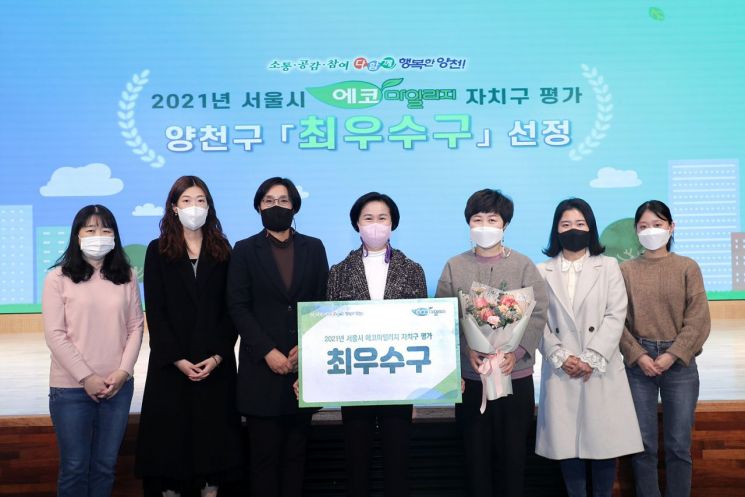
Yangcheon-gu (Mayor Kim Soo-young) is making remarkable achievements worthy of its reputation. It was selected as the best district for two consecutive years in the 2021 Seoul Eco Mileage Project district evaluation, following last year.
Eco Mileage is a citizen participation program that responds to climate change by voluntarily saving energy such as electricity, water, and city gas at homes and businesses to reduce greenhouse gases. The term combines ‘Eco’ and ‘Mileage.’
Seoul evaluated 25 districts comprehensively from October last year to September this year based on new member sign-ups, individual members, household members, group members, apartment complexes, and high-consumption business sites. As a result, Yangcheon-gu achieved the honor of being the best district for two consecutive years.
Especially this year, the district was highly evaluated for overcoming difficulties in face-to-face promotion due to COVID-19 by using QR codes for non-face-to-face promotion and small-scale visiting campaigns to continuously secure members. The achievement is particularly meaningful as the district met 100% of the target in individual and household member evaluation indicators.
Meanwhile, in the ‘2021 First Half Eco Mileage Excellent Group Evaluation’ conducted before the district evaluation, Cheonjugyo Mokdong Cathedral in Yangcheon-gu won the grand prize. The cathedral maximized energy savings through facility investments such as LED lighting and high-efficiency cooling system replacements and conducted energy-saving campaigns permeating daily life.
Among the incentives given to excellent groups, 80% can be reinvested in energy-saving projects, and 20% can be used as rewards or donated to the Seoul Energy Welfare Citizen Fund.
Mayor Kim Soo-young of Yangcheon-gu said, “I am very proud that Yangcheon-gu was selected as the best Eco Mileage district for two consecutive years. To respond to the increasingly serious climate crisis, energy-saving practices in daily life are not optional but essential. Yangcheon-gu will continue to promote the Eco Mileage project with speed.”
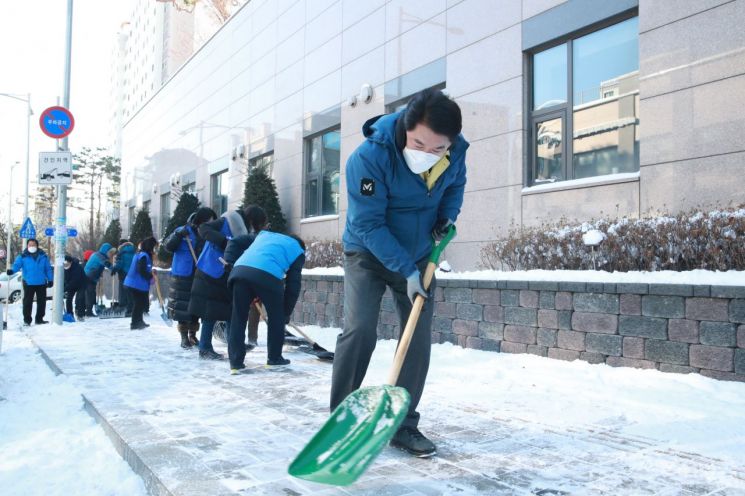
Gwanak-gu (Mayor Park Jun-hee) will operate the ‘Winter Snow Removal Disaster Safety Countermeasures Headquarters’ from the 15th to respond to natural disasters such as heavy snow and freezing in the coming winter.
The Snow Removal Disaster Safety Countermeasures Headquarters consists of 13 teams and 84 members, including the Situation Management General Team, Disaster Site Environment Management Team, Traffic Countermeasures Team, and Facility Emergency Recovery Team, operating an emergency duty system for four months until March 15 next year.
Considering the district’s many sloped roads, the district operates 40 automatic brine spraying devices at 23 locations focusing on habitual freezing sections and has placed about 800 snow removal boxes and free snow removal tool boxes by neighborhood.
Additionally, the district secured 1,217 tons of snow removal agents such as calcium chloride and 2,955 snow removal personnel through cooperation among civilian, government, military, and police, establishing a snow removal response system ready for immediate deployment during snowfall.
This winter, a smart road heating system was installed on five vulnerable snow removal sections?Gukhoe Complex Road, Ssukgogae-ro, University Road, Nangok-ro 26-gil, and Nakseongdae Station Road?covering about 1.34 km, expected to alleviate traffic congestion and inconvenience caused by heavy snow.
With 1.64 billion KRW in national and city funds, the smart road heating system is installed under the asphalt road surface and automatically operates by heating to melt snow when snowfall is detected by sensors on the surface. It is an eco-friendly snow removal method that enhances proactive response during heavy snow.
An official from the district said, “We will take proactive, field-centered preemptive measures to minimize casualties, property damage, and citizen inconvenience caused by winter disasters. We will thoroughly establish situation management, traffic communication, and citizen safety measures and prepare seamlessly through cooperation among related organizations, private groups, associations, and public officials.”
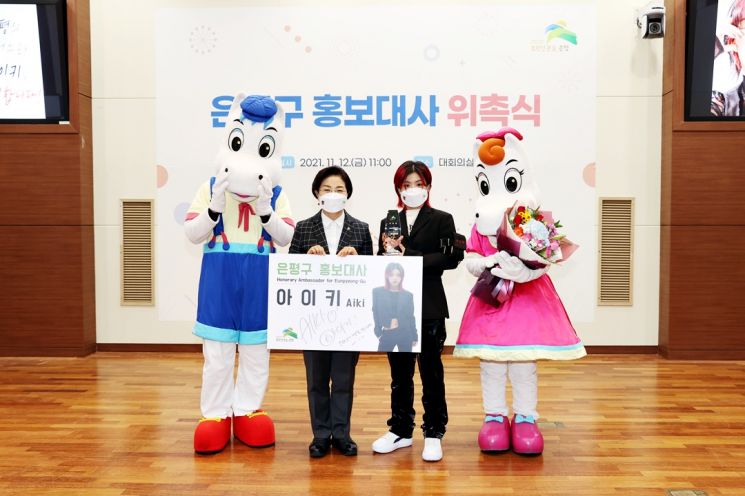
Eunpyeong-gu (Mayor Kim Mi-kyung) appointed world-renowned choreographer Aiki as its promotional ambassador.
Aiki is a Korean choreographer recognized worldwide and a key figure in the recent street dance craze. In 2019, she participated in the third season of the famous American NBC dance audition ‘World of Dance,’ ranking 4th in the adult (Upper) category, gaining recognition for her skills. Last year, she choreographed for the refund expedition group ‘Don’t Touch Me’ on MBC’s ‘How Do You Play?’ and recently appeared on MNET’s dance survival program ‘Street Woman Fighter,’ sparking a street dance craze in Korea and gaining great attention.
Aiki, a resident of Eunpyeong-gu, currently has a choreography practice room near Yeonsinnae Station, a ‘hot place’ in Eunpyeong-gu. She regularly posts choreography videos featuring the Yeonsinnae Station area on social media and recently appeared on several public broadcasting entertainment programs, showing her special affection for Eunpyeong-gu.
The appointment ceremony held on the 12th invited health center medical staff working on the front lines of COVID-19 prevention. The event included a dance performance by the Hanullim Performance Team, followed by Aiki’s ambassador appointment ceremony.
Aiki said, “I was very happy that Eunpyeong-gu Office first offered me the ambassador role. As a resident of Eunpyeong-gu and representing the district where I live and work, I feel both emotional and excited. I will visit more through events and performances in Eunpyeong-gu.”
Mayor Kim Mi-kyung of Eunpyeong-gu said, “I sincerely thank Aiki for readily accepting the ambassador role despite her busy schedule. With her lively and cheerful image, I expect she will bring happiness and energy to Eunpyeong residents as we approach daily recovery and further enhance the brand value of Eunpyeong-gu.”
Aiki plans to continue various activities such as promoting the district and participating in events following this appointment.
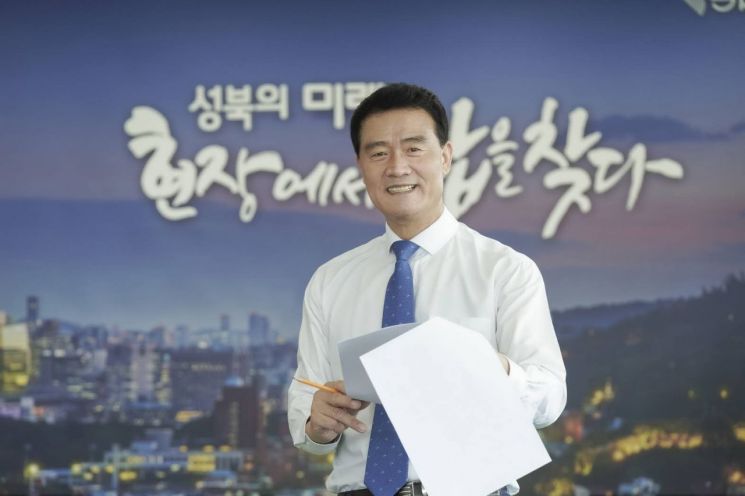
Seongbuk-gu (Mayor Lee Seung-ro) will implement the ‘Seasonal Fine Dust Management System’ from December, when high concentrations of fine dust frequently occur, until March next year, focusing on transportation, heating, workplaces, and exposure reduction.
The seasonal fine dust management system is a preemptive intensive management measure that strengthens pollutant emission reduction policies during this period to reduce the frequency and intensity of fine dust occurrences.
This year’s management plan includes 13 projects across four sectors: transportation, heating, workplaces, and exposure reduction.
During the seasonal management period, 5th-grade emission vehicles will be restricted from operating throughout Seoul and the metropolitan area. Since the revision and enforcement of the ‘Special Act on Fine Dust’ in March 2019, the vehicle operation restriction area has expanded to all of Seoul and the metropolitan area. The restriction applies on weekdays from 6 a.m. to 9 p.m., excluding weekends and holidays. A fine of 100,000 KRW will be imposed on 5th-grade vehicles without low-emission measures if caught. Emergency vehicles such as fire trucks and ambulances are exempt.
The district will particularly improve the heating sector, which accounts for 39% of ultrafine dust emissions, by focusing on eco-friendly boiler distribution, strengthening heating temperature management in large buildings, and introducing special eco mileage points. Subsidies for eco-friendly boilers, which emit one-eighth the nitrogen oxides (NOx) compared to general boilers, will be provided. District officials will visit large buildings consuming over 2,000 TOE annually to check compliance with the appropriate heating temperature of 20℃. Additionally, members who reduce energy use by more than 20% compared to the previous two years during the management period will receive an extra 10,000 mileage points.
An official said, “To reduce residents’ exposure to fine dust, we plan to strengthen road cleaning by cleaning seven key road sections (62 km) three times a day and expanding the daily work distance per cleaning vehicle from 50 km to 60 km to minimize dust scattering on roads.”
To reduce pollutant emissions, the district will strengthen guidance and inspections of construction sites generating scattered dust and pollutant-emitting workplaces and support the installation of prevention facilities at small-scale workplaces for focused management.
Mayor Lee Seung-ro of Seongbuk-gu said, “The seasonal fine dust management system will further enhance fine dust reduction effects. Protecting the health and lives of all Seongbuk residents is important, so we ask for residents’ interest and active participation.”
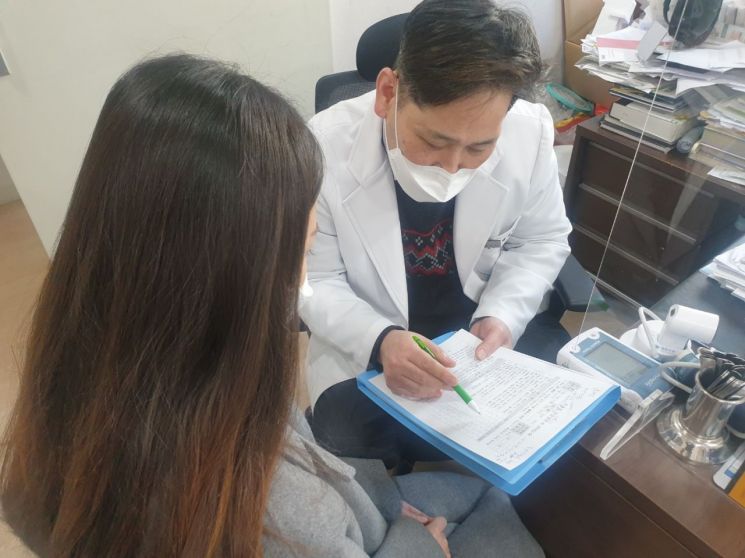
Gangseo-gu, Seoul (Mayor Noh Hyun-song) announced it will promote the ‘Life Connection Stethoscope Project’ to establish a suicide prevention system through linkage with primary medical institutions.
According to the Ministry of Health and Welfare’s ‘Psychological Autopsy Report,’ most suicide victims experienced physical discomfort such as abdominal pain or sleep problems before suicide and visited primary medical institutions such as internal medicine, family medicine, or oriental clinics rather than psychiatric departments for treatment.
If primary medical institutions proactively assess suicide risk in such patients and recommend active treatment for high-risk individuals, it is expected to be effective in suicide prevention.
Accordingly, the district decided to promote the ‘Life Connection Stethoscope Project’ to detect and intervene early in depression and high suicide risk groups through cooperation with primary medical institutions to reduce suicide rates.
This project identifies suicide risk groups among patients visiting primary medical institutions and connects them with community mental health welfare resources.
First, physicians at primary medical institutions conduct the Patient Health Questionnaire-9 (PHQ-9) and Suicide Behaviors Questionnaire-Revised (SBQ-R) tests for patients suspected of depression or suicide risk.
For those with high suicide risk and who wish to receive counseling, the Gangseo-gu Public Health Center provides in-depth counseling through dedicated suicide prevention personnel.
After assessing the suicide risk level through counseling, continuous management cases are connected to various community welfare resources such as specialized medical institutions, Gangseo-gu Mental Health Welfare Center, and Gangseo-gu Public Health Center’s Life Keeper caregiver services.
As of November, five primary medical institutions in the region participate in the ‘Life Connection Stethoscope Project,’ and the district plans to expand participation through active support and promotion.
An official said, “As the COVID-19 situation prolongs, more people complain of depression. We will do our best to prevent suicide through active cooperation with the community and spread a culture of respect for life. For more information, contact the Gangseo-gu Public Health Center’s Health Management Division.”
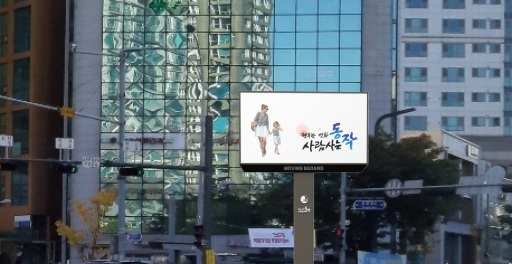
Dongjak-gu (Mayor Lee Chang-woo) announced on the 15th that it will begin preparations for the pilot operation of ‘Sadang Convenientium Media Mate,’ a big data-based digital outdoor advertising system.
‘Convenientium’ is a compound word of ‘convenience’ and ‘premium,’ meaning providing a high level of convenience.
This project was selected as a target site in December 2019 by the Ministry of the Interior and Safety’s ‘Big Data-Based Digital Outdoor Advertising Pilot Project Contest’ and will be established along about a 1 km section from Sadang Station to Isu Station.
The district will install a total of 13 units in the Dongjak-daero area with high foot traffic: two large billboards (4m x 3m), six small kiosk-type billboards (0.6m x 1.2m), and five smart benches (1m x 0.5m), all to be completed by December.
The pilot operation will last one year until December next year, broadcasting advertisements 18 hours a day (6 a.m. to midnight) with 80% for small business and local commercial ads and 20% for public ads.
Main content includes guidance on public and private parking lots near Sadang Station, promotion of Sadang 1-dong food alley commercial district, and small business advertising support services. It also provides public Wi-Fi, wireless charging, and rest spaces.
Especially, through digital outdoor advertisements, big data such as surrounding foot traffic, sales status, and parking app user information will be collected and analyzed to be used as basic data for marketing strategies and advertisement broadcasting to revitalize the local commercial district.
Additionally, during the pilot operation, the district plans to provide free advertising to support local small businesses struggling due to the prolonged COVID-19 pandemic.
Moon Young-sam, head of the Street Administration Division, said, “Through this project, we will brighten the city streets and do our best to help revitalize the local economy by providing free advertising for small business owners.”
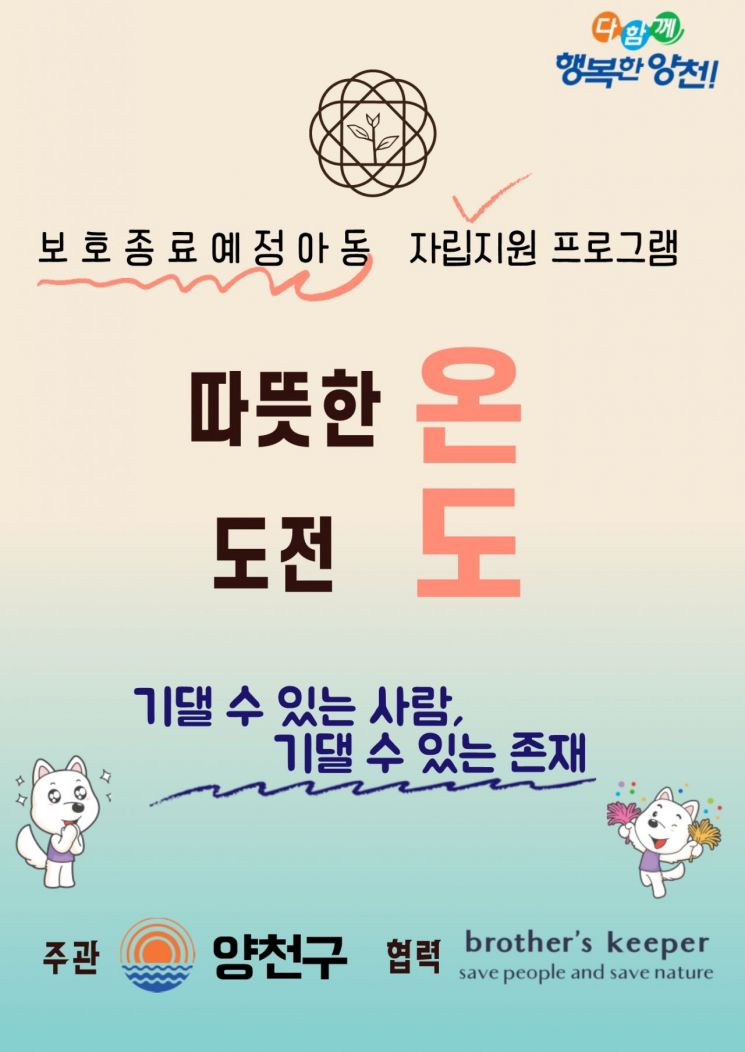
Everyone needs someone to trust and rely on in life. Especially for children aging out of care without adults to watch over them, a ‘reliable support’ is crucial.
Yangcheon-gu (Mayor Kim Soo-young) is promoting the ‘Warm Challenge, Temperature (On-do)’ project to provide psychological counseling and self-reliance education, becoming a strong support for children aging out of care.
Children aging out of care refer to those who turn 18 or whose protection purpose is fulfilled, ending care in child welfare facilities or foster care under the ‘Child Welfare Act.’ They must go through a process of independence, but face significant real-world barriers. In fact, one in four children aging out of care is a basic livelihood security recipient, facing complex economic, psychological, and social difficulties.
Accordingly, Yangcheon-gu plans to support in-depth psychological counseling and provide education on life skills necessary for independent living after care through the ‘Warm Challenge, Temperature (On-do)’ project to help healthy independence.
The project consists mainly of a group counseling program and a self-reliance support program, with 11 high school students preparing to age out participating.
The group counseling program is conducted in cooperation with the Yangcheon-gu Mental Health Welfare Center (Director Kim Ga-eun). It supports children in expressing themselves, improving self-esteem, and alleviating anxiety about independence through in-depth psychological counseling. It also provides opportunities to face their inner selves through various psychological tests.
The self-reliance support program, starting in December, is linked with the social enterprise ‘Brother Keeper,’ operated by those who have left child care facilities. Through sharing life and experiences after leaving care, it builds bonds with children and provides practical financial and housing education such as utility bill payments and lease contract writing. Cooking classes and food-making competitions will also be held to help children enjoy healthy and warm home-cooked meals after independence.
Mayor Kim Soo-young of Yangcheon-gu said, “We are promoting the ‘Warm Challenge, Temperature’ project with a mother’s heart to help children aging out of care achieve healthy independence. Yangcheon-gu will continue to be a reliable partner so that our children can live happily as confident members of society.”
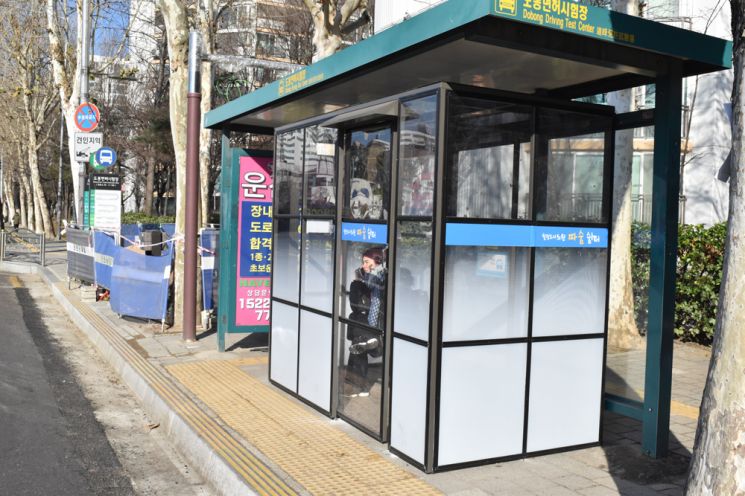
Nowon-gu (Mayor Oh Seung-rok) will add heated seats and begin full operation from the 15th.
Heated seats are a project to provide warmth during winter and chilly spring and autumn seasons, offering comfort and warm consolation to residents tired of daily life.
This year, the district added a total of 140 heated seats mainly at bus stops frequently used by residents and transportation-vulnerable groups such as the elderly.
Since the pilot installation of heated seats at 38 bus stops in 2018 received great response from residents, the district has continuously expanded the installation. By this year, heated seats have been installed at 318 of 503 bus stops in the district (251 city bus stops, 67 village bus stops).
The heated seats are made of durable double-strengthened glass, measuring 203 cm wide and 33 cm deep. The surface temperature is maintained at 36 degrees Celsius, using carbon nanotubes for high thermal conductivity and minimal power consumption.
This year, operation starts on the 15th and continues until April next year. Operating hours are from 5 a.m. to 11 p.m., matching the first and last bus times, and the seats automatically activate when the ambient temperature drops below 18 degrees Celsius.
The heated seats, with a green background, bear the silver inscription, “May today be the most beautiful and overwhelming day, no matter the day,” to offer a small comfort to weary hearts. The district plans to continuously monitor user feedback to improve satisfaction.
In addition to heated seats, the district will operate 93 ‘Ttasum Shelters’ from the 20th, providing protection from cold winter winds.
These shelters were not operated last year due to COVID-19 risks but will be operated this year with flexible distancing measures due to phased daily recovery.
The district is also conducting various projects to create a convenient public transportation environment. It completed 100% installation of bus information terminals and bus platforms where possible through field surveys. Additionally, it carried out bus stop obstacle removal projects at 25 stops to remove trees, streetlights, and signs that hinder boarding and threaten safety.
Furthermore, the district is closely cooperating with Korail and Seoul Metro to gradually expand escalators and elevators at subway stations for user convenience.
Mayor Oh Seung-rok of Nowon-gu said, “I hope residents can warm up and find healing in the comforting words while waiting for the bus. We will continue efforts to provide a pleasant and convenient public transportation environment.”
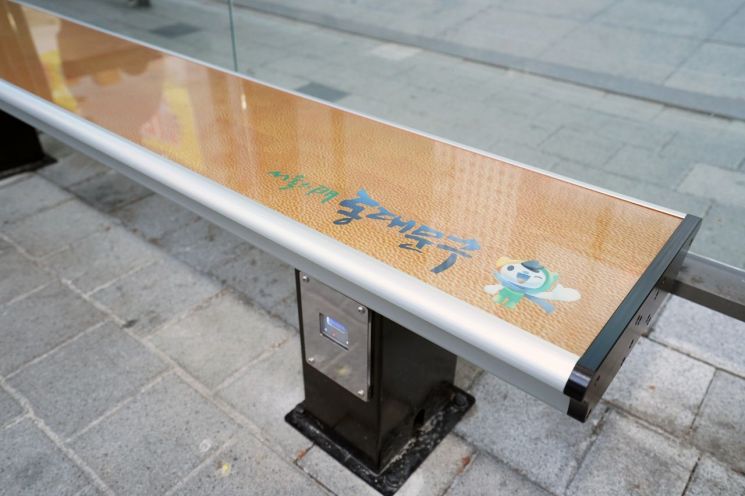
Dongdaemun-gu (Mayor Yoo Deok-yeol) will install heated seats at 80 roadside bus stops and begin full operation from the 15th to support residents using buses in winter.
This installation involved 260 million KRW of district funds allocated in the supplementary budget. Including the newly installed 80 heated seats and the existing 20, there are a total of 100 heated seats, ranking fourth among Seoul’s 25 districts.
The heated seats activate when the outside temperature is below 18 degrees Celsius and provide heat up to 40 degrees Celsius, offering warmth to residents waiting for buses in winter. After a three-day pilot operation from the 12th to 14th, full operation starts on the 15th, with operating hours from 5 a.m. to 11 p.m. matching bus operation times.
The district plans to survey resident satisfaction with the heated seats and, if positively evaluated, install heated seats at all bus stops with boarding platforms.
On the afternoon of the 11th, Mayor Yoo Deok-yeol inspected the heated seats at bus stops in preparation for the cold wave. He said, “The sudden cold weather is expected to cause difficulties for residents using public transportation. I hope the installed heated seats provide some warmth to bus users. We will continue to improve public transportation facilities to enhance residents’ convenience.”
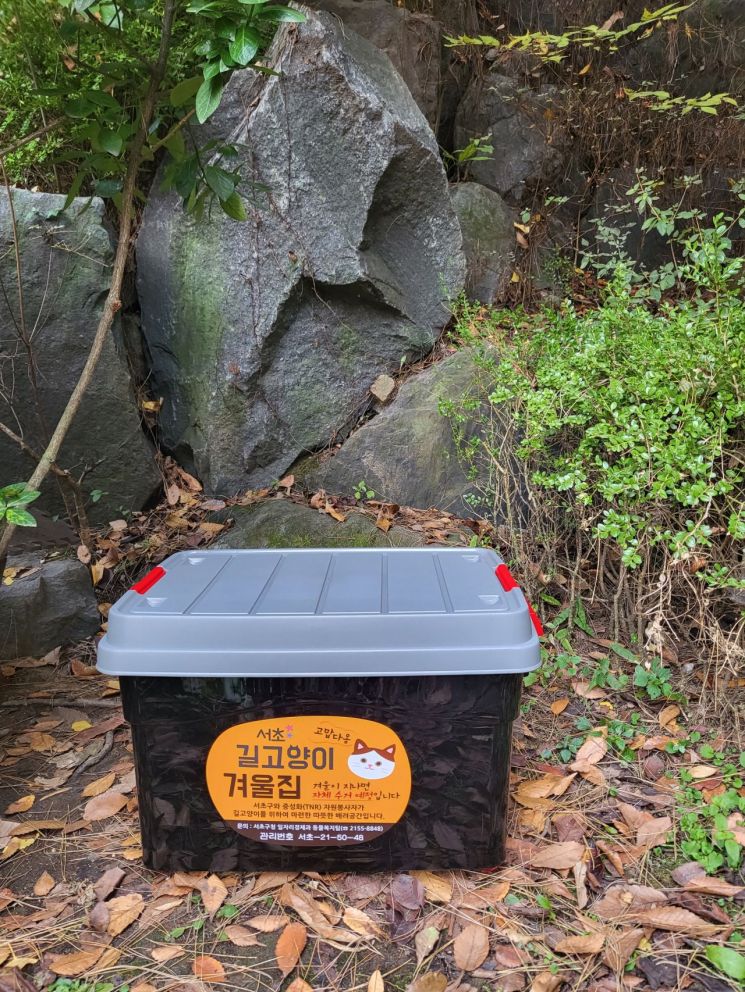
Seocho-gu installed 50 additional winter shelters for stray cats on the 13th to protect them from the cold.
Including the 150 shelters previously installed, the district now operates a total of 200 ‘Seocho Stray Cat Winter Shelters’ to ensure stray cats can spend a safe and warm winter.
The stray cat winter shelter project was first conducted by Seocho-gu in 2018, the first among local governments nationwide, and has been prepared through making events with local residents and cat mom volunteers. Last year, the event was not held due to COVID-19, but this year it was changed to a pre-installation event with minimal personnel in line with the phased daily recovery.
The newly installed shelters are black living boxes measuring 60 cm wide, 40 cm deep, and 40 cm high, with a round hole on the side as an entrance. The interior is fully lined with thick insulation sheets, and acetate sheets form the door to help cats endure the severe cold.
Notices are attached to the shelters to prevent unauthorized movement or damage, and the shelters will be collected after winter.
Additionally, local cat mom groups donated 100 blankets, and the pet food company ‘Dunapet’ sponsored 50 bags (total 100 kg, 2 kg per bag) of cat food ‘Angel’s Cat’ to help protect stray cats in winter.
Along with 36 ‘Stray Cat Feeding Stations’ installed in October, the winter shelters aim to prevent stray cat deaths from freezing during the winter months. The district plans to resume the neutering project from February next year.
The district formed and operates a volunteer group of 77 for stray cat neutering this year, achieving top-tier results among Seoul districts. The district has also promoted various animal welfare policies, including enacting animal protection ordinances, operating the Seocho Animal Welfare Committee, opening and operating the Seocho Animal Love Center for abandoned dog adoption and education, and appointing and operating honorary animal protection monitors.
Jo Byung-geon, head of the Job Economy Division, said, “Through installing stray cat winter shelters, we hope stray cats can spend a safe and warm winter and that a mature companion culture where residents and animals coexist harmoniously will be established.”

Gangnam-gu (Mayor Jung Soon-gyun) designated November 14 to 20 as ‘Child Abuse Prevention Week’ in observance of World Child Abuse Prevention Day on November 19 and will conduct online quiz events and street campaigns.
The quiz event will be held from the 15th to 19th on the Gangnam-gu Office website under the theme ‘How much do we know about child abuse?’ and 500 participants will be selected by lottery to receive coffee gift coupons.
On the 19th, the district will conduct a ‘Child Abuse Reporting, Procedure Guidance, and Prevention’ campaign near COEX in cooperation with Gangnam Police Station and Suseo Police Station.
Child abuse investigation duties were previously performed by the private sector but were transferred to city, county, and district governments from October 2020 to strengthen public responsibility. Accordingly, Gangnam-gu organized a dedicated child abuse team to work on prevention and protection.
Mayor Jung Soon-gyun, who participated in the SOS (Save Our Seoul!) relay challenge for child abuse prevention in May, said, “I hope more people will take interest in reporting and preventing child abuse through the campaign. I will do my best to ensure children’s safety until child abuse is eradicated.”
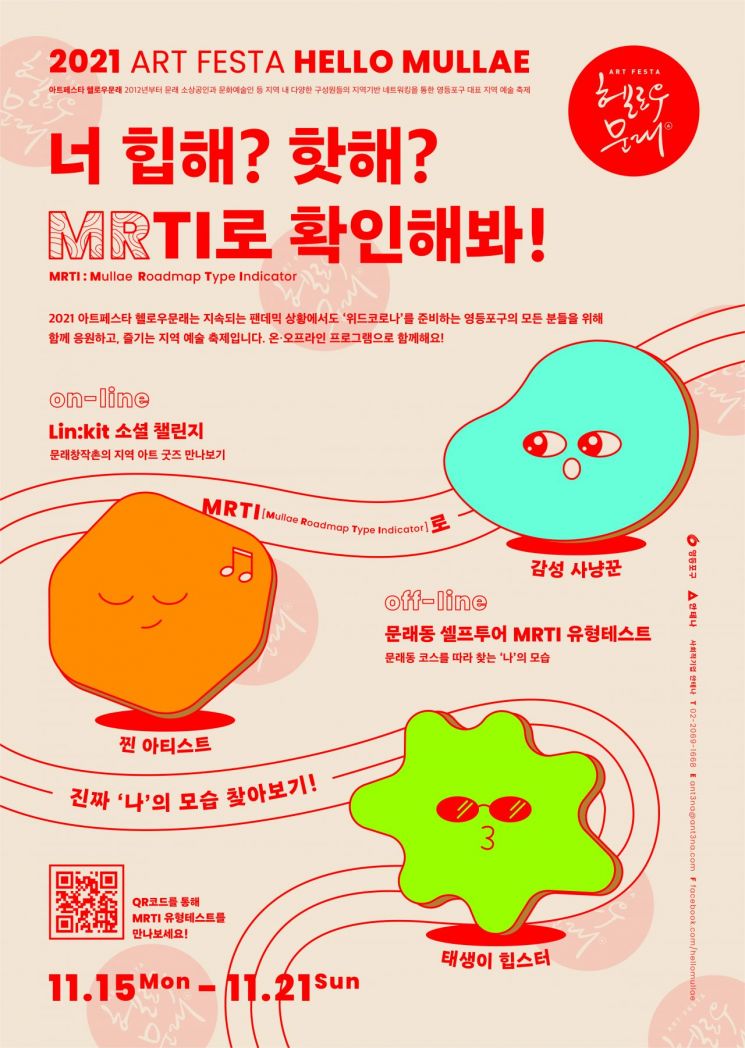
Yeongdeungpo-gu (Mayor Chae Hyun-il) announced it will hold the ‘2021 Art Festa Hello Mullae,’ a cultural and arts festival where visitors can feel the romance of Mullae-dong, from the 15th to 21st around Mullae Creative Village.
Now in its 9th year, ‘Hello Mullae’ is Yeongdeungpo’s representative community festival created by residents, cultural artists, small business owners, and various local members based on the coexistence of ironworks and art villages in Mullae-dong.
The ‘2021 Art Festa Hello Mullae’ can be enjoyed both online and offline. This year, a ‘Mullae-dong Self-Tour Type Test (MRTI)’ was developed to explore the hidden stories of Mullae-dong by exploring the ironworks and art creation village, where ironworks, art, and commerce coexist, along personalized courses.
Through the self-tour type test, participants can identify their type and Mullae-dong roadmap among three course types: ‘Emotional Hunter’ seeking emotional ironworks spots, ‘True Artist’ full of exhibitions, works, and workshops, and ‘Born Hipster’ collecting unique hot places. Participants can then proceed with individual tours according to their course type.
Visiting three mission locations per course and collecting stamps on the mission card allows participants to receive tour rewards at one of the mission locations on a first-come, first-served basis during the event. Leaflets and self-tour maps needed for participation are available at Mullae Station Exit 7 Mullae Creative Village INFO and mission locations.
Online, the ‘Lin:kit Social Challenge’ connects various local members through culture and arts. Selected challengers (100 people) receive Mullae Creative Village art goods and share photos or short videos on SNS. The district plans to create a single content piece completed by the 100 challengers’ certification shots.
For event schedules and details, visit the Hello Mullae Facebook page or the official blog and Instagram of the social enterprise Antenna.
Mayor Chae Hyun-il of Yeongdeungpo-gu said, “‘Hello Mullae’ is a communication space connecting residents, small business owners, creators, and visitors enjoying the romance of Mullae-dong. I hope the ‘2021 Art Festa Hello Mullae’ brings new vitality to Mullae Creative Village and that everyone enjoys the festival safely and happily.”
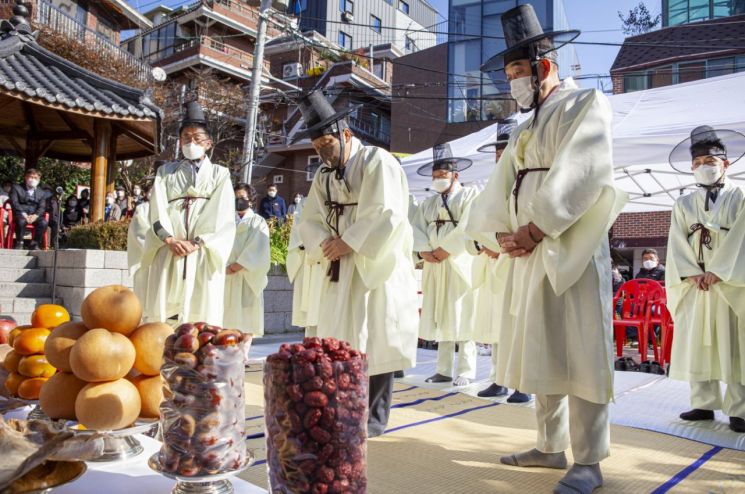
“Wishing for residents’ peace.”
Guro-gu (Mayor Lee Sung) held the ‘Garibong-dong Thuja Tree Ritual’ on the 12th to pray for residents’ safety and well-being.
The district said, “To inherit traditional culture and create a place for neighborly harmony, we hold the ‘Garibong-dong Thuja Tree Ritual’ every autumn. This year, we prepared the ritual with hopes for residents’ peace and the end of COVID-19,” on the 15th.
The thuja tree located at 13-175 Garibong-dong is about 15 meters tall, 2.5 meters in circumference, and estimated to be over 500 years old. It is considered the oldest thuja tree in Korea and was designated a protected tree by Seoul in 2004. According to legend, offering a ritual to the tree during harvest season wards off misfortune by the snake living inside the tree.
The ritual was suspended during the Korean War but revived in 2002 through residents’ efforts, with annual prayers held since 2003.
The ritual took place at the pavilion yard near the thuja tree. Following traditional methods, it proceeded with the invocation (burning incense and offering cups), reading of the ritual text, bowing, sharing of ritual food, and burning of paper offerings. Due to COVID-19 prevention, the ‘Resident Harmony Festival’ was omitted again this year, and only the ritual was held with minimal attendees. The ritual was live-streamed on YouTube.
The donations collected from this ritual will be used for kimchi sharing events for elderly living alone at the end of November.
An official from Guro-gu said, “We hope this thuja tree ritual will relieve residents’ worries caused by COVID-19. We will continue efforts to make it a village festival where generations communicate together with the thuja tree that has protected the village.”
© The Asia Business Daily(www.asiae.co.kr). All rights reserved.



















