Seoul City Councilor Itaeseong emphasizes the need to create a fair and healthy competitive structure among corporations when re-designating wholesale corporations, highlighting that narrowing competition gaps between distribution entities and solidifying business vested interests act as competition-restricting factors during the administrative audit of Seoul Agro-Fisheries & Food Corporation.
[Asia Economy Reporter Jong-il Park] Currently, there are six wholesale corporations handling fruits and vegetables within the Garak Market in Seoul. Except for Corporation F, the other five wholesale corporations can handle 193 items, including 45 fruit items, 146 vegetable items, and 2 other items. However, Corporation F is limited to 8 fruit and vegetable items, including radish, napa cabbage, and cabbage.
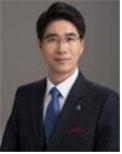
Lee Tae-seong, a member of the Planning and Economy Committee of the Seoul Metropolitan Council (Democratic Party, Songpa 4), stated, “According to the current Monopoly Regulation and Fair Trade Act, if a single business operator’s market share in a specific market exceeds 50%, it is presumed to be a market-dominant operator.” He emphasized the urgent need to devise special measures to resolve the partial monopoly of certain vegetable items within Garak Market.
As a specific measure, Councilor Lee suggested, “It is necessary to enforce competition among wholesale corporations by introducing an evaluation method that assigns concrete target figures to gradually increase the transaction ratio for the top 10 items with the highest transaction volumes during the wholesale corporation re-designation process, which occurs every five years.”
Additionally, Councilor Lee pointed out, “When examining the transaction ratios of the 8 items handled by Corporation F by each wholesale corporation, a competitive structure is formed between the middlemen handling the exempted items and Corporation F. However, for exempted items that Corporation F does not handle, the transaction ratio by other wholesale market corporations is very low. This is because, given the current sales structure, high operating profit margins are maintained, so there has been insufficient investment over the past 25 years in efforts to develop production areas to attract exempted item volumes and to secure middlemen and auctioneers responsible for those items.”
Emphasizing the need for active interest from the Seoul Metropolitan Government to improve the competitive structure, Councilor Lee stated, “Since wholesale corporations operate as consignment sales agents designated by the Seoul Metropolitan Government, which established them to support producers with weak bargaining power, the opinions of producer organizations must be sufficiently reflected during the upcoming wholesale corporation re-designation.” He also demanded, “Please actively consider relaxing regulations that limit handled items to promote competition among corporations, as advocated by producer organizations.”
Finally, he said, “The conditions for designating wholesale corporations should be linked to the annual evaluations of wholesale corporations, and the review committee related to wholesale corporation designation should include various external experts such as lawyers, accountants, labor consultants, and distribution specialists, rather than being centered on internal members, to ensure objectivity and fairness in the review process.”
© The Asia Business Daily(www.asiae.co.kr). All rights reserved.
















