Institute for Basic Science
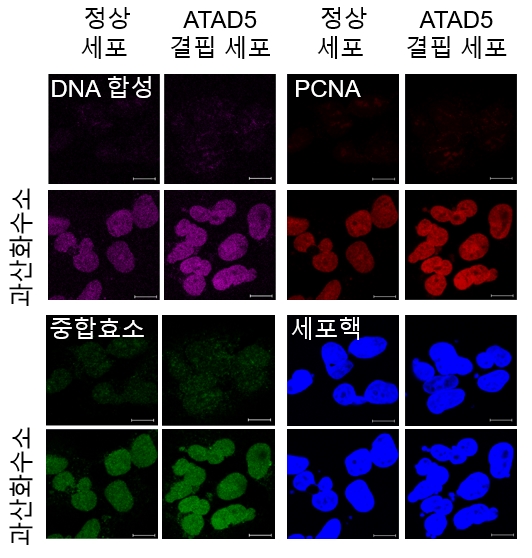 <Discovery of DNA Repair Protein for Oxidative Stress Damage>
[Figure 1] Repair DNA synthesis caused by oxidative stress increases when ATAD5 protein is deficient.
When hydrogen peroxide is applied to increase intracellular reactive oxygen species levels, PCNA and DNA polymerase bind to DNA, and repair DNA synthesis occurs. In the absence of ATAD5 protein, PCNA accumulates on DNA, and repair DNA synthesis further increases.
[Asia Economy Reporter Kim Bong-su] Domestic researchers have discovered a protein (ATAD5) that repairs DNA damaged by reactive oxygen species (ROS). This is expected to aid in the development of cancer treatments and anti-aging agents.
The Institute for Basic Science (IBS) announced on the 12th that the research team led by Research Fellow Lee Gyu-young of the Genome Stability Research Group elucidated the mechanism by which the tumor suppressor protein ATAD5 regulates the completion of DNA repair damaged by reactive oxygen species.
Reactive oxygen species act like a double-edged sword in our bodies. While they protect cells, excessive production damages DNA, causing aging and cancer. At this time, our body activates a damage repair system to respond. However, the final stage of this process, the mechanism of ‘repair DNA synthesis,’ has not been well understood.
In previous studies, the research team revealed that the ATAD5 protein alleviates replication stress and controls abnormal structures within DNA to support stable DNA replication. In this study, they demonstrated that ATAD5 regulates DNA synthesis to complete repair at single-strand break sites caused by reactive oxygen species. Furthermore, they elucidated the principle by which ATAD5 reduces the exposure of ‘DNA nicks’ that cause genome instability, thereby maintaining genome stability.
The researchers first labeled the ATAD5 protein with a fluorescent protein and applied it to various types of DNA damage. As a result, only reactive oxygen species specifically increased the fluorescent signal of ATAD5 binding to DNA. The PCNA protein, which assists DNA synthesis, showed the same response. This means that when reactive oxygen species damage DNA, PCNA binding becomes active to promote DNA synthesis and repair, and ATAD5 activity also increases during this process. Additionally, they confirmed that single-strand breaks caused by reactive oxygen species are the main type of damage leading to DNA synthesis.
They also revealed that ATAD5 plays a key role in the final stage of DNA repair, DNA synthesis. In a normal DNA repair process, PCNA binds to damaged DNA to assist DNA synthesis and is then removed by the ATAD5 protein. However, when the amount of ATAD5 is reduced, PCNA accumulates and DNA synthesis increases, causing more frequent stalling of DNA polymerase. This increases the frequency of DNA nick exposure, inducing cell death. This means that if ATAD5 is insufficient during the repair of DNA damage caused by reactive oxygen species, excessive DNA synthesis can compromise genome stability.
Research Fellow Lee said, “We have revealed a new function of ATAD5 in regulating the repair of DNA damage caused by reactive oxygen species,” adding, “Since reactive oxygen species are considered the main cause of various diseases including cancer and aging, this is expected to contribute to the development of cancer treatments and anti-aging agents in the future.”
The results of this study were published online on the 1st in the international journal Nucleic Acids Research (IF 16.97).
© The Asia Business Daily(www.asiae.co.kr). All rights reserved.

















