China Real Estate Crisis Spreads
Concerns Over Capital Outflow from Emerging Markets if US and UK Raise Interest Rates
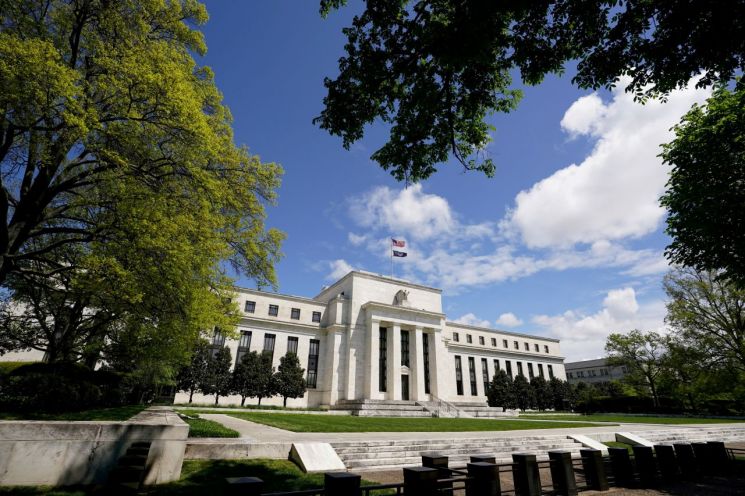
[Asia Economy Reporter Kim Suhwan] The U.S. Federal Reserve (Fed) has warned that China's real estate-driven economic crisis could threaten the global financial system. The Fed also expressed concerns that interest rate hikes in advanced economies such as the U.S. and the U.K. could trigger capital outflows from emerging markets. The Fed Vice Chair hinted at the possibility of an interest rate increase by the end of next year.
In its semiannual Financial Stability Report released on the 8th (local time), the Fed stated, "China's real estate sector poses some risk factors to the U.S. financial system," adding, "Considering the size of China's economy and its trade relations with other countries, a liquidity crisis within China could contract the global financial market."
This implies that the liquidity crisis spreading across the real estate sector, including Evergrande Group which is facing bankruptcy with debts exceeding 300 trillion won, could spill over into the global economy.
The Fed added in the report, "The debt levels of Chinese industries and local governments are substantial," and warned, "If the liquidity crisis in China's real estate sector spreads to the financial industry, or if there is a sharp adjustment in real estate prices or increased risk sensitivity among investors, the entire Chinese financial system will come under pressure."
The Fed particularly warned about liquidity crises in emerging markets with increased debt levels. The report noted that emerging markets with high debt ratios could pose risks to the global financial system, stating, "If a tightening environment arises due to interest rate hikes in advanced economies and increased risk sensitivity among investors, it could raise debt costs for emerging market governments and companies, leading to capital outflows."
Regarding the domestic macroeconomic situation, the Fed also expressed concerns about economic contraction due to potential interest rate hikes. The report projected, "A sharp increase in interest rates will trigger a massive adjustment in high-risk assets," and "With expected declines in housing demand and prices, borrowing costs for companies will rise, leading to reduced new hiring and investment."
The Fed also raised concerns about volatility risks in high-risk assets. It warned, "(High-risk) assets are vulnerable to factors such as the COVID-19 situation, changes in risk sensitivity, and slowing economic recovery," and cautioned that if the economy shifts into a downturn phase, these assets could experience sharp declines.
Earlier, the Fed had effectively embarked on unlimited quantitative easing immediately after the outbreak of the COVID-19 pandemic, providing abundant liquidity to the market, which led to a surge in asset prices and created bubble risks.
The Fed also diagnosed that the rise of stablecoins (cryptocurrencies pegged to fiat currencies) could pose threats to financial stability. The report analyzed, "Stablecoin assets are vulnerable to bank runs (massive deposit withdrawals)," and "These risks will worsen due to a lack of transparency and governance standards."
Meanwhile, Fed Vice Chair Richard Clarida hinted at the possibility of an interest rate hike before the end of next year, citing rapid economic recovery and sustained high inflation.
At an online event hosted by the Brookings Institution that day, he said, "We are still far from the stage of considering rate hikes," but added, "I believe the necessary conditions for a rate increase will be met by the end of 2022."
© The Asia Business Daily(www.asiae.co.kr). All rights reserved.

















