Resolution of Shipping Logistics Crisis Lowers Freight Rates
Gradual Recovery Expected for Airline Stocks
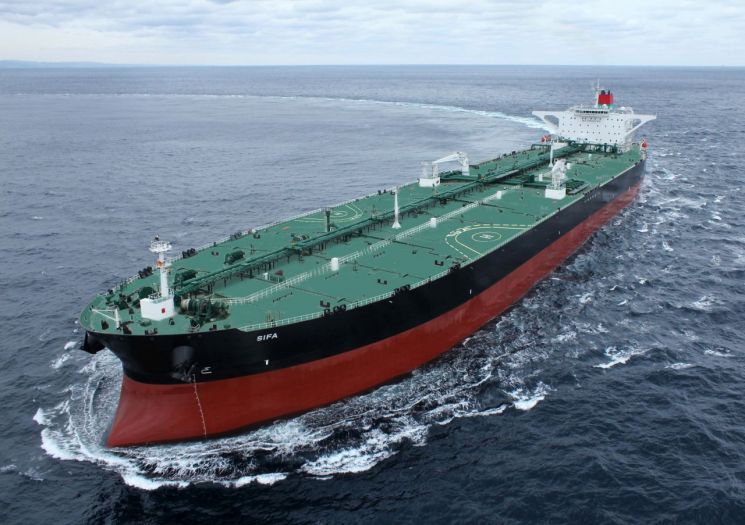
[Asia Economy Reporter Minji Lee] With transportation stocks falling more than 12% in a month, it is expected to be difficult for a short-term recovery. In the case of shipping stocks, concerns have grown that freight rates may decline due to the resolution of the logistics crisis, and for airline stocks, although passenger demand is expected to recover with 'With Corona,' the recovery will be gradual, making it unlikely for stock prices to rebound within the year.
According to the Korea Exchange on the 1st, the KRX Transportation Index fell about 10.97% over the past month. Among the KRX indices, it had the second-largest decline after the Healthcare Index, significantly underperforming the KOSPI decline rate (-3.2%) during the same period.
Among the constituent stocks, container shipping company HMM experienced the largest drop, plunging about 27.6% in the past month. Although HMM proposed early redemption of the 600 billion KRW perpetual bonds held by the Korea Ocean Business Corporation, the view that the corporation would ultimately choose stock conversion over redemption provided a pretext for the decline. If the perpetual bonds are converted into stock, 83.647 million new shares will be issued, which inevitably dilutes the equity value from the perspective of individual investors. Additionally, concerns over falling freight rates also negatively affected the stock. As the Baltic Dry Index (BDI), closely related to bulk carriers, plunged about 36% in a month, bulk shipping companies Pan Ocean (-18.8%) and Korea Line (-2.4%) showed downward trends.
Airline stocks such as Jin Air (-9%), Korean Air (-9%), and Jeju Air (-6%) also showed steep declines, as investor sentiment weakened amid growing forecasts, mainly from foreign securities firms, that the recovery in the passenger business sector would be slow.
As the world transitions to 'With Corona,' the securities industry expects that even if cargo volume and passenger demand increase, transportation stocks are unlikely to show a sharp rise. In the case of shipping stocks, the main factor driving freight rate increases was supply disruption rather than cargo volume. Researcher Kyung-Ah Yeom of Shin Young Securities explained, "Even after the logistics turnover speed normalizes, the first half of next year, when cargo volume grows quantitatively, will be the time for shipping stocks to rebound," adding, "For the time being, the resolution of supply-demand imbalances will lead to freight rate declines, which will affect shipping stocks."
Regarding airline stocks, advice is emerging to invest from a mid- to long-term perspective. Looking at the case of the United States, which adopted 'With Corona' early, major airlines are facing growing concerns over earnings due to rising oil prices and a slowdown in passenger demand recovery. Researcher Min-sik Na of Ebest Investment & Securities said, "In Korea, international passenger traffic is expected to recover to pre-COVID levels only by 2023, so the recovery will be stepwise rather than a sharp rebound."
© The Asia Business Daily(www.asiae.co.kr). All rights reserved.

















