Rep. Lee Eun-ju: "Disability Public Safety Services Should Be Free of Inconvenience and Discrimination"
[Asia Economy Reporter Lee Gwan-joo] It has been confirmed that the National Police Agency created a manual for responding to complaints by type of disability and distributed it to police agencies nationwide last month. This is the first time the police have independently created a manual for responding to people with disabilities.
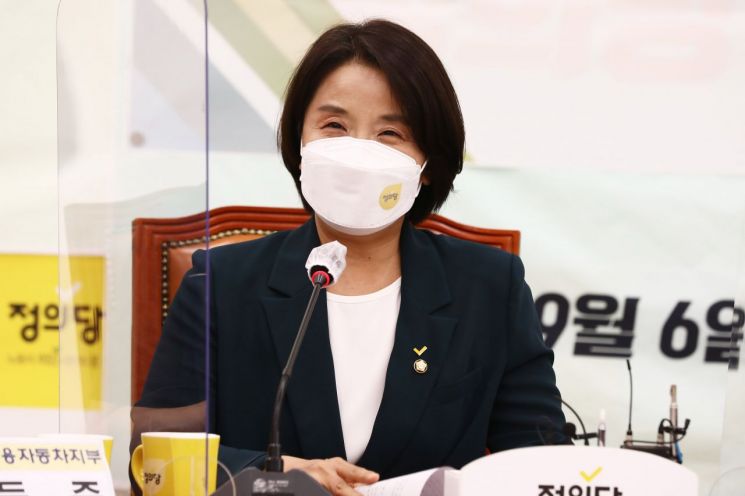
According to the 'Manual for Responding to People with Disabilities' received by Justice Party lawmaker Lee Eun-joo, a member of the National Assembly's Public Administration and Security Committee, from the National Police Agency on the 27th, disabilities are classified into 15 types, with precautions and response methods presented.
Common precautions include first asking and confirming the appropriate communication method since the type and degree of disability vary, and refraining from unconditionally requiring accompaniment by family members or activity assistants for people with disabilities over 19 years old. It also states that responses should be directed toward the person making the inquiry rather than the accompanying person, and cooperation should be made to simplify and minimize complaint procedures. The manual also specifies caution against derogatory expressions such as 'aeja' and 'jeongsinbyeongja' (mentally ill person), as well as commonly misused terms like 'normal person/general person' and 'jang-aeu' (disabled friend).
The manual details response methods by disability type. For example, for people with hearing impairments, it advises making lip movements clear and distinct and keeping word lists concise. For people with intellectual disabilities, it recommends using honorifics appropriate to their age. For people with physical disabilities or wheelchair users, it advises not to suddenly push or grab the wheelchair but to first confirm the intention to assist and then communicate face-to-face at eye level.
It also provides police action manuals for disaster and crisis situations. For people with visual impairments, it advises speaking naturally and accurately without shouting. For people with physical disabilities, it recommends always asking what kind of help is needed before assisting. For people with hearing impairments, it suggests attracting attention by turning on a flashlight or mobile phone flash when entering the scene to indicate evacuation routes.
The police plan to promote learning at least once every six months through department head training and team meetings based on the manual. Lawmaker Lee said, "Although the manual does not contain detailed content, it seems sufficient for use in the field," and urged, "Please thoroughly familiarize yourselves with the response manual by disability type so that people with disabilities do not experience inconvenience or discrimination when using police services."
© The Asia Business Daily(www.asiae.co.kr). All rights reserved.
![Clutching a Stolen Dior Bag, Saying "I Hate Being Poor but Real"... The Grotesque Con of a "Human Knockoff" [Slate]](https://cwcontent.asiae.co.kr/asiaresize/183/2026021902243444107_1771435474.jpg)











