[Asia Economy Reporter Yoo In-ho] The history of South Korea's northern diplomacy began during the Roh Tae-woo administration in 1988.
At that time, the northern policy was known as a diplomatic policy toward the communist bloc. It was carried out with the purpose of achieving economic development and the reunification of South and North Korea through improving relations with China, the Soviet Union, and Eastern European countries.
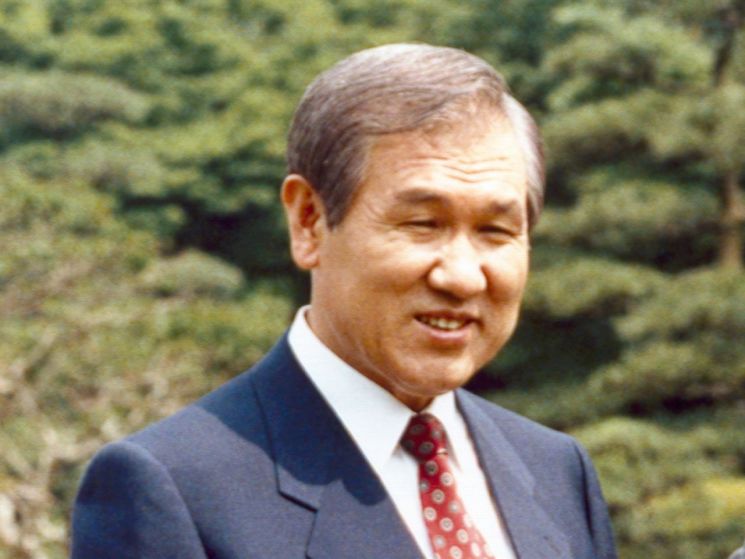
This was based on the judgment that South Korea, geopolitically situated among the four major powers surrounding the Korean Peninsula?the United States, China, Russia, and Japan?needed to seek improvement in inter-Korean relations. It is said to have originated from the Ostpolitik implemented by West Germany before reunification.
Former President Roh promoted the northern policy as a core national diplomatic policy during his term amid the international community's post-Cold War trend.
In his inauguration speech in February 1988, former President Roh declared, “We will broadly open channels of international cooperation even with those continental countries with which we had no exchanges.” This was the signal flare for northern diplomacy. With the fall of the Berlin Wall, South Korea, remaining the only divided country, had to expand its diplomatic territory through establishing diplomatic relations with the Soviet Union and China.
As a result, on February 1, 1989, South Korea established formal diplomatic relations with Hungary, the first Eastern European communist country to do so. Subsequently, on November 1 and December 28 of the same year, formal diplomatic relations were established with Poland and Yugoslavia, respectively.
The following year, with the signing of a joint statement by the South Korean and Soviet foreign ministers at the United Nations headquarters in New York to establish ambassador-level diplomatic relations, South Korea also established diplomatic ties with Russia.
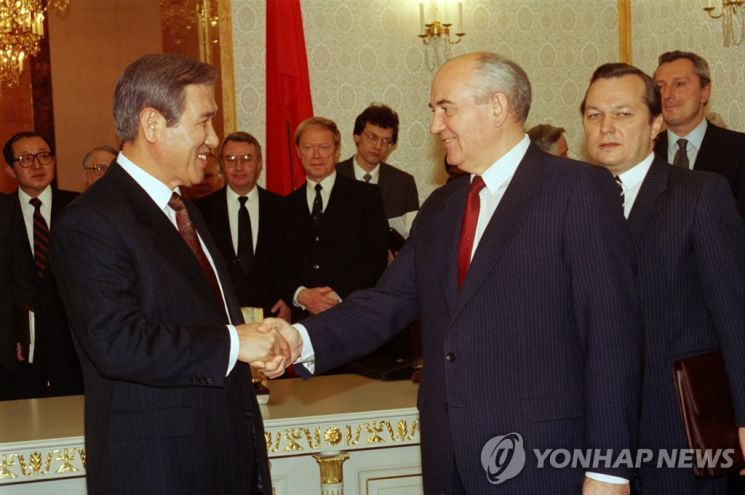
On June 4, 1990, a historic South Korea-Soviet Union summit was held at the Fairmont Hotel in Moscow. The photo of President Roh and Gorbachev standing side by side with bright smiles symbolized the end of the East-West Cold War.
Diplomatic relations were abruptly established on September 30, and from December 13 to 16, former President Roh visited Moscow to meet Gorbachev again. Although he faced criticism for promising a $3 billion loan during the visit, this led the Soviet Union to cut aid to North Korea and support South Korea’s admission to the United Nations.
Northern diplomacy, which began with exchanges with Eastern European countries, reached its peak with the establishment of diplomatic relations between South Korea and China in August 1992. This marked the restoration of relations with China after a 43-year break since 1949.
Later, during the Park Geun-hye administration, northern policies continuing former President Roh’s northern diplomacy, such as the Eurasia Initiative, were announced, but they yielded no significant results.
© The Asia Business Daily(www.asiae.co.kr). All rights reserved.

![Clutching a Stolen Dior Bag, Saying "I Hate Being Poor but Real"... The Grotesque Con of a "Human Knockoff" [Slate]](https://cwcontent.asiae.co.kr/asiaresize/183/2026021902243444107_1771435474.jpg)
















