"Giving Strength to the History Japan Denied"
[Asia Economy Reporter Yujin Cho] "Her powerful testimony gave vivid force to a history that many Japanese political leaders had denied for decades."
The New York Times (NYT) in the United States belatedly published an obituary article for the late Kim Hak-soon, the first to testify as a victim of the Japanese military's comfort women. It reexamined the issue of Japanese military comfort women victims to readers worldwide 24 years after her death from a lung disease in December 1997.
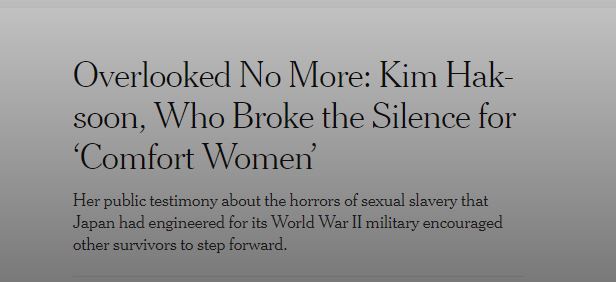
On the 25th (local time), the NYT devoted half of its obituary page to extensively report on Kim’s life and the significance of her testimony. This obituary article was part of the "Overlooked" series, through which the newspaper highlights the lives of notable figures whose obituaries were not properly reported since 1851. In March 2018, this series commemorated Yu Gwan-sun, who died in 1920.
The obituary began with Kim’s 1991 press conference, where she first testified as a comfort woman victim. "August 14, 1991. A woman living alone in a shabby house faced TV cameras and introduced Kim Hak-soon to the world for the first time. She gave chillingly detailed testimony that when she was only 17 during World War II, she was taken to a comfort station in China and was raped daily by Japanese soldiers."
The NYT evaluated, "Her powerful testimony was the first public testimony of a 'comfort woman girl,' giving vivid force to a history that many Japanese political leaders had denied for decades."
Since the 1930s, Japan had established military-run rape facilities across the Asia-Pacific region, luring about 200,000 girls and forcing them into sexual slavery, which the NYT described as one of the largest state-sponsored historical cases of sexual slavery.
It introduced that Kim’s testimony, courageous in a Korean culture at the time that silenced victims of sexual violence out of shame and dishonor, led to additional testimonies from Japanese military comfort women victims around the world.
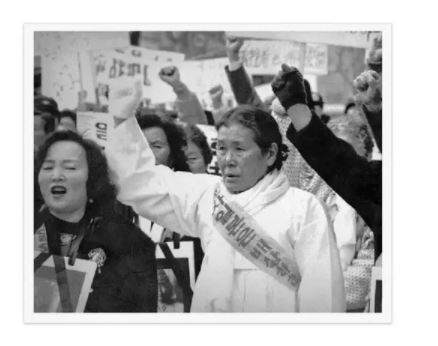
The NYT, which closely examined Kim’s life as she protested, "I endured all of that and have evidence that it happened," also covered the fact that South Korea designated August 14, the day of Kim’s first press conference, as "Comfort Women Victims Memorial Day" in 2018.
It also recounted her tireless activism demanding responsibility and compensation from Japanese authorities over the comfort women issue throughout the rest of her life.
The obituary included a passage about Gay McDougall, former UN Special Rapporteur, who in a recent conference said, "Nothing I wrote in my report comes close to the impact of Kim’s direct testimony 30 years ago," referring to her 1998 report that classified the operation of Japanese military comfort stations as crimes against humanity.
Alexis Dudden, a history professor specializing in Korea-Japan relations at the University of Connecticut, said in an interview with the NYT, "Kim Hak-soon was one of the bravest figures of the 20th century," and that historians’ research on the comfort women issue was able to fully develop thanks to her 1991 testimony.
© The Asia Business Daily(www.asiae.co.kr). All rights reserved.
![Clutching a Stolen Dior Bag, Saying "I Hate Being Poor but Real"... The Grotesque Con of a "Human Knockoff" [Slate]](https://cwcontent.asiae.co.kr/asiaresize/183/2026021902243444107_1771435474.jpg)

















