[Asia Economy Reporter Park Byung-hee] Saudi Arabia, the world's largest oil-producing country, has declared its plan to achieve carbon neutrality by 2060.
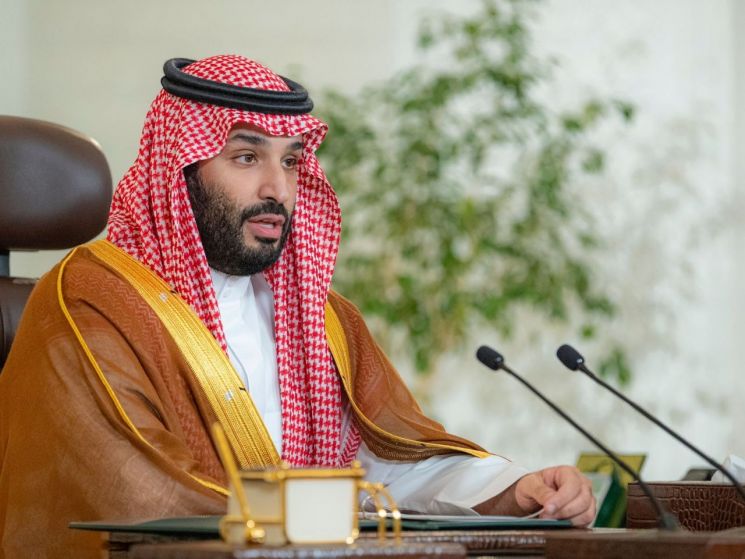
According to the Associated Press on the 23rd (local time), Saudi Crown Prince Mohammed bin Salman announced at the 'Saudi Green Initiative' (SGI) event that day that the country would join international efforts to combat climate change. In a video speech, Crown Prince Mohammed stated, "While maintaining stability in the international oil market, Saudi Arabia will reduce its net carbon emissions to zero by 2060." He also added that Saudi Arabia plans to reduce methane gas emissions by 30% by 2030 and plant 450 million trees in the inland capital Riyadh to make it a sustainable city.
The declaration of carbon neutrality by Saudi Arabia, the largest oil exporter among the Organization of the Petroleum Exporting Countries (OPEC) members, was made ahead of the 26th United Nations Climate Change Conference of the Parties (COP26).
Saudi Arabia's target year for carbon neutrality is the same as China and Russia's, which is 2060. The United States and the European Union (EU) aim to achieve carbon neutrality by 2050.
Saudi Arabia plans to invest $186.6 billion (approximately 219 trillion won) annually to reduce carbon emissions by 278 million tons.
Energy Minister Abdulaziz bin Salman emphasized, "Neither hydrocarbons (oil and natural gas), fossil fuels (such as coal), nor renewable energy alone can be the sole solution," adding, "Carbon neutrality can be achieved through comprehensive and inclusive policies."
Minister Abdulaziz explained that Saudi Arabia's carbon neutrality could be achieved earlier, but the definite target year is set as 2060.
Earlier this month, the United Arab Emirates (UAE), one of the major oil-producing countries, announced its plan to achieve carbon neutrality by 2050.
© The Asia Business Daily(www.asiae.co.kr). All rights reserved.

















