Polish Constitutional Tribunal: "Our Constitution Takes Precedence Over EU Treaties"
EU Criticizes, Saying It Threatens the Foundation of European Integration
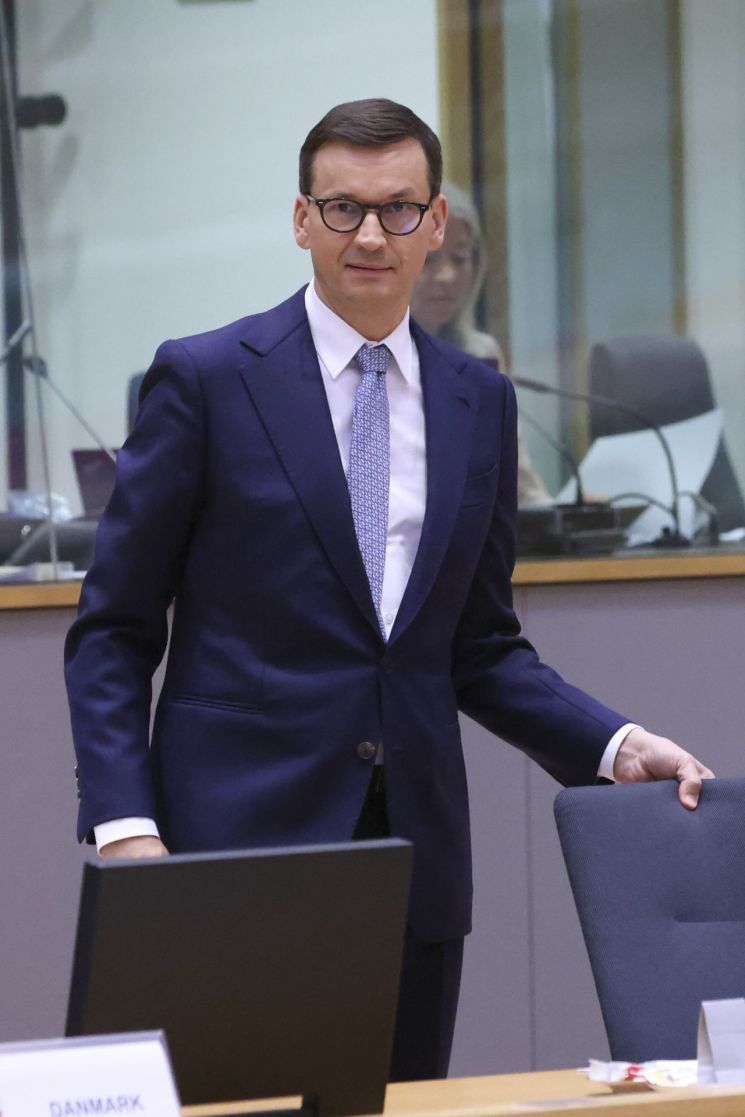
[Asia Economy Reporter Kim Suhwan] European Union (EU) member state leaders exchanged critical remarks toward Poland regarding the recent decision by the Polish Constitutional Tribunal on EU law during the two-day EU summit starting on the 21st (local time). In response, the Polish Prime Minister stated that Poland would not succumb to "intimidation" but expressed willingness to engage in dialogue to find a solution.
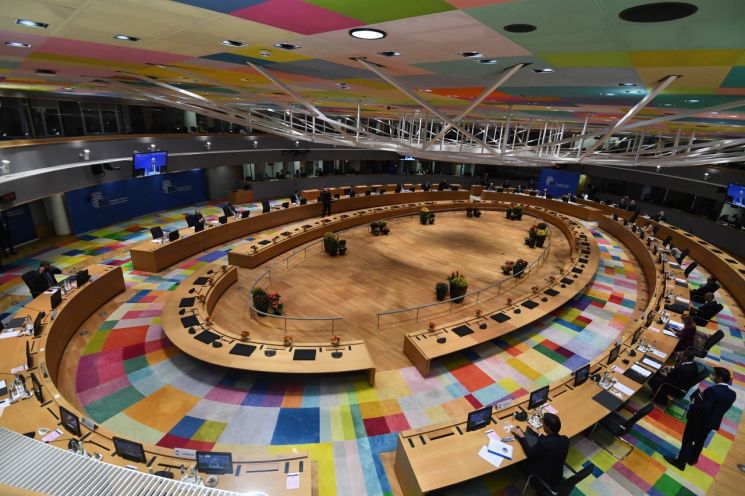
According to the Associated Press, the EU summit held in Brussels, Belgium, opened with debates over the Polish Constitutional Tribunal's July 7 ruling that Poland's constitution takes precedence over EU treaties and decisions within its territory. European countries have criticized the Polish tribunal's decision as a threat to the foundation of the EU.
European Countries: "Poland Has Crossed the Red Line... Reduction of Aid Should Also Be Considered"
The recent decision by the Polish Constitutional Tribunal followed a request by Polish Prime Minister Mateusz Morawiecki in July to determine which law holds supremacy between the EU's highest court, the European Court of Justice (ECJ), and the Polish constitution.
David Sassoli, President of the European Parliament, sent a letter to the heads of state before the summit, condemning the situation by stating, "A few days ago, the legal foundation of our EU was challenged. This is not the first time, but it will not be the last. This is the first time such a serious issue has emerged."
Some European countries have taken a hardline stance, suggesting that EU funds allocated to Poland should be reduced.
Mark Rutte, Prime Minister of the Netherlands, emphasized, "We must take a firm stance regarding the issue of subsidies being paid to some Eastern European countries that violate democratic principles."
Alexander De Croo, Prime Minister of Belgium, pointed out, "If you want to be a member of the community and enjoy its benefits, you must follow the rules," adding, "The red line has been crossed, and we cannot tolerate that."
Miche?l Martin, Prime Minister of Ireland, also expressed concern, stating, "We are very worried," and emphasized, "Prioritizing EU law is extremely important to protect all citizens across Europe."
Polish Prime Minister: "We Will Not Succumb to Intimidation... Will Engage in Dialogue to Seek Solutions"
In response to the pressure from European countries, Polish Prime Minister Morawiecki said, "We will not act under the pressure of intimidation," and added, "We are ready to engage in dialogue, but we do not agree with the continuous expansion of the powers of EU institutions."
He further stated, "Of course, we will discuss solutions to the current dispute through dialogue."
Viktor Orb?n, Prime Minister of Hungary, sided with Poland, saying, "Poland is one of Europe's greatest countries," and raised his voice, "There is no need to impose sanctions. It is absurd." Hungary has also faced criticism over democratic backsliding from the EU in recent years.
EU Faces Fundamental Risks... Germany and France Emphasize "Seeking Solutions Through Dialogue"
The European Commission has clashed with the Polish government over judicial independence and LGBTQ+ rights issues, and tensions have escalated following the Polish Constitutional Tribunal's decision.
The European Commission has increased pressure by warning of possible legal actions, suspension of economic recovery fund support, and restrictions on certain voting rights as financial and political responses.
This is because the majority of EU member states view respecting common EU regulations and values as essential to maintaining the EU's political and economic influence on the global stage.
The European Commission has not yet approved Poland's economic recovery plan, which is necessary for disbursing funds to member states affected by COVID-19.
As the conflict between the EU and Poland intensifies, some analysts warn that it poses a threat to the EU itself. Following Brexit, which shook the EU's unity, the current Polish issue is seen as a fundamental risk to the EU.
Since Poland joined the EU in 2004, EU subsidies provided to Poland have been credited with significantly contributing to its economic development. If these subsidies are actually reduced, there are concerns it would pose a serious threat to the Polish economy.
Reflecting this, a recent public opinion poll conducted by local Polish media last month showed that 88% of respondents supported remaining in the EU.
Prime Minister Morawiecki's emphasis that there is no possibility of "Polexit," meaning Poland's exit from the EU, is interpreted as considering this public opinion and the subsidies.
Some countries have expressed the view that solutions through dialogue should be sought to prevent a catastrophic outcome. Given the overwhelming public support for EU membership within Poland, there is no reason to provoke the Polish people.
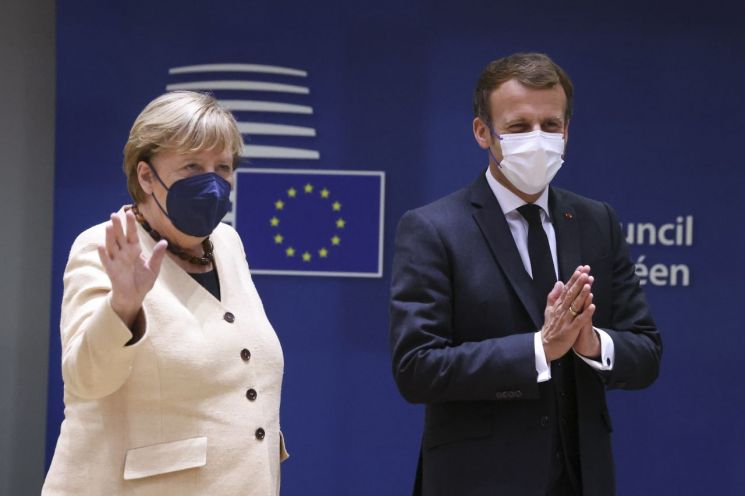 German Chancellor Angela Merkel (left) and French President Emmanuel Macron
 [Image source=AP Yonhap News]
Angela Merkel, Chancellor of Germany, argued that continuously taking Poland to the ECJ is not a solution and stated, "We need to find a way to come together again," advocating compromise.
Emmanuel Macron, President of France, briefly met with Prime Minister Morawiecki before the summit to express concerns about the current situation and requested engaging in dialogue to find a "solution compatible with common principles and regulations."
According to EU officials, the European Commission is expected to pursue a two-track approach combining subsidy restrictions and offers of dialogue, the Wall Street Journal reported.
© The Asia Business Daily(www.asiae.co.kr). All rights reserved.



















