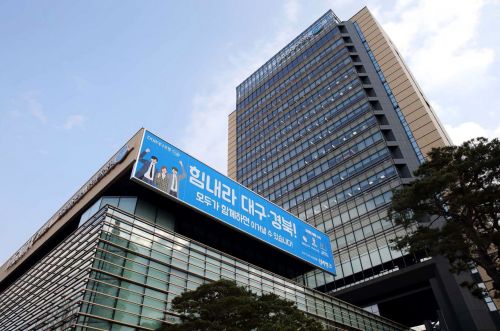
[Asia Economy Reporter Kim Hyo-jin] DGB Daegu Bank announced on the 21st that after upgrading its Fraud Detection System (FDS) to prevent various financial frauds arising from the increase in contactless finance and the advancement of digital technology earlier this year, it has achieved a prevention effect on electronic financial fraud and telecommunication fraud amounting to approximately 2 billion KRW.
The upgrade project was carried out based on the judgment that the existing scenario (Rule)-based detection method had limitations in the rapid detection and response to increasingly sophisticated and intelligent electronic financial fraud techniques. It is characterized by the integration of artificial intelligence learning (deep learning).
While monitoring and detecting electronic financial fraudulent transactions (transfers) in real time, the system incorporated artificial intelligence (deep learning) into the Fraud Detection System to build a predictive model that detects previously unrecognized types of abnormal financial transactions, voice phishing, and the latest financial fraud patterns, resulting in high detection performance.
DGB Daegu Bank explained that the upgraded system achieved 203 cases of incident prevention and approximately 2 billion KRW in prevented damages from January to September. This represents an increase of more than 50% compared to the number of incident preventions in the previous year. In particular, the bank emphasized that by strengthening practical responses such as blocking blacklists and abnormal behavior from overseas IPs in the telecommunication fraud sector, there has been a noticeable increase in the prevention of direct damage to customers.
© The Asia Business Daily(www.asiae.co.kr). All rights reserved.

![Clutching a Stolen Dior Bag, Saying "I Hate Being Poor but Real"... The Grotesque Con of a "Human Knockoff" [Slate]](https://cwcontent.asiae.co.kr/asiaresize/183/2026021902243444107_1771435474.jpg)














