Weekly Average Confirmed Cases Highest Worldwide
Death Toll Highest in 7 Months... Increased Burden on Healthcare System
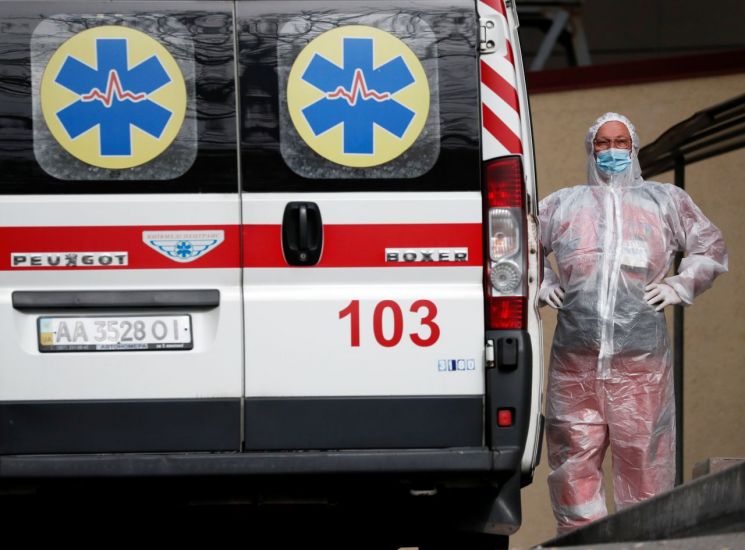
[Asia Economy Reporter Kim Suhwan] The UK is recently struggling with nearly 50,000 daily COVID-19 cases.
There are concerns that the UK, which was the first country in the world to start COVID-19 vaccinations, may have prematurely removed masks and celebrated too soon.
According to The Guardian on the 19th (local time), the UK recorded 48,703 COVID-19 cases on the 18th.
The Guardian pointed out that the UK's weekly average daily cases, with a population of 68 million, stands at 44,145, the highest level in the world.
Additionally, the number of patients who tested positive for COVID-19 and died within 28 days in the UK reached 223, the highest since the end of March.
According to the BBC, the number of confirmed cases from July to October this year alone reached 3 million.
As COVID-19 cases surge, the burden on the UK's National Health Service (NHS) is also increasing.
The Guardian reported that the number of patients waiting for hospital treatment for other illnesses currently stands at 5.7 million, a record high.
Particularly, there is growing concern as COVID-19 is spreading mainly among middle and high school students recently.
According to data from the UK Office for National Statistics (ONS) analyzing new cases in England from August 29 to this month’s 9th, the proportion of students in years 7 to 11 (equivalent to middle school 1st grade to high school 2nd grade in Korea) who tested positive in recent COVID-19 tests rose sharply to 8.9%, compared to 2.6% at the start of the survey.
Many suspect that the easing of quarantine regulations may have caused this crisis.
The UK introduced a 'With COVID' policy from July, easing mask-wearing rules and removing limits on gathering sizes.
At that time, UK Prime Minister Boris Johnson urged the public to "learn how to live with this virus."
Last month, Johnson emphasized that although the COVID-19 virus remains a risk factor, he hopes the UK remains "one of the freest societies."
In fact, a survey by Imperial College London showed that UK citizens responded at higher rates than those in neighboring Western European countries such as Germany, France, and Spain that they "no longer wear masks."
Given the clear infection-blocking effect of masks, many view the easing of mask mandates as a possible cause of the recent resurgence.
Professor Martin McKee of the London School of Hygiene and Tropical Medicine told CNN, "Other European countries are making significant differences with various measures. We need to question whether we are doing the right thing now because there is no evidence anywhere that we are doing well."
There is also speculation that immunity gained from vaccines may have weakened.
According to the British Medical Journal (BMJ), even after completing two vaccine doses, immunity significantly wanes after about six months. This was determined by analyzing data entered by COVID patients into symptom monitoring apps.
UK government statistics show that as of now, 86.0% of people aged 12 and over have received at least one vaccine dose, and 78.9% are fully vaccinated.
However, since the UK was the first country to start vaccinations and more time has passed, the vaccine's effectiveness may have diminished.
The number of new vaccine recipients, which once exceeded 750,000 per day, has recently stagnated at 20,000 to 30,000, which many criticize as a government failure.
Deepthi Guldasani, an epidemiology expert at Queen Mary University of London, criticized to CNN, "The government has only sent messages that the pandemic is over and the risk is gone."
Professor McKee of the London School of Hygiene and Tropical Medicine also told CNN, "If the government says the pandemic is over, why would anyone bother to get vaccinated?"
Despite this situation, the UK government's passive stance on countermeasures has sparked dissatisfaction among experts.
Prime Minister Johnson announced plans to prepare for winter with eased quarantine measures and booster shot vaccinations, and last month announced that a 'Plan B' including mask mandates would be applied if the healthcare system becomes overwhelmed.
Matthew Taylor, chair of the NHS Confederation, a UK medical organization, warned, "We are on the edge now. Without tremendous luck, we could face a serious crisis within the next three months. Additional measures under Plan B must be implemented immediately."
Professor Christina Fazel of University College London (UCL) told The Guardian, "Cases are increasing and hospitalizations are steadily rising. Infection control is not working in schools. The government must immediately switch to Plan B and expand vaccinations."
Epidemiology expert Guldasani also emphasized, "Daily cases have been between 30,000 and 40,000 for months. No country would tolerate this level. But in the UK, this has become normal. No healthcare worker would want to work in such conditions. It is very frightening to be in such a place ahead of winter."
© The Asia Business Daily(www.asiae.co.kr). All rights reserved.
!["The Woman Who Threw Herself into the Water Clutching a Stolen Dior Bag"...A Grotesque Success Story That Shakes the Korean Psyche [Slate]](https://cwcontent.asiae.co.kr/asiaresize/183/2026021902243444107_1771435474.jpg)
















