Risk of Local Extinction and Regional Disparities, Publication of Policy Data Collection
Local Extinction Risk Index, Net Migration of People in Their 20s to the Seoul Metropolitan Area, Regional Status of Jobs Related to the 4th Industrial Revolution
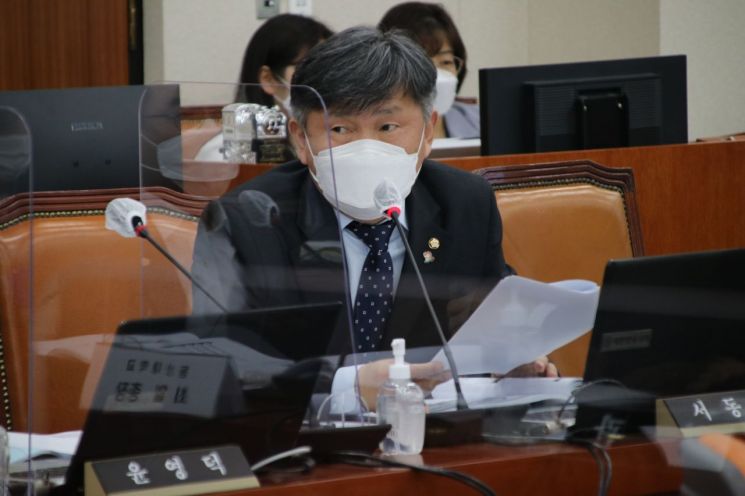
[Asia Economy Honam Reporting Headquarters, Reporter Heo Seon-sik] Representative Seo Dong-yong (Suncheon Gwangyang Gokseong Gurye (Eul), Democratic Party, National Assembly Education Committee) published a policy report titled “2021 Korea Disparity Map, The Crisis of Local Extinction and Regional Disparities” containing the reality of the gap between the metropolitan area and local regions, the causes and alternatives of the local extinction crisis, including the local extinction risk index, net migration of people in their 20s to the metropolitan area, the status of jobs related to the 4th industrial revolution by region, and university enrollment rates by region, in preparation for the national audit.
The local extinction risk index is calculated by dividing the female population aged 20?39 in a region by the population aged 65 or older. If this index is below 0.5, it is considered highly likely that the region will disappear in 30 years. An index of 1 or less is considered ‘extinction caution,’ and 0.5 or less is considered ‘extinction risk.’
According to an analysis by Representative Seo Dong-yong based on resident registration population as of the end of August 2021, out of 229 cities, counties, and districts, 107 (46.7%) are likely to disappear in 30 years.
In particular, the risk of extinction was high in Gangwon, Gyeongbuk, Jeonbuk, and Jeonnam regions.
Among 18 local governments in Gangwon, 16 were analyzed as extinction risk areas; in Gyeongbuk, 19 out of 23; in Jeonbuk, 11 out of 14; and in Jeonnam, 17 out of 22 basic local governments were classified as extinction risk areas.
Considering that in 2011, out of 228 cities, counties, and districts nationwide, 67 (29.4%) were extinction risk areas, it is clear that the risk of population decline and local extinction is rapidly increasing.
The local extinction risk was also confirmed through net migration of people in their 20s and 30s. In 2011, the metropolitan area had a net migration decrease of 8,450 people, but in 2020, it increased by 87,775 people.
Among them, net migration of people in their 20s was significant. In 2011, 43,351 people in their 20s moved to the metropolitan area, but in 2020, 81,442 moved. Especially in 2020, many people in their 20s left Gyeongnam, Gyeongbuk, and Jeonnam. Gyeongnam saw 16,420 people in their 20s leave, Gyeongbuk 15,662, and Jeonnam 10,994.
The job gap between local regions and the metropolitan area was also significant. Above all, the gap in quality jobs and jobs related to the 4th industrial revolution was large. According to 2019 Statistics Korea data, 47.0% of all businesses in South Korea were concentrated in the metropolitan area.
As a result, more than half (52.0%) of South Korea’s regional gross domestic product was generated in the metropolitan area.
Along with population decline, the crisis of local universities was deepening. In 2020, the education cost per university student was 18.034 million KRW in the metropolitan area and 14.584 million KRW in non-metropolitan areas, showing a difference.
Research funding per full-time faculty member was also lower in non-metropolitan areas compared to the metropolitan area. There was also a gap in central government support for higher education. In particular, Seoul alone monopolized 43.7% of research and development funding.
Due to population decline, the enrollment rate of new students at four-year universities in Gangwon, Gyeongnam, Gyeongbuk, Jeonnam, and Jeonbuk did not reach 90% in the 2021 academic year, indicating an expanding crisis for local universities.
The drop in new student enrollment rates in local universities in 2021 was due to a larger population decline compared to 2020.
2021 was the first year when the number of births in 2002, the typical university entrance age group, fell from the 500,000s to the 400,000s. The university entrance population is expected to remain in the mid-to-high 400,000s for the next decade.
However, it is predicted that in 2032, when those born in 2013 enter university, population decline will accelerate again, bringing another crisis.
Representative Seo Dong-yong stated, “Along with the population cliff in 10 years, rapid social turmoil could occur not only due to local extinction but also education issues,” and added, “Since we know the future of population decline in 10 years, if we prepare with new planning and proper measures, we can mitigate the shock.”
As tasks to respond to the local extinction crisis, Representative Seo proposed alternatives such as ‘local reinvestment of higher education finances,’ ‘strengthening lifelong education and adjusting the role of junior colleges,’ ‘restructuring failing four-year universities,’ and ‘compact cities centered on local national universities.’
Asia Economy Honam Reporting Headquarters, Reporter Heo Seon-sik hss79@asiae.co.kr
© The Asia Business Daily(www.asiae.co.kr). All rights reserved.
![Clutching a Stolen Dior Bag, Saying "I Hate Being Poor but Real"... The Grotesque Con of a "Human Knockoff" [Slate]](https://cwcontent.asiae.co.kr/asiaresize/183/2026021902243444107_1771435474.jpg)
















