- GIST Opens New Horizons in Microbiome-Based Liver Disease Treatment
- Potential for Early Disease Diagnosis and Monitoring
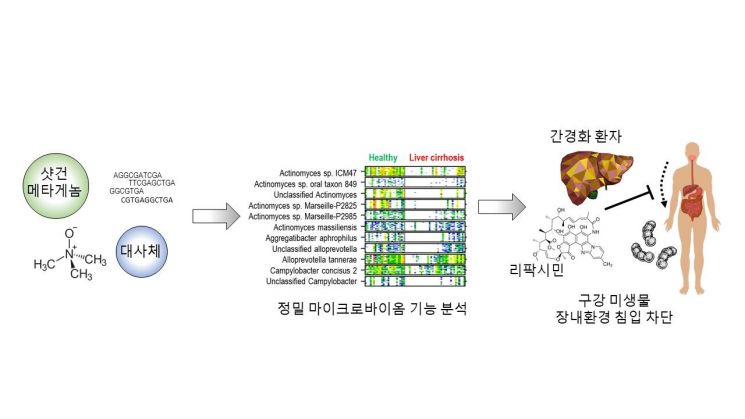 Revealed the mechanism of oral microbiome penetration into the gut environment through precise microbiome analysis.
[Asia Economy Reporter Kim Bong-su] A study has found that antibiotics used to treat liver cirrhosis and the invasion of oral microbes into the gut are effective in preventing oral microbes from invading the gut environment.
Gwangju Institute of Science and Technology (GIST) announced on the 20th that Professor Lee Seon-jae's research team, in collaboration with the research team from King's College London, UK, revealed the mechanism of liver cirrhosis and the drug rifaximin through shotgun metagenome-based precision microbiome analysis technology.
Until now, rifaximin, an antibiotic, has been used to treat hepatic encephalopathy in patients with liver cirrhosis, but its mechanism had not been clearly identified. Hepatic encephalopathy is a disease in which toxic substances accumulate in the body due to impaired liver function caused by liver cirrhosis, affecting the brain with unfiltered blood, leading to consciousness disorders or behavioral changes.
Through precise microbiome analysis research, the team found that in liver cirrhosis, oral microbes invade the gut environment, causing systemic inflammation in patients, and specifically identified the mechanism by which rifaximin effectively prevents the invasion of oral microbes into the gut. By systematically analyzing the gut-oral axis through multi-omics analysis including shotgun metagenomics and metabolomics, and constructing a full genome reference of the oral microbiome, they revealed that blocking the gut invasion of oral microbes such as Veillonella and Streptococcus plays a key role in preventing hepatic encephalopathy caused by liver cirrhosis.
Professor Lee said, “By utilizing bioinformatics and data mining techniques, this will open new horizons for microbiome-based drug development for liver disease and hepatic encephalopathy treatment,” and added, “It is expected that the microbiome can be applied for early disease diagnosis and monitoring.”
The research results were published online on the 24th of last month in the international journal Journal of Hepatology.
© The Asia Business Daily(www.asiae.co.kr). All rights reserved.
![Clutching a Stolen Dior Bag, Saying "I Hate Being Poor but Real"... The Grotesque Con of a "Human Knockoff" [Slate]](https://cwcontent.asiae.co.kr/asiaresize/183/2026021902243444107_1771435474.jpg)
















