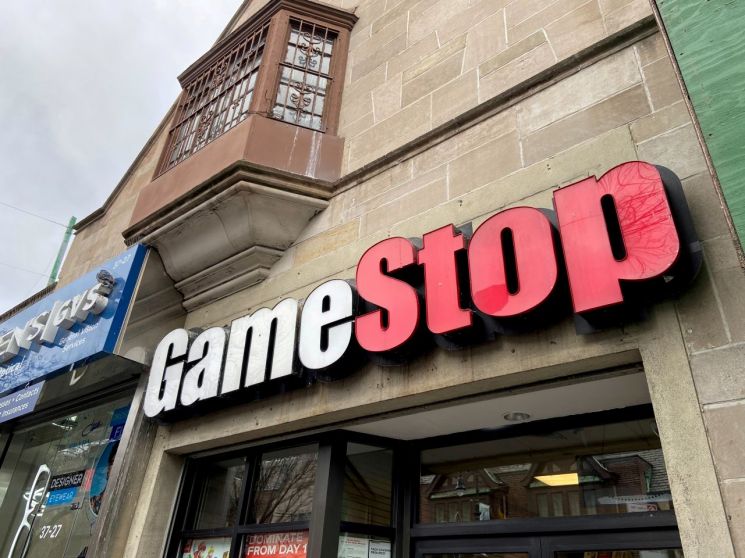
[Asia Economy Reporter Cho Hyun-ui] The U.S. securities authorities have officially concluded that the 'GameStop' incident that occurred earlier this year was due to massive buying by individual investors. The 'short squeeze,' where hedge funds that shorted GameStop stocks buy back shares to minimize losses from the sharp price increase, was not the main driver of the abnormal surge in the stock price.
The U.S. Securities and Exchange Commission (SEC) disclosed a report containing these findings on the 18th (local time), according to CNBC and others.
GameStop's stock price soared from $20 at the end of last year to an intraday high of $483 on January 28 this year, fueled by purchases from individuals gathered mainly in the Reddit online community's 'WallStreetBets' chat room. The number of accounts trading GameStop surged from 10,000 in early January to 900,000 on January 27.
The SEC explained, "Whether driven by the desire to profit from triggering a short squeeze or by belief in GameStop's fundamentals, it was positive investor sentiment, not short covering (buying back shares to repay short sales), that led the rise in GameStop's stock price."
The SEC also pointed out that the gamification features of stock trading applications like Robinhood played a role in further heating up individual investors' enthusiasm. These stock trading apps used points, rewards, leaderboards, and other mechanisms to activate stock trading among individual investors.
The SEC dismissed market speculation that naked short selling contributed to the surge in GameStop's short selling, stating it found no evidence to support this.
It also concluded that there was no so-called 'gamma squeeze' related to options trading. A gamma squeeze refers to a phenomenon where sellers of call options buy the underlying stock to hedge their risk, causing the stock price to rise further.
The SEC stated, "Although options trading in GameStop increased significantly, it was mostly put options rather than call options."
Foreign media criticized the report for not addressing several market concerns, such as whether someone manipulated social media to stir positive investor sentiment toward GameStop or whether hedge funds pressured for trading restrictions on GameStop.
© The Asia Business Daily(www.asiae.co.kr). All rights reserved.

















