Major Carbon Emitting Countries Absent from UN General Assembly
Concerns Over Difficulties in Reaching Comprehensive Climate Agreement
Biden Also Faces Political Backlash and Sudden Halt
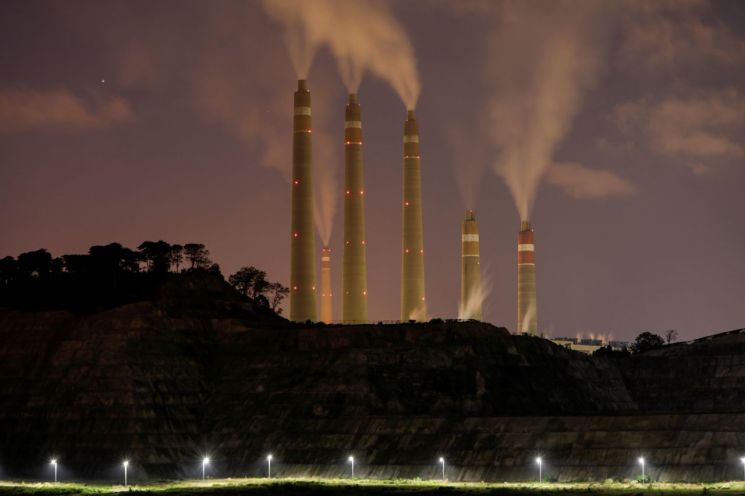
[Asia Economy Reporter Kim Suhwan] Ahead of the 26th United Nations Framework Convention on Climate Change (UNFCCC) Conference of the Parties (COP26) to be held in Glasgow, UK, on the 31st of this month, concerns are rising that the formulation of a comprehensive climate agreement will face difficulties as leaders of major countries, including China, have notified their absence from the meeting.
While the US government has actively emphasized responding to climate change, it is also facing domestic backlash, leading to criticism that only South Korea, which declared a 40% reduction in carbon emissions by 2030, is moving too fast.
Boris Johnson, Prime Minister of the UK, the host country of COP26, said in an interview with Bloomberg on the 18th (local time), "It seems extremely tough to reach a climate change agreement at COP26," and urged, "We want participating countries to show concrete actions."
Johnson's warning came amid a recent retreat in carbon emission reduction efforts in various countries.
After the COVID-19 pandemic, as electricity demand rebounded, a global energy shortage occurred, prompting countries to expand coal and natural gas usage, and financial capacity for carbon reduction has also become insufficient.
In fact, as major carbon-emitting countries are expected to be absent from COP26, the momentum for negotiations appears to be weakening.

As of this date, the major countries that have declared their absence from COP26 are China and Brazil.
With China, the world's largest carbon emitter, notifying its absence, there are criticisms that the driving force for reaching an agreement at COP26 has been lost.
Also, Narendra Modi, Prime Minister of India, the world's third-largest carbon emitter, has yet to decide whether to attend the meeting.
Bloomberg reported, "About two weeks before COP26, signs of conflict are emerging between countries wanting a comprehensive agreement for massive carbon emission reductions and those wanting to slow down."
European countries are also finding it difficult to present aggressive carbon reduction targets amid the worsening energy shortage.
Bloomberg reported that the Group of Seven (G7) countries are pressuring member countries of the Group of Twenty (G20) to raise their carbon emission targets, causing dissatisfaction among these countries.
In particular, the Biden administration in the United States, which is regarded as driving the most aggressive carbon reduction efforts, is also facing political backlash domestically.
Joe Manchin, a moderate Democratic senator, recently expressed opposition to a bill proposed by the Democratic Party that provides incentives to private companies using clean energy.
© The Asia Business Daily(www.asiae.co.kr). All rights reserved.


















