Execution Completed in 2020, Halved Compared to Previous Year
Office Workers and Self-Employed Unable to Spare Time, Authorities Also Struggle with Execution
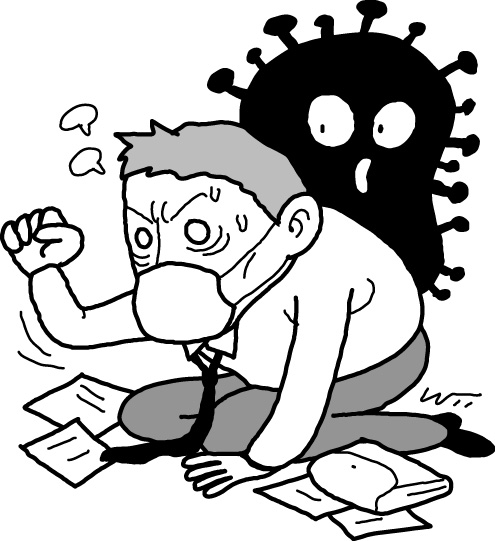
"Please reconsider the order for community service only."
At the end of June, in a courtroom on the 4th floor of the Seoul Central District Court, Mr. A (54, male), who is accused of hit-and-run injury and driving without a license, appeared for his second trial and made this appeal. He was prosecuted for hitting a vehicle waiting at a traffic signal on a road in Seocho-gu, Seoul last year, injuring the driver, and fleeing the scene. Although he committed the crime while his license was revoked due to two prior drunk driving offenses, the first trial sentenced him to probation, narrowly avoiding imprisonment.
Nevertheless, the reason Mr. A appealed was because of the accompanying "120-hour community service order." He lamented, "It is difficult to take time off during the week," and "If I do the service, I might lose my job." A month later, the 4-1 Criminal Appeal Division of the Seoul Central District Court (Presiding Judge Kim Yang-seop) stated that "he paid an additional 6 million won to settle with the victim" and did not impose a separate community service order.
Since the spread of COVID-19, it has been revealed that some individuals subject to community service orders have failed to complete them due to financial burdens, and authorities such as the Ministry of Justice have faced difficulties in enforcement. According to the Ministry of Justice's "2021 Crime Prevention Policy Statistical Analysis" released on the 19th, the number of completed community service orders last year was 17,821, a sharp decrease of 51.7% compared to 36,918 in 2019.
The community service order is a system that, instead of incarcerating those found guilty or requiring protective measures, assigns them to unpaid service in agricultural and fishing villages, welfare facilities, marginalized groups, emergency disaster recovery sites, and other support locations during their daily lives. The principle is to perform the service continuously during the probation period.
However, last year, there were 675 cases of failure to complete the community service order within the designated period (due to changes in disposition or other reasons), accounting for 3.1% of the total 21,609 cases of community service order terminations. The number of such "non-completions" had been decreasing since 2017, recording 588 cases or 1.5% of total terminations in 2019, but rebounded last year due to the impact of COVID-19 and other factors.
Article 64, Paragraph 2 of the current Criminal Act stipulates that "if a person subject to a community service order violates the compliance requirements and the degree is serious, the probation sentence may be revoked." The Ministry of Justice applies to the court to revoke probation if the community service order is not fulfilled without special reasons. The court decides whether to revoke it.
The legal community analyzes that the increase in non-completions is due to difficulties in volunteering at welfare facilities caused by COVID-19, and the challenges faced by working professionals or self-employed individuals who find it hard to allocate time for community service orders.
A Ministry of Justice official explained, "We are making accommodations to minimize disruptions to the livelihoods of those subject to the order so they can fulfill their community service obligations," adding, "Although the start of enforcement may be delayed compared to before, there are no cases of termination solely due to COVID-19." The official also stated, "Enforcement at some cooperating institutions has become somewhat difficult due to COVID-19," and "We are discovering new cooperating institutions or utilizing in-house workshops."
© The Asia Business Daily(www.asiae.co.kr). All rights reserved.

















