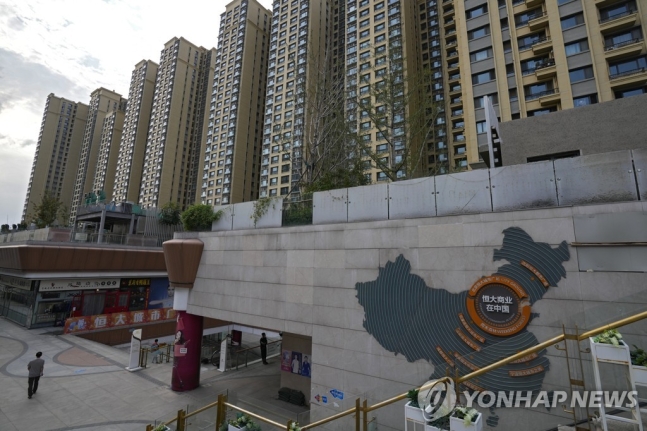
[Asia Economy Reporter Kwon Seoyoung] Amid concerns over the deterioration of the Chinese real estate market due to the Evergrande crisis, a report focusing on the oversupply of real estate in China has attracted attention.
On the 15th (local time), CNN aired an article titled "Ghost Cities: The Evergrande Crisis Shines a Light on Millions of Empty Homes in China," revealing the reality of vacant homes in China. CNN estimated that there are 30 million unsold apartments across China, which could accommodate about 80 million people. This number is comparable to the entire population of Germany.
CNN also cited the analysis of Mark Williams, Asia economist at the UK independent macroeconomic research institute Capital Economics, estimating that the number of empty apartments that remain unoccupied after being sold in China could reach 100 million units. This corresponds to a population capacity of 260 million people.
CNN reported that this oversupply of real estate has created "ghost towns" across China where almost no one lives. However, since China has driven its economic growth over the past decades by leveraging the real estate market, CNN analyzed that this economic structure could now act as a kind of "time bomb."
The real estate developer with the highest debt in China is Evergrande. Evergrande's debt amounts to $300 billion (approximately 355 trillion KRW), which is cited as a reason why Evergrande has become a typical example of unsustainable growth. CNN also reported that in recent days, several real estate companies in China have disclosed cash flow problems. These companies have reportedly requested creditors to extend debt repayment deadlines or warned of possible defaults.
CNN pointed out that unfinished construction projects could further exacerbate the real estate industry's instability. Since about 90% of new real estate assets in China are sold before completion, if developers face a crisis, the impact could directly affect buyers as well.
However, a representative from the People's Bank of China stated regarding these real estate crisis theories that "land and housing prices and expectations in the Chinese real estate market remain stable." They also mentioned, "Most real estate companies are operating smoothly with solid financial indicators," and added, "The real estate industry is generally healthy."
© The Asia Business Daily(www.asiae.co.kr). All rights reserved.

















