Early End Signal of Supercycle (Super Boom)... Diverging Outlooks on Samsung Electronics' Rebound Timing
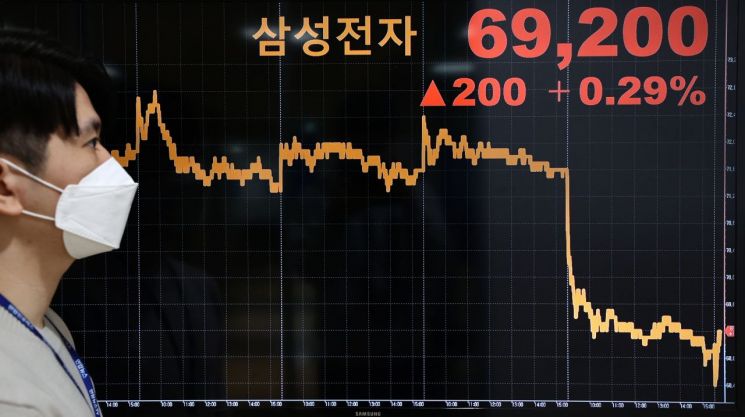
[Asia Economy Reporter Lee Seon-ae] Individual investors watching South Korea's top two KOSPI market cap leaders, Samsung Electronics and SK Hynix, are growing increasingly anxious. As forecasts emerge that the memory semiconductor market's supercycle (period of booming growth) may end prematurely, concerns about 'Semiconductor Korea' are intensifying, and opinions on the stock outlook for Samsung Electronics and SK Hynix are divided, keeping investors on edge.
On the 17th, according to securities firms and market research agencies, pessimistic views dominate regarding DRAM prices. With expectations that DRAM prices will begin to decline significantly starting from the fourth quarter this year and into next year, the stocks of Samsung Electronics and SK Hynix, which lead the global DRAM market, have continued to weaken.
Taiwan-based semiconductor market research firm TrendForce recently reported that the DRAM price uptrend that began earlier this year is expected to end in the fourth quarter, with prices falling 3?8% compared to the previous quarter. In particular, TrendForce forecasts that next year will see a full-fledged decline phase, with prices dropping 15?20% compared to this year.
In the securities industry, there are also growing views that the memory supercycle, which began earlier this year, will peak in the fourth quarter. Since July, prices for memory semiconductors such as DRAM have been holding steady.
Looking at past trends, the memory semiconductor market supercycle has appeared in 5?7 year cycles, typically lasting about two years. Earlier this year, optimistic forecasts suggested that the supercycle, driven by increased IT demand due to the COVID-19 pandemic, could continue beyond next year.
However, recently, concerns about oversupply have grown due to semiconductor companies' successive capacity expansions. TrendForce expects Samsung Electronics to increase DRAM supply by 19.6% next year and SK Hynix by 17.7%.
TrendForce stated, "Major DRAM demand sectors such as smartphones, servers, and PCs are not expected to see significant growth," adding, "Even if DRAM suppliers take a conservative approach to expansion plans, the supply growth rate will exceed the demand growth rate."
Separately from oversupply concerns, recent power shortages in China and global supply chain shocks have also had short-term negative impacts on the memory market. As market worries about DRAM price declines starting in the fourth quarter are being priced in early, Samsung Electronics and SK Hynix stocks have shown weakness recently despite forecasts of strong third-quarter earnings.
Kim Un-ho, a researcher at IBK Securities, said in a recent report, "Currently, due to concerns over DRAM prices, Samsung Electronics' stock is undervalued relative to its earnings, and the stock price is expected to remain weak for the time being. It is advisable to take a conservative approach until the DRAM price trend for the first quarter of next year is confirmed."
Song Myung-seop, a researcher at Hi Investment & Securities, said, "Rather than actively buying stocks now in anticipation of semiconductor price rebounds in the second and third quarters of next year, it is more appropriate from a risk management perspective to monitor industry risk factors and valuation multiples for a while before making purchases."
However, within the semiconductor industry, there are also opinions that the cautious forecasts from securities firms and market research agencies are excessive. The industry explains that overall DRAM demand is on an upward trend, and since contracts between manufacturers and customers are long-term, the actual impact of price fluctuations is limited.
The industry perspective is that even if there is a price adjustment in memory semiconductors, prices will not plunge sharply nor will the market enter a recession phase; rather, it will be a temporary correction. In fact, on the 14th, Taiwan's TSMC, the world's largest semiconductor foundry, announced third-quarter results exceeding market expectations, and the Philadelphia Semiconductor Index, an investment indicator for semiconductor stocks, rose, which positively influenced the stock prices of global semiconductor companies including Samsung Electronics and SK Hynix.
Park Yu-ak, a researcher at Kiwoom Securities, predicted, "Although Samsung Electronics' stock price adjustment will continue for the time being, after a short-term correction, the stock price will turn upward from the end of the year due to expectations of improvement in the DRAM market and expansion of foundry market share." Hwang Min-sung, a researcher at Samsung Securities, also said, "While cycles are unavoidable, after a brief correction, next year's profits will be better than this year’s, and excessive stock discounts will not last long."
© The Asia Business Daily(www.asiae.co.kr). All rights reserved.

















