"There Are Differences of Opinion Between Both Sides on Some Issues... Must Be Resolved Through Dialogue"
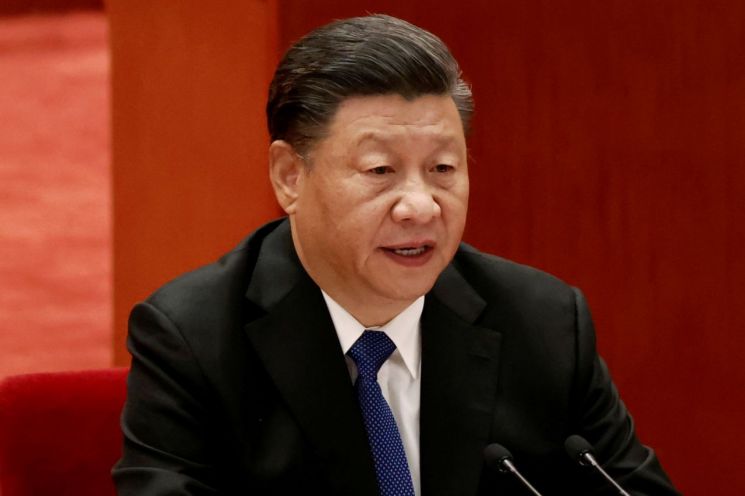
[Asia Economy Reporter Kim Suhwan] On the 15th, Chinese President Xi Jinping, during a phone call with Charles Michel, President of the European Union (EU) Council, indirectly urged the EU to distance itself from the US's pressure on China by mentioning "strategic autonomy."
According to the Chinese Foreign Ministry's website on the 16th, President Xi said in the call the previous day, "China has always been sincere in developing China-EU relations while firmly safeguarding its sovereignty, security, and development interests," adding, "Europe should uphold strategic autonomy, discern right from wrong, and work together with China to promote progress in China-Europe cooperation."
President Xi also emphasized, "China and Europe differ in history, culture, social systems, and stages of development," and "it is not surprising that some competition, disagreements, and differences exist, which should be resolved through dialogue and negotiation."
He further stated, "Since this year, there have been new changes in the international situation, and China-Europe relations are also facing new challenges," adding, "China and the EU are two independent forces and comprehensive strategic partners. Both sides should strengthen strategic communication and jointly promote the healthy and stable development of China-EU relations."
In response, President Michel said, "Due to recent changes in the international situation, the EU and its member states have increasingly recognized the importance of strengthening strategic autonomy," adding, "Europe and China have different political systems and development models, but both sides support multilateralism, and cooperation is needed in combating COVID-19, promoting economic recovery, addressing climate change, and safeguarding regional peace and stability."
He continued, "The EU adheres to the 'One China' policy and has not changed its stance on the Taiwan issue," adding, "The EU will maintain strategic autonomy in handling international affairs."
Relations between China and the EU have recently been strained due to Lithuania upgrading its Taiwan office in its country from the "Taipei Representative Office" to the "Taiwan Representative Office" and disputes over human rights issues in China's Xinjiang Uygur Autonomous Region.
In particular, China is concerned that with Angela Merkel, who maintained a relatively independent voice in relations with the US, stepping down as German Chancellor, the EU may more actively join the US's pressure on China in the future.
© The Asia Business Daily(www.asiae.co.kr). All rights reserved.
!["The Woman Who Threw Herself into the Water Clutching a Stolen Dior Bag"...A Grotesque Success Story That Shakes the Korean Psyche [Slate]](https://cwcontent.asiae.co.kr/asiaresize/183/2026021902243444107_1771435474.jpg)
















