Presentation on the Impact of the Evergrande Group Crisis on the Chinese Economy
[Asia Economy Reporter Jang Sehee] There are forecasts that the Evergrande Group crisis will have a negative impact on the Chinese economy. However, it is expected that the impact will be limited due to the Chinese government's response.
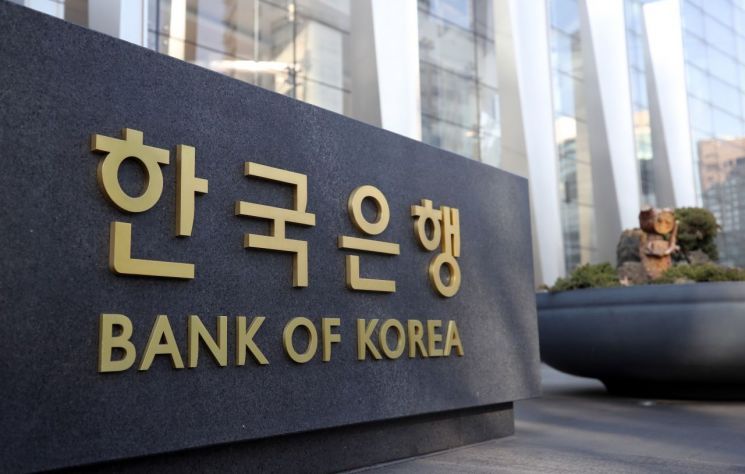
On the 16th, the Bank of Korea stated in its 'Overseas Economic Focus' report, "This crisis may reveal some of the shadow banking, corporate debt, and productivity decline issues that the Chinese economy is grappling with, and it is important to be aware that similar incidents could recur in the future."
The Bank of Korea particularly predicted that the downturn in the real estate sector will negatively affect growth, mainly through construction investment. In fact, preliminary estimates using input-output tables showed that real estate-related activities account for about 29% of the Gross Domestic Product (GDP), which is considerably higher compared to other countries. It is estimated that if the Chinese real estate sector contracts by 20%, the GDP size could decrease by 5 to 10%.
However, although 53.8% of Evergrande Group's assets are unfinished housing, considering the authorities' response stance, the impact on the housing market and construction investment is expected to be limited.
Furthermore, the Bank of Korea forecasted that the sale of assets held by Evergrande Group and related companies, along with weakened investment sentiment, will delay the recovery of consumption. The Bank stated, "Since housing accounts for a large portion of household assets, a slowdown in the housing market could constrain the recovery of household consumption through the asset price channel."
In this context, if the sluggish housing market adds to the already slow consumption recovery due to strict quarantine measures, it could lead to a contraction in consumption. Looking at China's retail sales growth rate, it declined from 12.1% year-on-year in June to 8.5% in July and 2.5% in August.
Revenue from land-use rights sales, a major source of funds for local governments, is expected to decrease, worsening fiscal conditions. Approximately 46% of local government fiscal revenue comes from land-use rights sales.
The Bank of Korea emphasized, "If structural problems such as debt and productivity decline materialize simultaneously, it could cause real shocks to the global and our economy, as well as trigger global financial instability. It is necessary to continuously monitor the structural issues of the Chinese economy."
Meanwhile, the possibility of this leading to a financial crisis is considered low. The Bank stated, "Considering the limited exposure of financial institutions and the Chinese government's control over financial markets, the likelihood of it leading to a financial crisis is not high."
© The Asia Business Daily(www.asiae.co.kr). All rights reserved.
![Clutching a Stolen Dior Bag, Saying "I Hate Being Poor but Real"... The Grotesque Con of a "Human Knockoff" [Slate]](https://cwcontent.asiae.co.kr/asiaresize/183/2026021902243444107_1771435474.jpg)











