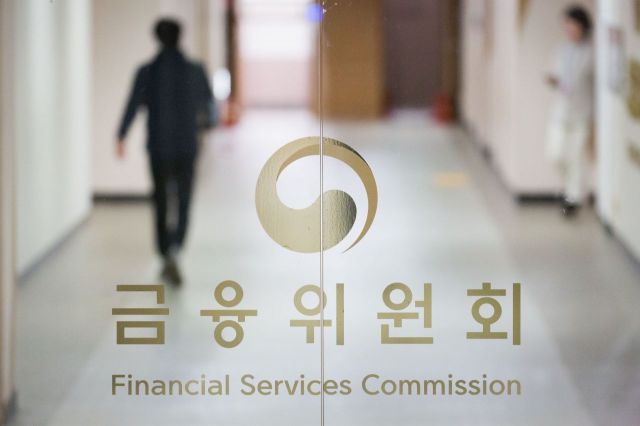
[Asia Economy Reporter Kwangho Lee] Ahead of the recalculation of the card fee eligible cost (cost basis), financial authorities convened a private meeting with the CEOs of card companies. The industry is concerned that this year's fee adjustment discussions, coinciding with next year's presidential election schedule, may lead to another reduction in fees.
According to financial circles on the 15th, the Financial Services Commission held a meeting with major card company CEOs the day before to gather opinions regarding the merchant fee restructuring. Given that the CEOs were gathered, it is presumed that discussions about further reductions in card fee rates took place.
An industry official said, "The Financial Services Commission plans to announce the eligible cost calculation results and fee restructuring plan next month, but they collected opinions from the card industry before the announcement," adding, "Nothing has been decided yet."
Eligible cost refers to the expenses incurred during card payments. It is determined based on the card companies' funding costs, risk management costs, general administrative costs, interchange fees, marketing expenses, and adjustment costs over the past three years.
According to the 2012 amendment of the Specialized Credit Finance Business Act, eligible costs are adjusted every three years. The eligible costs calculated this year will determine the card merchant fee rates applied from next year through 2024.
Currently, general merchants pay up to 2.5% of sales as card fees. However, lower rates of approximately 0.8% and 1.3% are applied to small merchants (annual sales under 300 million KRW) and medium merchants (annual sales between 300 million and 500 million KRW), respectively.
Considering that the card companies' cost basis for fees is about 1 to 1.5%, the losses incurred from small and medium merchants are borne by general merchants.
Card companies argue that further fee reductions are difficult as profitability in the credit sales sector has deteriorated due to the lowering of merchant fees. On the 28th of last month, the National Office Financial Services Labor Union, the National Financial Industry Labor Union, and the Card Company Labor Union Council held a press conference in front of the Government Seoul Office, urging the abolition of the card fee eligible cost recalculation system.
On the other hand, the political sphere has introduced bills related to reducing merchant fees, citing the protection of small business owners and self-employed individuals amid the prolonged COVID-19 pandemic.
In March, independent lawmaker Yongho Lee proposed the "Small Business Owner Card Fee Preferential Act," which applies additional preferential card fee rates only to small-scale small business owners with low sales.
People Power Party lawmaker Jageun Koo also proposed an amendment to the Specialized Credit Finance Business Act that exempts card fees for small payments under 10,000 KRW for small and medium credit card merchants with annual sales under 3 billion KRW and applies preferential fee rates to traditional markets regardless of sales scale.
The Financial Services Commission plans to announce the eligible cost calculation results and fee restructuring plan around the end of next month.
© The Asia Business Daily(www.asiae.co.kr). All rights reserved.

















