Domestic Pork Belly 100g 2,785 KRW
Up 15.5% in One Year
Twice the Price of Imported Frozen 100g
One-Third of Restaurant Ingredients Imported
Potatoes Up 5x, Vegetables Up 2x
Kimchi Imported in 6 out of 10 Places
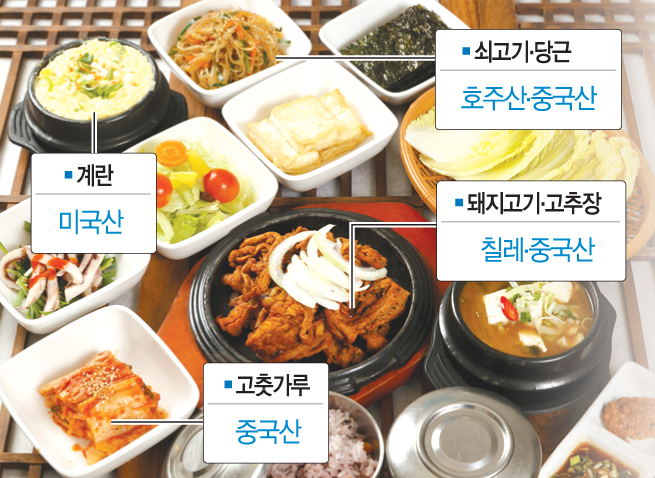
[Asia Economy Reporter Lee Seung-jin] Last year, the proportion of imported ingredients used by dining establishments increased significantly. One-third of major ingredients were imported, nearly doubling over two years.
30% of Restaurant Ingredients Are Imported
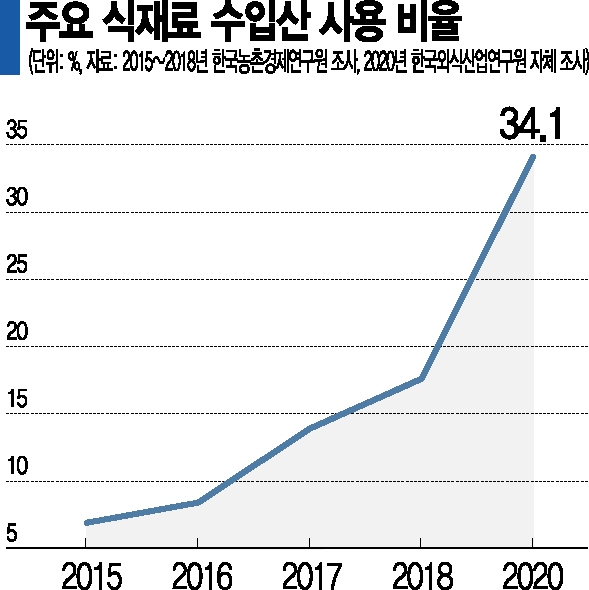
According to the "Study on the Use of Domestic and Imported Ingredients by Dining Establishments" by the Korea Foodservice Industry Research Institute on the 15th, the proportion of imported major ingredients used by dining establishments last year was 34.1%. According to the Korea Rural Economic Institute, the use of imported ingredients by dining establishments increased from 6.9% in 2015 to 8.4% in 2016 and 13.9% in 2017. In 2018, it rose to 17.6%, about 2.5 times higher than in 2015, showing a sharp increase year by year.
Looking at detailed items, chicken increased from 13.8% in 2018 to 21.8% last year. Rice rose from 1.4% in 2018 to 4.2% last year, attributed to a 29.8% surge in rice prices compared to 2018. During the same period, potatoes increased fivefold from 2.9% to 14.7%, and the proportion of imported green onions and napa cabbage nearly tripled. The overall proportion of imported vegetables more than doubled.
In the case of kimchi, the imported ratio reached 61.9%, indicating that more than six out of ten dining establishments use imported kimchi. The main reason for purchasing imported ingredients among dining establishments was price, which was the highest factor across all items.
Domestic Ingredient Prices Soar
Prices of domestic ingredients continue to rise due to increased demand from more home dining caused by COVID-19, soaring feed prices, and avian influenza (AI), among other reasons.
According to the Korea Agro-Fisheries & Food Trade Corporation, the price of 100g of domestic refrigerated pork belly is 2,785 won, up 15.5% from a year ago. This is due to soaring feed prices caused by rising grain prices combined with supply disruptions from African swine fever (ASF). The price of imported frozen pork belly per 100g is 1,406 won, widening the price gap with domestic products this year.
Garlic, used in most side dishes, costs 12,133 won per kilogram, 17.9% more expensive than the previous year. Egg prices, which surged in November last year due to the AI outbreak, have not stabilized throughout the year. Although the government took measures such as importing U.S. eggs, prices remain about 15% higher than last year.
Minimum Wage Increase Leads to More Imported Ingredients
Furthermore, with the minimum wage increase, dining establishments facing reduced profits are expected to increase the use of imported ingredients rather than raising food prices. Next year's minimum wage is 9,160 won per hour, up 440 won (5.0%) from this year's 8,720 won.
Lee Kyung-mi, senior researcher at the Korea Foodservice Industry Research Institute, pointed out in the report, "The dependence on imported ingredients by dining establishments is expected to deepen further, so it is necessary for the government to continuously conduct surveys on the use of ingredients by dining establishments and identify problems." She also proposed improving the ingredient distribution system as a way to enhance the price competitiveness of domestic ingredients.
She suggested, "Distribution costs account for a significant portion of the cost of ingredients, which make up the largest share of operating expenses for dining establishments. To address this, it is necessary to consider introducing a bulk purchasing ingredient distribution system."
© The Asia Business Daily(www.asiae.co.kr). All rights reserved.


















