September PPI Up 10.7% Year-on-Year, Sharp Rise in Fuels, Metals, and Non-Ferrous Metals
Chinese Authorities Strengthen Market Monitoring to Encourage Achievement of This Year's Economic Growth Target
[Asia Economy Beijing=Special Correspondent Jo Young-shin] Dark clouds are gathering over the Chinese economy.
With international raw material prices such as coal soaring, the Producer Price Index (PPI) has risen at the largest rate since 1996, signaling red flags in major economic indicators. The sharp rise in China’s PPI, as the world’s factory, is raising concerns about global inflation since it affects prices worldwide.
Chinese authorities have also detected abnormal signs and are actively encouraging the achievement of this year’s economic growth target, showing a strong stance on defending economic growth.
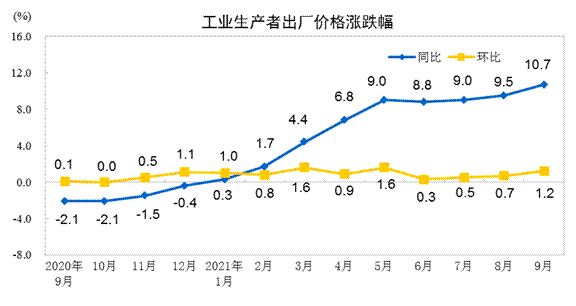
◆ PPI Surge Sparks Global Inflation Concerns = On the 14th, China’s National Bureau of Statistics announced that the PPI in September rose 10.7% year-on-year. This increase is the highest in 25 years since statistics began in 1996.
The sharp rise in PPI means that production costs in China’s manufacturing industry have increased. This inevitably impacts manufacturing prices of industrial goods worldwide.
By category, fuel prices surged by 30.3%, reflecting the sharp rise in coal and crude oil prices. This was followed by black metals at 23.3%, non-ferrous metals and wires at 22.6%, and chemical raw materials at 20.7%.
Fortunately, the PPI has not yet transmitted to China’s Consumer Price Index (CPI). Last month, the CPI rose only 0.7% year-on-year. The widening gap between PPI and CPI suggests that CPI will likely be affected soon.
◆ China Encourages Economic Growth Target Amid Abnormal Signs = The People’s Daily reported that the National Development and Reform Commission (NDRC) recently held a symposium analyzing the current economic situation and grasping the status of China’s key industries. Prior to this, the NDRC held an economic seminar with a group of economic experts to hear problems and proposals to overcome them, according to the People’s Daily. The NDRC is the department overseeing China’s economic policies. Analysts say that as unexpected variables such as power shortages, rising international raw material prices, global logistics bottlenecks, and floods occurred, the NDRC has directly stepped in to urge economic and related institutions to take action.
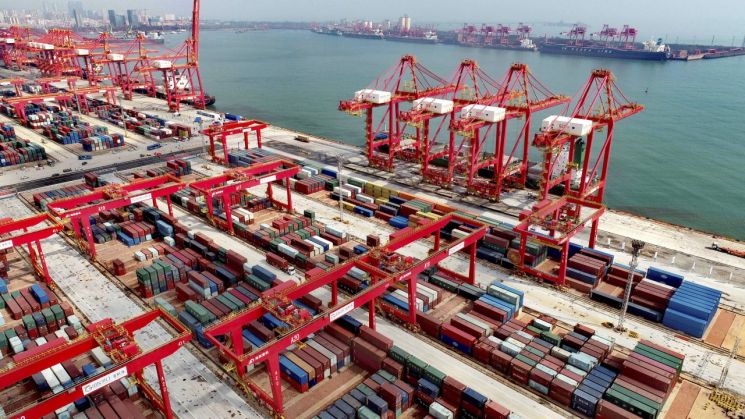
Before the PPI, a warning light was lit on China’s manufacturing Purchasing Managers’ Index (PMI). The PMI released by the National Bureau of Statistics last month was 49.6. This is the first time in 19 months since February last year’s 35.7 that the manufacturing PMI fell below the baseline of 50. A reading below 50 indicates economic contraction. Concerns are emerging across China that power shortages, which have shortened manufacturing companies’ operating hours, will reduce economic growth in the fourth quarter.
Pan Ruoying, a researcher at the Bank of China Research Institute, said, “Since the third quarter, all economic indicators have been declining,” adding, “Macroeconomic control policies are needed for stable economic growth.”
◆ China’s Fiscal and Financial Policy Measures Inevitable = Summarizing the views of Chinese economic experts, it is estimated that China’s economy met its initial targets through the third quarter. In fact, last month, China’s exports rose 28.1% year-on-year to $305.74 billion (approximately KRW 366 trillion). Since the power shortage intensified only after mid-September, it appears that September exports were not significantly affected.
The problem lies in the fourth quarter. Given that the coal shortage is unlikely to be resolved in the short term, global economic forecasting institutions are lowering their growth forecasts for China. Goldman Sachs has revised its 2023 growth forecast from 8.2% to 7.8%, Nomura Securities of Japan from 8.2% to 7.7%, and Fitch from 8.5% to 8.1%.
The Chinese government is increasingly likely to use the financial policy card of lowering the reserve requirement ratio (RRR) to boost economic growth. The People’s Bank of China lowered the RRR by 0.5 percentage points in July. Lowering the RRR increases the lending capacity of Chinese financial institutions.
Wang Zigang, a researcher at the Macroeconomic Research Center of the Chinese Academy of Fiscal Sciences, argued, “To achieve the annual economic growth target, China must sprint in the fourth quarter,” adding, “Fiscal support policies to ease cost pressures on small and medium-sized enterprises and stable investment policies through the issuance of local special bonds must be implemented in parallel.”
© The Asia Business Daily(www.asiae.co.kr). All rights reserved.
![Clutching a Stolen Dior Bag, Saying "I Hate Being Poor but Real"... The Grotesque Con of a "Human Knockoff" [Slate]](https://cwcontent.asiae.co.kr/asiaresize/183/2026021902243444107_1771435474.jpg)

















