Side Effects of Comprehensive Loan Regulations Everywhere
Tenants, Landlords, and Lottery Winners in Panic
Only Real Demanders Suffer as Debt Management Measure
"Regulatory Policy Won't Last Long," Some Predict
"I barely won the public housing subscription, but now my loan has been blocked. How are people who have lived their whole lives without a home supposed to come up with such a large sum of money to pay the price without a loan?" (A housewife in her 30s living in Ilsan New Town)
"Just before the contract, the tenant suddenly said they couldn't get a bank loan. I can't leave the house empty... I urgently put it up for semi-monthly rent, but I'm worried if I can find a tenant." (A landlord in their 50s living in Bundang New Town)
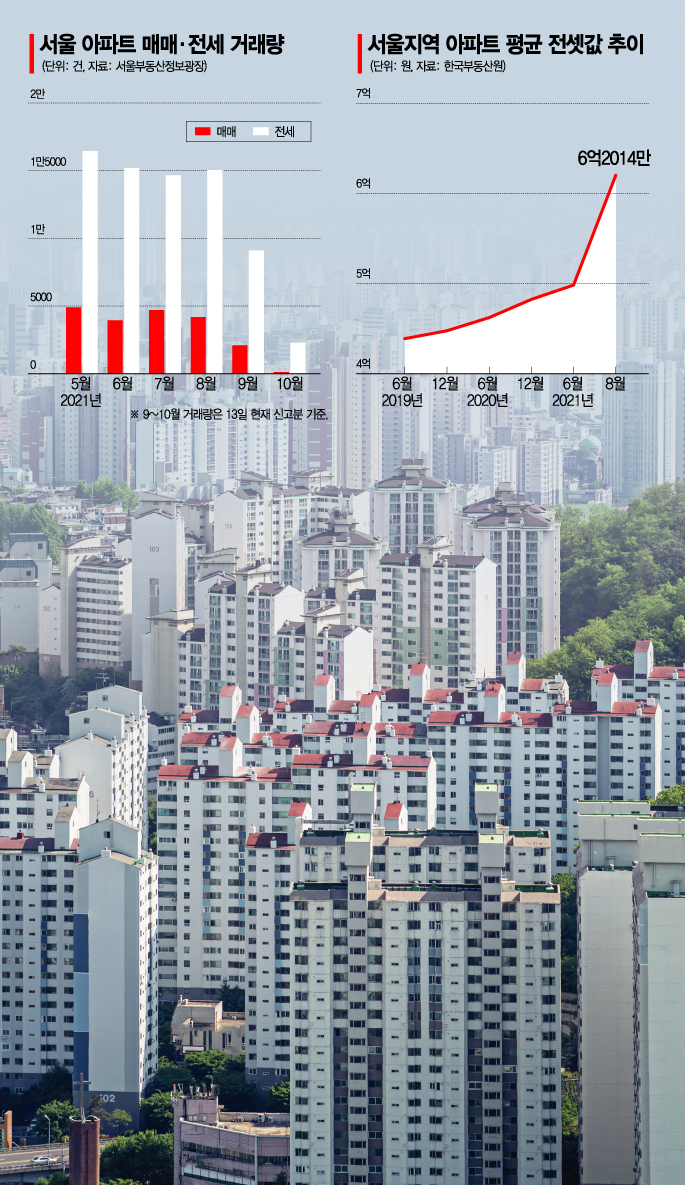
The real estate market is in a panic due to the government's sudden all-out loan regulations. While sales and jeonse prices are soaring, the sudden tightening of loans is causing side effects to emerge everywhere.
Tenants are being pushed to the outskirts because they cannot immediately secure the increased jeonse deposit, and homeowners who planned to move after buying a house first are unable to sell their existing homes and are at risk of losing their deposits. Some non-homeowners who won subscriptions are also facing a bleak outlook as their interim payment loans have been blocked. The government insists that regulations are inevitable to curb the rapidly increasing household loans, but there are criticisms that the damage is concentrated on actual demanders.
At Risk of Losing Deposit Due to Loan Denial
One of the most confused areas due to the government's strengthened loan regulations is the jeonse market. Mr. A, a 30-year-old office worker living in Seoul, recently managed to find a newlywed jeonse house in Guro-gu but is now at risk of losing his deposit without even moving in. This is due to loan regulations that were unforeseen at the time of contract about a month ago. Mr. A said, "I barely found a bank branch with remaining loan limits and submitted an application, but I'm anxious it might be rejected," adding, "Even old apartments on the outskirts have deposits exceeding 300 to 400 million KRW, and without loans, moving is just a dream."
According to the Korea Real Estate Board, as of August, the average apartment jeonse price in Seoul was 620.14 million KRW. Due to the implementation of the three lease laws last year, jeonse prices fluctuated, rising by nearly 200 million KRW compared to August 2019 (439.9 million KRW). Therefore, there are many concerns that if jeonse loan regulations continue, the confusion during this fall's moving season will worsen. Mr. B, a 30-something who posted on the Blue House petition, appealed, "If regulations become stricter, we will have no choice but to turn to secondary and tertiary financial institutions," adding, "The skyrocketing jeonse prices and increased interest burden alone are already very difficult."
Some non-homeowners who won apartment subscriptions are also facing contract cancellation risks as group loans for interim and final payments have been partially suspended. Prospective residents of 'Gamilsweet City' in Gam-il District, Hanam, Gyeonggi Province, are representative cases. There are many appeals that if they cannot secure an additional 100 to 200 million KRW due to reduced loan limits, they will be left homeless. Mr. C, in his 30s, who won a special newlywed supply two years ago, pointed out, "Our apartment's designated bank stopped the Bogeumjari Loan due to government loan regulations," adding, "This is causing harm to actual residents."

Homeowners Also Confused: "Who Are These Regulations For?"
Homeowners are equally at a loss due to loan regulations. Especially, one-homeowners who planned to move by 'buying first, selling later' are facing urgent situations as it becomes difficult to find buyers due to tightened loan regulations. Mr. D, who bought a moving house in Ilsan, Gyeonggi Province, in August and planned to pay the balance by the end of next month, is now in a difficult situation because his current house is not selling. Mr. D said, "I thought it would sell quickly because it's a small unit, but even though I listed it below market price due to loan regulations, no one wants to buy it." Generally, in a rising price market, delaying the sale increases capital gains, so 'buy first, sell later' can have advantages, but during times when regulations slow buying demand, failure to sell existing homes may cause inability to meet payment deadlines.
Some landlords are also reportedly in difficult situations due to strengthened jeonse loan regulations. If tenants cannot secure jeonse deposits, livelihood landlords inevitably suffer damage. While it would be fortunate if loan regulations lowered jeonse prices, many landlords convert jeonse to monthly rent, which is seen as negative for the government's goal of stabilizing the jeonse market. Landlord E said, "A few days before the jeonse contract last week, I suddenly heard from the real estate agent that the tenant's jeonse loan was rejected," adding, "I decided to give more time for now, but I'm worried whether I will have to switch to monthly rent later."
Lee Eun-hyung, a senior researcher at the Korea Institute of Construction Policy, said, "Since the presidential election is in March next year, it is expected that the loan regulation strengthening trend will not last long," adding, "Jeonse loan regulations are interpreted as measures to reduce gap investments and stabilize house prices, but they only increase market confusion immediately and it will be difficult to achieve the expected effects."
© The Asia Business Daily(www.asiae.co.kr). All rights reserved.
!["The Woman Who Threw Herself into the Water Clutching a Stolen Dior Bag"...A Grotesque Success Story That Shakes the Korean Psyche [Slate]](https://cwcontent.asiae.co.kr/asiaresize/183/2026021902243444107_1771435474.jpg)


















