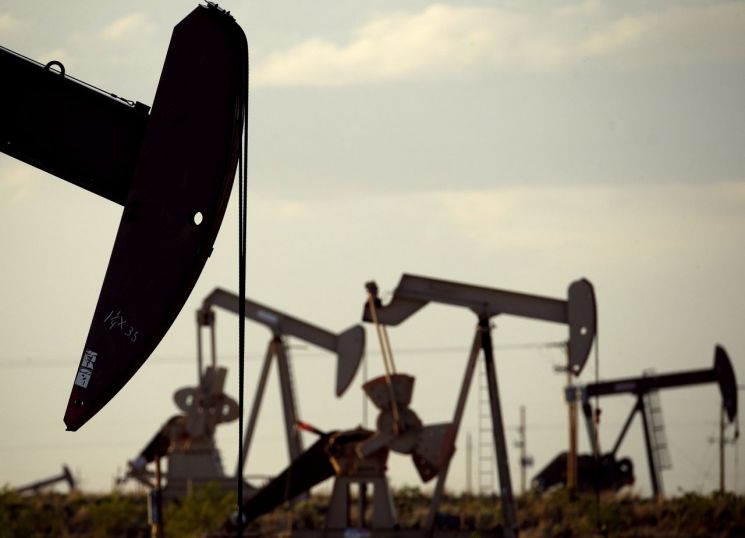
[Asia Economy Reporter Kim Suhwan] Concerns have emerged that the surge in energy prices, including oil prices, could suppress the rebound of the U.S. economy and lead to a recession.
The Wall Street Journal (WSJ) reported on the 10th (local time) that the rise in energy prices such as oil is posing a threat to the U.S. economy.
The price of West Texas Intermediate (WTI) crude oil traded on the New York Mercantile Exchange surpassed $80 per barrel for the first time since 2014.
WTI prices rose as high as $80.11 per barrel during trading on the 8th, marking a 64% increase since the beginning of this year.
The price of natural gas also doubled in six months. Heating oil has risen 68% so far this year.
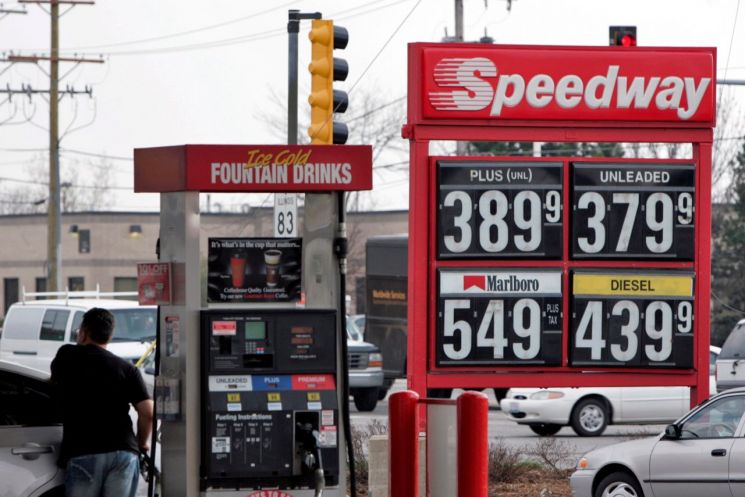
As major energy prices soar like this, energy prices within the U.S. are also sharply rising.
The average retail price of gasoline in the U.S. has surpassed $3 per gallon (3.78L), rising nearly $1 over the past 12 months.
The price of electricity increased by 5.2% compared to a year ago, the highest in seven years.
There are concerns that this surge in energy prices has triggered warning signs for the U.S. economic outlook.
Andreas Larsen, an analyst at Nordea Bank in Finland, predicted that due to rising energy prices, the U.S. growth rate next year will decline from 3.5% to 1.5%.
He also analyzed that if energy prices rise an additional 40%, the global economy, including the U.S., will enter a recession.
The problem is that the upward trend in energy prices is expected to continue for some time.
According to Moody’s Analytics, oil prices are expected to range between $80 and $90 per barrel in early next year.
JP Morgan also forecasted that oil prices could reach $190 per barrel by 2025.
Along with this, if rising energy prices push inflation higher, the U.S. Federal Reserve (Fed) will inevitably face pressure to accelerate tightening measures.
The Fed’s inflation target is an average of 2%. However, the UK economic analysis firm Oxford Economics predicted that inflation could rise to 5.1% due to the surge in energy prices.
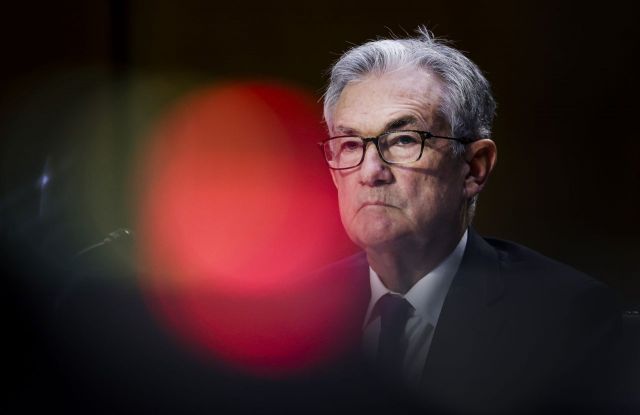
Fed Chair Jerome Powell has maintained the view that inflationary pressures are temporary, but recently, there is a growing acknowledgment that the inflation may last longer than initially expected.
Bart Melek, an analyst at TD Securities, predicted that there will be a growing consensus that the Fed will change its policies depending on inflation forecasts.
© The Asia Business Daily(www.asiae.co.kr). All rights reserved.



















