Eunji Lee GIST Professor Team Controls Crystallization Rate of Conductive Polymers
Expected to Have Many Applications in Next-Generation Electro-Optical Devices
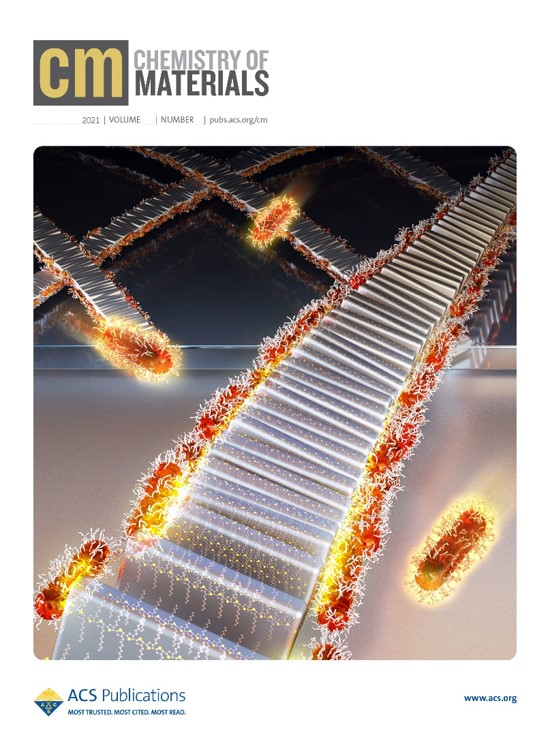
[Asia Economy Reporter Kim Bong-su] The research team led by Professor Eunji Lee of the Department of Materials Science and Engineering at Gwangju Institute of Science and Technology (GIST) announced on the 5th that they have developed a hybrid nanowire manufacturing technology that can uniformly control the position, alignment, and orientation of quantum rods by regulating the crystallization speed of conductive polymers.
Quantum rods are semiconductor crystals with an aspect ratio, and their structure, shape, and alignment direction between particles greatly affect their electrical and optical properties. However, they tend to aggregate randomly due to their low aspect ratio. In the development of hybrid materials utilizing quantum rods, uniform dispersion, precise positioning, and orientation control of quantum rods are very important factors to consider for performance specialization.
The research team introduced blocks capable of bonding with quantum rods into conductive polymers and applied solution processing. By considering the diffusion coefficient of mixed solvents, they controlled the crystallization speed of the polymer and successfully fabricated hybrid nanowires with uniformly arranged quantum rods.
The hybrid semiconductor nanowires consist of alternating arrangements of electron donors, conductive polymers, and electron acceptors, quantum rods, with a width of 10 nanometers and lengths of several micrometers. In particular, the formation of nanowires, crystallization, crystallinity of conductive polymers, and the position and uniform arrangement structure of quantum rods were elucidated through the development of advanced nanotechnology, three-dimensional transmission electron microscopy analysis. It was confirmed that the crystallization speed of the polymer greatly influences the length of the nanowires, the alignment mode of the quantum rods, as well as polarization and charge transport pathways, inducing unique electrical and optical properties.
Professor Lee explained, “The significance lies in presenting a strategy to freely control the alignment and orientation of quantum rods within ultra-fine semiconductor nanostructures,” adding, “Using the coupling mode of quantum rods with polarization characteristics, it is expected to have many applications in next-generation electro-optical devices such as novel light-emitting switch devices, optical communication, quantum computing, 3D displays, and solar cells.”
The research results were published online on the 27th of last month in the international journal Chemistry of Materials (IF: 9.811). It was selected as a cover paper and will be published soon.
© The Asia Business Daily(www.asiae.co.kr). All rights reserved.

















