US, EU, UK, and Japan Central Banks Concerned About Inflation
Supply Chain Improvements Not Easy... "Inflation Will Continue Until Next Year"
[Asia Economy New York=Correspondent Baek Jong-min] Central bank governors from the United States, Europe, the United Kingdom, and Japan have predicted that inflation will continue to rise through next year. While central banks in each country are pursuing normalization of monetary policy in response to rising inflation, concerns have been raised that their room for maneuver may be limited amid worries about economic recovery slowing due to supply chain bottlenecks.
Jerome Powell, Chair of the U.S. Federal Reserve (Fed), said in a speech at the European Central Bank (ECB) conference on the 29th (local time), "It is frustrating that supply chain issues have not improved," and forecasted, "The situation seems likely to worsen further."
He went on to estimate, "Inflation will likely continue to rise longer than we initially thought next year." Chair Powell has shifted away from the claim that inflation is temporary and has been warning daily about the possibility of sustained inflation increases.
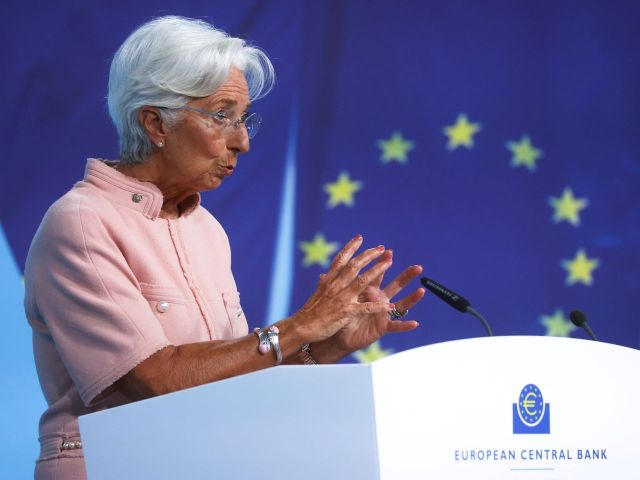
Christine Lagarde, President of the ECB, also pointed out that "the supply chain bottlenecks experienced over the past few months continue, and in some cases are worsening." President Lagarde expressed concerns about problems with cargo shipping and unloading and mentioned, "The ECB is carefully monitoring the possibility of secondary disruptions such as wage increases."
Andrew Bailey, Governor of the Bank of England, also stated, "We will be watching inflation increases very closely."
Haruhiko Kuroda, Governor of the Bank of Japan, reported that Japanese companies are striving to meet the surge in demand, but there are no signs of the situation easing. He said, "Demand is increasing too rapidly, so the supply shortage is likely to persist."
A major foreign news outlet recently reported that the recent rise in inflation is caused by semiconductor supply chain breakdowns and shortages of raw materials such as crude oil, deepening the concerns of central banks.
If central banks respond to control inflation by raising benchmark interest rates, a sharp rise in market interest rates is inevitable. The economic recovery slowdown caused by the Delta variant and supply chain disruptions must also be taken into account.
President Lagarde predicted, "Due to supply chain bottlenecks, soaring energy prices, and the spread of COVID-19, the economic outlook for the Eurozone remains uncertain."
Governor Bailey emphasized the difficulty of central bank-level responses, saying, "Monetary policy cannot produce semiconductors or secure truck drivers." He also forecasted that the UK's gross domestic product will not return to pre-COVID-19 levels until early next year.
The hope of the central bank governors is for the supply chain to recover early. Chair Powell said, "The current surge in inflation is the result of supply constraints facing very strong demand, all related to the reopening of the economy. It is a process with a beginning, middle, and end."
He added, "It is very difficult to say how large the impact will be or how long it will last, but we expect to recover and overcome it."
On this day, differences in views on future monetary policy among central banks were also observed. Chair Powell reiterated that if inflation rises beyond controllable levels, they will respond with interest rate hikes and will begin tapering asset purchases within the year, but Governor Kuroda emphasized his stance to continue accommodative monetary policy.
Governor Kuroda said, "Regardless of the policies the new government pursues, the Bank of Japan will continue accommodative monetary policy to achieve the 2% inflation target."
Meanwhile, Governor Kuroda assessed that the bankruptcy crisis of China's Evergrande Group is unlikely to have a negative impact on the Chinese economy and stated that the current situation in China differs from Japan's bubble collapse in the 1980s.
© The Asia Business Daily(www.asiae.co.kr). All rights reserved.

















