[Asia Economy Honam Reporting Headquarters Reporter Park Jin-hyung] Manufacturing companies in the Gwangju area forecast that the economic recovery trend will continue in the fourth quarter of this year.
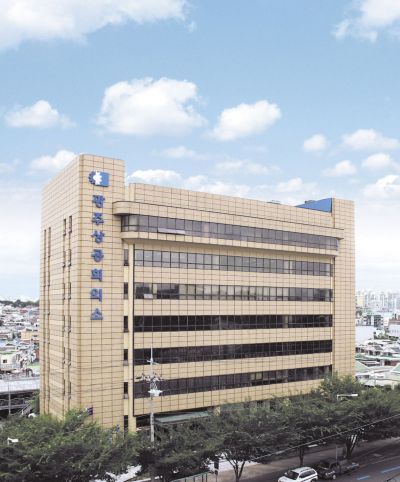
The Gwangju Chamber of Commerce and Industry (Chairman Jeong Chang-seon) announced that the BSI (Business Survey Index) was recorded at '113' in the '2021 4th Quarter Business Outlook Index' survey conducted on 127 manufacturing companies in the Gwangju area.
This marks the third consecutive quarter exceeding the baseline (100), which is analyzed to reflect growing expectations for economic recovery due to expansionary fiscal policies centered on major countries and the increase in COVID-19 vaccination rates.
By industry, sectors such as 'Non-metallic Minerals & Glass (143)', 'Food & Beverage (138)', 'Machinery & Molds (119)', and 'Steel & Metal Processing (114)' exceeded the baseline (100), indicating a forecast of improvement.
The 'Non-metallic Minerals & Glass (143)' sector expects an increase in orders due to the resumption of public and private redevelopment projects and expectations for expanded housing supply, forecasting an improved economy compared to the previous quarter. The 'Food & Beverage (138)' sector anticipated economic growth driven by increased outdoor activities and the resumption of group catering following expanded vaccination.
The 'Machinery & Molds (119)' sector predicted economic improvement due to expectations from improved business conditions and increased order volumes, along with increased production and investment activities. The 'Steel & Metal Processing (114)' sector forecasted economic growth due to economic stimulus measures by major countries worldwide, expansion of SOC infrastructure, and increased facility investments.
The 'IT, Electrical & Electronics (100)' sector expects the perceived economy to remain similar to the previous quarter despite deteriorating profit structures caused by rising raw material prices, due to increased orders from parent companies and growing demand for premium products.
The 'Automobiles & Parts (100)' sector anticipates increased sales due to strong global automobile market sales and new car launches; however, semiconductor parts supply instability acts as a downside factor, resulting in a perceived economy similar to the previous quarter.
However, the 'Rubber, Chemicals & Plastics (60)' sector is expected to experience a decline in the perceived economy compared to the previous quarter due to decreased orders from clients and deteriorating profit structures caused by rising raw material prices.
By company size, large and medium-sized enterprises (121) expect to sustain export growth as the economic recovery continues due to large-scale economic stimulus measures by major governments, while small and medium-sized enterprises (110) also forecast an improved perceived economy due to expectations for COVID-19 vaccine distribution and normalization of economic activities.
By export status, export companies (110) positively forecast the fourth quarter economy due to increased demand in the global market and increased order volumes, while domestic companies (113) also expect increased sales compared to the previous quarter as consumer sentiment recovers due to increased COVID-19 vaccinations and expanded private and government investments.
Regarding companies' forecasts for South Korea's economic growth rate this year, the majority responded that it would be '3.6% or higher but less than 4.0% (48.0%)'. This was followed by '0% or higher but less than 3.5% (37.8%)', '4.1% or higher but less than 4.5% (12.6%)', and '4.6% or higher but less than 5.0% (1.6%)'.
When asked whether companies could achieve the goals set at the beginning of the year, responses were 'Close to achieving goals (49.6%)', 'Achieving goals (44.1%)', and 'Exceeding goals (6.3%)'.
Regarding internal and external risks expected to affect companies' performance this year, 'Exchange rate and raw material price volatility (70.1%)' was cited most frequently, followed by 'Domestic market stagnation due to COVID-19 (66.1%)', 'Interest rate hike trend (26.0%)', and 'Deterioration of financing conditions (18.9%)'.
On changes in companies after COVID-19, responses were 'No significant change (39.4%)', 'Changes in work environment such as remote work (36.2%)', and 'Expansion of online transactions and non-face-to-face distribution channels (16.5%)' in that order.
A Gwangju Chamber of Commerce official stated, "The perceived economy seems to continue recovering due to domestic and international economic recovery and increased COVID-19 vaccination rates," but added, "Since concerns such as the resurgence of infections and interest rate hikes remain, it appears to be a time when companies need to take proactive measures."
© The Asia Business Daily(www.asiae.co.kr). All rights reserved.

















