[Asia Economy Reporter Lee Chun-hee] Regulations related to the management of high-risk pathogens such as botulinum toxin used for cosmetic purposes and anthrax bacteria will be further strengthened.
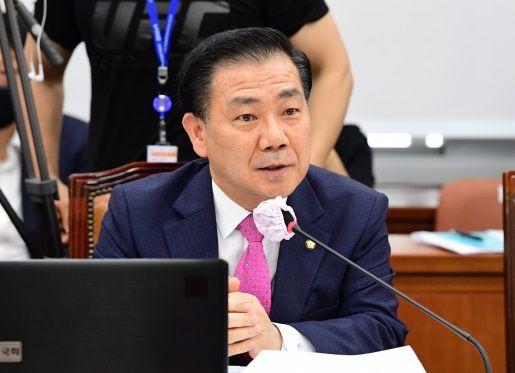
Baek Jong-heon, a member of the National Assembly's Health and Welfare Committee from the People Power Party, announced on the 28th that the partial amendment bill of the "Infectious Disease Prevention and Control Act (Infectious Disease Prevention Act)" containing these provisions has passed the plenary session of the National Assembly. This bill was prepared as an alternative to the bill originally proposed by Baek Jong-heon and others in May.
The existing law regulates that those who intend to install and operate high-risk pathogen handling facilities must obtain approval or report to the Commissioner of the Korea Disease Control and Prevention Agency according to safety management levels. If approval is obtained or reported by deception or fraudulent methods, the approval can be revoked or the closure of the high-risk pathogen facility can be ordered. In addition, those who have obtained permission to import high-risk pathogens into the country must notify the Commissioner of the Korea Disease Control and Prevention Agency in advance of the movement plan to transfer and move the relevant high-risk pathogens.
In response, Representative Baek prepared this bill with the intention of allowing individuals or private businesses to also utilize high-risk pathogen handling facilities for infectious disease diagnosis and academic research. He also pointed out that there was no basis to handle high-risk pathogens when canceling approval or ordering closure of the handling facilities, and no basis to cancel approval if the pathogens were not taken over for a long time after import permission. Accordingly, the bill allows individuals and private businesses to use high-risk pathogen handling facilities for infectious disease diagnosis and academic research purposes.
Furthermore, the bill enables cancellation of permission if a person who intends to import high-risk pathogens into the country fails to take over or report the pathogens, and establishes grounds for handling the high-risk pathogens held when approval for handling facilities is canceled or closure is ordered.
Representative Baek said, "With the passage of this bill in the plenary session, safety management of high-risk pathogens has been further strengthened to protect the health of the people," and added, "We plan to prepare laws that can impose strong criminal penalties for unjust reporting of high-risk pathogens such as botulinum toxin in the future."
© The Asia Business Daily(www.asiae.co.kr). All rights reserved.

![Clutching a Stolen Dior Bag, Saying "I Hate Being Poor but Real"... The Grotesque Con of a "Human Knockoff" [Slate]](https://cwcontent.asiae.co.kr/asiaresize/183/2026021902243444107_1771435474.jpg)















