Nickel Down 2.3% · Tin Down 3.9%
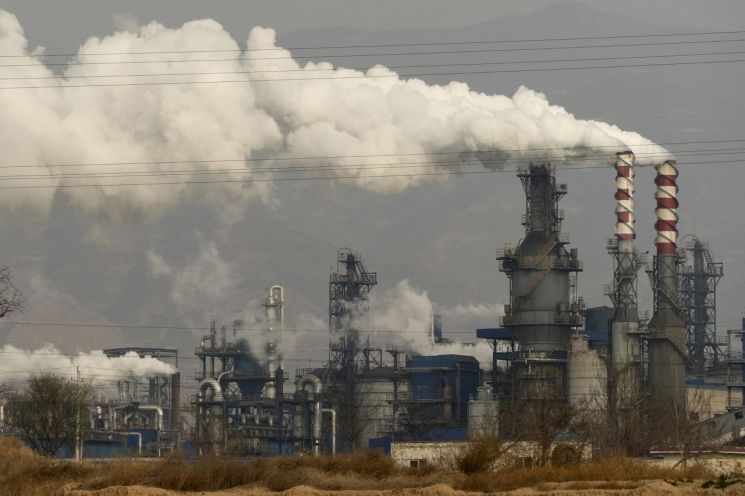
[Asia Economy Reporter Park Byung-hee] As power shortages have forced factories and smelters in China to halt operations, raw material prices on the London Metal Exchange (LME) fell across the board on the 27th (local time). While a short-term decline in raw material demand is expected, concerns are growing that the power shortage could lead to an overall slowdown in China's economic growth rate.
According to Bloomberg on the 27th (local time), LME nickel futures closed at $18,946 per ton, down 2.3% from the previous trading day. Tin prices plunged 3.9% to $351,000 per ton, and aluminum prices also fell by 1.1%.
The China International Capital Corporation (CIC) stated in a report that concerns over power shortages halting stainless steel production are the cause of the nickel price decline, and power restrictions could continue through the fourth quarter.
In China, power shortages are worsening due to soaring coal prices and the government's push for eco-friendly policies.
China's power generation heavily depends on coal-fired power plants, but the government is limiting fossil fuel use under the pretext of reducing carbon emissions. This year, coal imports from Australia, with which China has conflicts, have also been halted. As coal prices soared, the cost burden on power plants increased. Due to government regulations and rising costs, power production has decreased, leading to power shortages across China. With the Beijing Winter Olympics scheduled for February next year, the government may continue to restrict coal use for environmental reasons, raising concerns that the power shortage could be prolonged.
Economic growth forecasts for China are also being revised downward. CIC warned that power shortages could reduce China's economic growth rate by 0.1 to 0.5 percentage points in the third and fourth quarters of this year.
CIC expects that the power shortage will particularly impact short-term production, forecasting that the industrial production growth rate (year-on-year) for September will fall to around 4 to 4.5%. China's industrial production growth rates were 6.4% in July and 5.3% in August.
Nomura Holdings also predicted in a report released on the same day that production cuts due to power shortages will cause the Purchasing Managers' Index (PMI) for Jiangsu, Zhejiang, and Guangdong provinces, to be released this week, to fall below '50', indicating economic contraction. Nomura had previously lowered its forecast for China's economic growth rate this year from 8.2% to 7.7% on the 24th and stated that it may lower the forecast further from 7.7%.
© The Asia Business Daily(www.asiae.co.kr). All rights reserved.

![Clutching a Stolen Dior Bag, Saying "I Hate Being Poor but Real"... The Grotesque Con of a "Human Knockoff" [Slate]](https://cwcontent.asiae.co.kr/asiaresize/183/2026021902243444107_1771435474.jpg)














