[Asia Economy Reporter Eunmo Koo] As the budget phone market approaches 10 million subscribers, concerns have been raised that the market is being reorganized mainly around subsidiaries of the three major telecom companies, prompting calls for the urgent introduction of a market share cap system.
According to data submitted by the Ministry of Science and ICT to Representative Yang Jeong-sook of the National Assembly's Science, Technology, Information and Broadcasting and Communications Committee on the 28th, as of the end of July 2021, the number of budget phone subscribers in South Korea was counted at 9.81 million. The number of budget phone subscribers has recently been increasing by 100,000 each month, and it is expected to reach the 10 million mark this year.
In particular, concerns are growing as the market share of the three major telecom companies' subsidiaries in the mobile phone sector has exceeded 46.6%. The number of budget phone subscribers increased by 17.5% from 7.75 million at the end of 2019 to 9.11 million in 2020, and as of the end of July, it reached 9.81 million, an increase of 2.06 million in one year and seven months. However, the fortunes of the subsidiaries of the three major telecom companies and small and medium budget phone providers have diverged significantly.
For mobile phone line subscribers, who generate relatively higher revenue per subscriber, the subsidiaries of the three major telecom companies increased from 2.54 million in 2019 to 2.81 million in July 2021, an increase of 270,000. In contrast, small and medium budget phone providers decreased from 4.32 million to 3.22 million during the same period, a drop of 1.1 million. On the other hand, looking at Internet of Things (IoT) subscribers, who generate lower revenue, the subsidiaries of the three major telecom companies maintained around 250,000 subscribers from 2019 to the end of July 2021, while small and medium budget phone providers increased nearly sixfold from 620,000 in 2019 to 3.54 million at the end of July 2021.
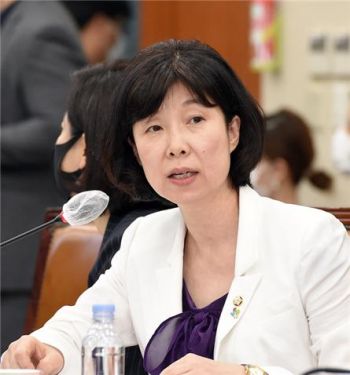
Representative Yang Jeong-sook stated, “The subsidiaries of the three major telecom companies actively attract profitable mobile phone subscribers by leveraging their financial power, while being very passive in attracting unprofitable IoT subscribers.” She pointed out the uneven playing field, saying, “Unlike small and medium providers, telecom subsidiaries receive support from their parent companies and enjoy benefits such as reductions in radio usage fees and network usage fee support.”
In terms of subscriber market share, the subsidiaries of the three major telecom companies held only 37.0% of the budget phone market in 2019, but this rose nearly 10 percentage points to 46.6% by July 2021. If KT Powertel, a KT subsidiary, had not been sold, the share would have been 49.5%, nearly reaching 50%.
Small and medium budget phone providers are reportedly struggling to maintain subscribers by attracting ‘prepaid plan’ subscribers and ‘zero-won plan’ subscribers in response to the aggressive marketing of the three major telecom companies’ subsidiaries, even at the cost of their own profits.
As of July, the number of prepaid subscribers for the three major telecom companies’ subsidiaries was only 160,000, while small and medium budget phone providers had 1.87 million, more than ten times higher. Conversely, postpaid subscribers numbered 2.65 million for the three major telecom companies’ subsidiaries, nearly twice the 1.35 million of small and medium budget phone providers. The postpaid subscriber market share of the three major telecom companies’ subsidiaries reached 66.2%.
Revenue for small and medium budget phone providers increased only by 800 million KRW (0.2%) from 323 billion KRW in 2016 to 323.8 billion KRW in 2019, whereas during the same period, the subsidiaries of the three major telecom companies increased their revenue by 95.2 billion KRW (18.6%) from 509.6 billion KRW to 604.8 billion KRW.
Representative Yang urged, “As the budget phone market is reorganized around the subsidiaries of the three major telecom companies, the original purpose of introducing budget phones is being undermined, and small and medium budget phone providers are facing a crisis. To alleviate this situation, the market share of telecom subsidiaries should be regulated to 50%.” She called for the prompt passage of an amendment to the Telecommunications Business Act reflecting these measures.
© The Asia Business Daily(www.asiae.co.kr). All rights reserved.
![User Who Sold Erroneously Deposited Bitcoins to Repay Debt and Fund Entertainment... What Did the Supreme Court Decide in 2021? [Legal Issue Check]](https://cwcontent.asiae.co.kr/asiaresize/183/2026020910431234020_1770601391.png)















