Conflicts Over Interfloor Smoking Continue... Residents Suffer Due to Ineffective Regulations
Last Year, 2,844 Complaints of Interfloor Cigarette Smoke, a 19.2% Increase from the Previous Year
Experts "Related Laws Need Revision and Supplementation... Neighborly Consideration Required"
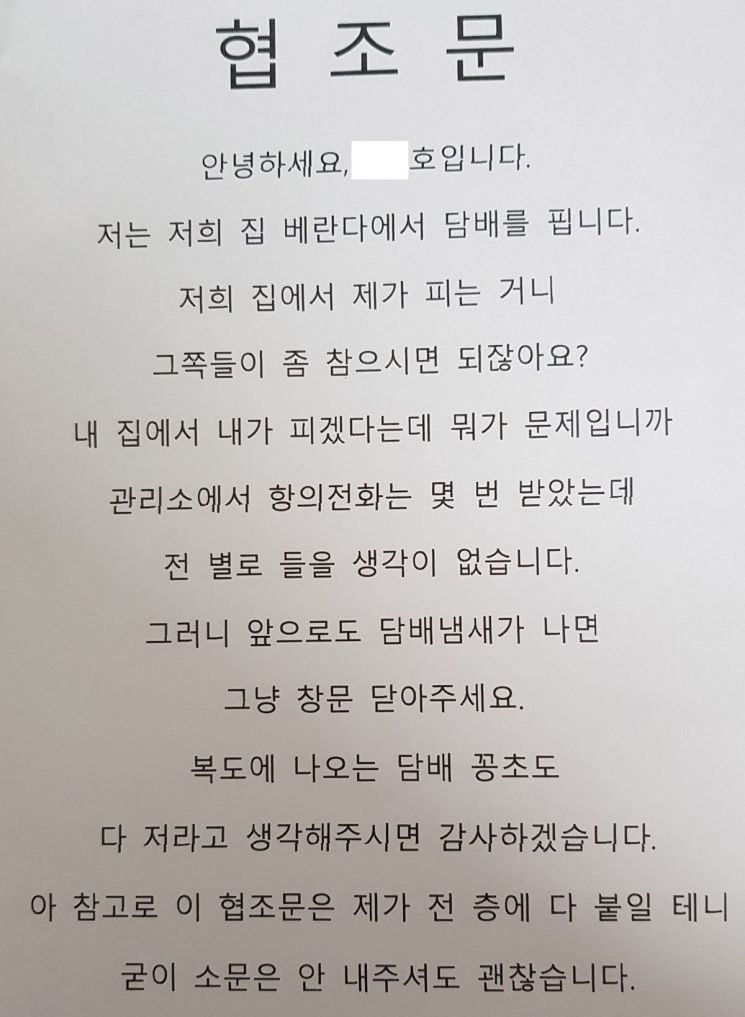 A cooperation notice presumed to be written by a smoking resident of an apartment, posted on an online community on the 26th. Photo by Online Community
[Asia Economy Reporter Kim Soyoung] As issues surrounding indoor smoking in apartment complexes and other multi-family housing continue unabated, the release of a brazen statement from smokers has deepened conflicts among residents.
On the 26th, a post titled "A Cooperation Notice from an Apartment" was uploaded to an online community. According to the photo shared, resident A, who wrote the notice, claimed, "I smoke on my apartment balcony. Since I smoke at my home, shouldn't others just endure it? What's the problem with me smoking in my own home?"
He added, "I've received several complaint calls from the management office, but I don't really intend to listen," and "So if you smell cigarette smoke in the future, just close your windows."
Despite knowing that complaints about secondhand smoke between floors have accumulated, netizens could not hide their anger at such a notice that shows no sign of remorse or change.
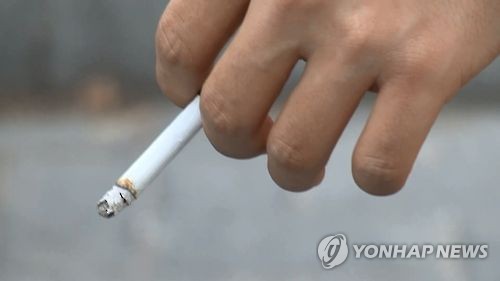 Conflicts between neighbors are intensifying over smoking issues in apartment complexes. Experts emphasize the need for consideration among neighbors.
 [Image source=Yonhap News]
Netizens responded strongly with comments such as, "If that homeowner's logic applies, then noise between floors is okay too, right? Whether playing soccer or basketball at home, it's my house," "If you smoke in your own home, then close your own windows while smoking. Why should we close ours?" and "You don't want the smell to linger in your home, so you smoke on the balcony and don't care about others? Ridiculous."
This is not the first time such an incident has occurred. Earlier, on June 17, a similar story sparked outrage on an online community. It involved a note attached to a cooperation notice in an apartment in Busan requesting residents not to smoke in the bathroom.
The note protesting the request to refrain from smoking in the bathroom read, "This seems like an issue to be addressed individually with the downstairs neighbors. The balcony bathroom is a personal space. Either move to a more expensive apartment or provide separate smoking areas for smokers."
In response, netizens sharply retorted, "If you want a separate smoking area, then go to a better, more expensive apartment as you said," and "That's that person. Instead of writing notes, go outside and smoke."
According to the Anti-Corruption and Civil Rights Commission, complaints about secondhand smoke or cigarette odors between floors filed through the national complaint portal reached 2,844 last year, a 19.2% increase from 2,386 the previous year. With more people working from home due to COVID-19 and the rise of homebodies, the situation is becoming even more serious.
Jung, a worker in his 20s, said, "Smoking on the street is uncomfortable, but you can just move away quickly. Indoor smoking is really distressing," adding, "Whether eating or sleeping, I often have to go close the windows because of cigarette smoke coming from somewhere."
This secondhand smoke issue is serious not only because of the unpleasant odor but also due to the risk of lung cancer. The Southeast Regional Nuclear Medicine Institute under the Ministry of Science and ICT conducted a study on 1,551 lung cancer patients diagnosed via Positron Emission Tomography (PET CT) over the past decade since its opening in 2010. The study found that 69.8% (1,082) were direct smokers and 11.5% (178) were exposed to secondhand smoke. This means 8 out of 10 lung cancer patients were either direct or indirect smokers.
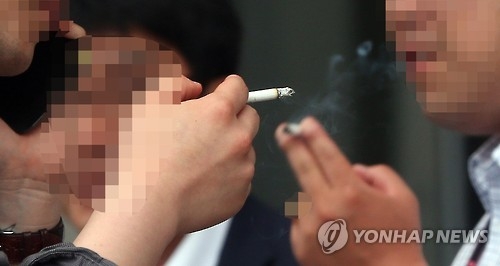
Voices criticizing the effectiveness of laws penalizing indoor smoking are growing louder. Kim, a college student in her 20s, said, "Smoking inside the home involves many issues incomparable to outdoor smoking," and argued, "Strong penalties appropriate to this are necessary."
Netizens also raised their voices, saying, "The law should be amended so that those who harm others with cigarette smoke face fines and compensation. In summer, many children suffer from smoke coming from downstairs when windows are open," and "Instead of raising cigarette prices, strong measures for non-smokers should be prepared."
Under the current Multi-Family Housing Management Act, even if problems arise from secondhand smoke, the apartment management can only recommend that residents stop indoor smoking rather than enforce it. This is why the law is criticized for lacking effectiveness.
Opinions also suggest that non-smoking apartments are ineffective. In designated non-smoking apartment complexes, smoking in hallways, staircases, elevators, and underground parking lots?non-smoking zones?results in fines of up to 100,000 won. However, smoking in areas outside these designated zones is not subject to fines.
Meanwhile, among smokers who are increasingly losing ground due to the rise of non-smoking apartments and outdoor non-smoking zones, complaints are emerging. Critics point out that without providing separate smoking areas, a culture of prohibition and sanctions against smoking is being created. According to Seoul city data, the number of non-smoking zones in Seoul increased steadily by about 20,000 each year: 244,582 in 2016, 265,113 in 2017, and 282,641 in 2018. In contrast, as of January 2019, there were only 6,200 smoking zones, just 2.4% compared to non-smoking zones.
While smoking booths have been suggested, the burden of installation and operation makes it difficult to expand their introduction within complexes. As a result, conflicts between smokers asserting their smoking rights and non-smokers complaining of harm remain unresolved.
Experts emphasize the need for regulatory improvements alongside neighborly consideration. Real estate lawyer Kang Mingu told SBS Biz in an interview, "There are regulations regarding smoking, but they lack enforceability and it is difficult to secure evidence, so they are practically ineffective. Legal improvements are needed," adding, "Ultimately, neighbors must be careful and considerate of each other regarding smoking and noise."
© The Asia Business Daily(www.asiae.co.kr). All rights reserved.
![Clutching a Stolen Dior Bag, Saying "I Hate Being Poor but Real"... The Grotesque Con of a "Human Knockoff" [Slate]](https://cwcontent.asiae.co.kr/asiaresize/183/2026021902243444107_1771435474.jpg)


















