Financial Services Commission Holds Meeting with Economic and Financial Market Experts
Additional Household Debt Measures to Be Announced in October... Key Focus on 'Borrower's Repayment Ability'
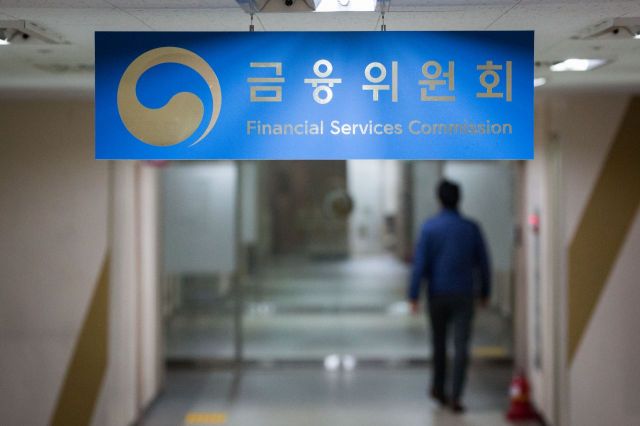
[Asia Economy Reporters Kwangho Lee and Jinho Kim] Financial authorities have decided to extend the timeline for managing the total household debt volume beyond next year. They plan to continuously and gradually implement stringent measures until the effects of the policies become clearly evident. Market experts also expressed concerns about the risks associated with household debt and emphasized the need for 'additional loan regulations.'
On the 27th, Ko Seung-beom, Chairman of the Financial Services Commission, held a meeting with economic and financial market experts at the Korea Federation of Banks in Jung-gu, Seoul, stating, "It is necessary to proactively, safely, and surely eliminate the triggers of various latent risk factors."
Attendees at the meeting included Professor Kim Young-ik of Sogang University, economic commentator Lee Jong-woo, economist Oh Seok-dae of SG Securities, Kim Young-il, head of the Research Center at NICE Credit Information, Kim Dong-hwan, director of the Alternative Finance Economic Research Institute, Shin Dong-jun, head of the KB Securities Research Center, and Shin Yong-sang, director of the Financial Research Institute.
Chairman Ko diagnosed, "It is a situation where excessive household debt and overheating of asset markets such as real estate must be proactively eliminated before they worsen further. At the same time, there is a complex task to provide uninterrupted support to vulnerable groups who may face increased difficulties during this process."
He emphasized, "Since the household debt problem we are currently facing has accumulated and expanded over a long period, the process of reversing this momentum will inevitably involve some discomfort and time, but we will proceed proactively and strongly with consistent policy determination."
He added, "The most important criterion in loan decisions should be whether the borrower can bear the loan and repay it stably even if circumstances change in the future. The core of the household debt measures to be announced by the government in October will focus on enhancing the effectiveness of repayment ability assessments."
Market experts also agreed on the necessity of strict management of household debt. Shin Yong-sang, director of the Financial Research Institute, expressed concern at the meeting, stating, "Proactive measures such as total volume and qualitative management of household debt are urgent." He suggested risk management directions including ▲ controlling total debt volume and growth speed ▲ lending practices within the borrower's repayment capacity ▲ blocking balloon effects by resolving regulatory discrepancies. However, he added that separate support and supplementary measures should be prepared for vulnerable groups marginalized during the strengthening of management.
Economic commentator Lee Jong-woo also pointed out, "Strict control over loan accessibility is necessary," and stressed, "The cost of loans should be increased, such as by expanding principal and interest installment repayments."
Concerns were also raised about the recent surge in jeonse loans. Kim Young-il, head of the NICE Credit Information Research Center, said, "It is necessary to examine the factors behind the increase in jeonse loans to prepare for a soft landing of household debt," adding, "Jeonse loans may have been used as a means for tenants to increase leverage." He further noted, "It is also important to consider the possibility of default risks materializing, especially among self-employed workers in sectors affected by COVID-19, in the event of interest rate hikes."
The government is considering additional household debt management measures, including advancing the schedule for phased implementation of the Debt Service Ratio (DSR) regulations by borrower and strengthening DSR regulations on secondary financial institutions. Measures to restrict margin loans by securities firms and the possibility of applying DSR to card loans are also being discussed. The announcement is expected shortly after the National Assembly audit.
Meanwhile, the meeting also discussed various risk factors related to the rapidly changing domestic and international economic and financial markets. Professor Kim Young-ik of Sogang University warned, "There is a high possibility of a global economic double-dip (temporary recovery followed by recession)." Economist Oh Seok-tae of SG Securities also advised, "Attention should be paid to global risk factors such as inflation, tapering, and the Evergrande crisis."
© The Asia Business Daily(www.asiae.co.kr). All rights reserved.

















