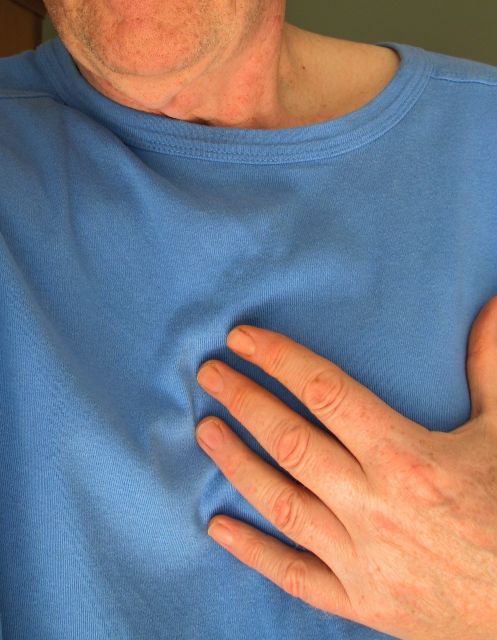
[Asia Economy Reporter Kim Daehyun] The Supreme Court has ruled that a worker who died of a myocardial infarction while performing public labor work during a cold snap on his first day of work should be considered to have suffered an 'occupational accident' if his underlying conditions had been properly managed.
On the 27th, the Supreme Court's First Division (Presiding Justice No Taeak) announced that it overturned the lower court's ruling, which had dismissed the appeal by Mr. A's bereaved family against the Korea Workers' Compensation and Welfare Service regarding the non-payment of survivor's benefits and funeral expenses, and remanded the case to the Seoul High Court.
Previously, Mr. A, who had served as a career soldier for over 30 years, participated in a public labor project in March 2017 after his discharge and was assigned to work on 'pine tree preventive injections.' On the first day of this work, Mr. A collapsed and died from an acute myocardial infarction while moving back to the workplace after lunch on a forest slope. He had been suffering from hypertension, unstable angina, and left ventricular failure, and it was investigated that the minimum temperature had dropped below freezing due to the cold snap that day.
The first trial ruled in favor of the plaintiff, but the second trial ruled against. The second court judged that it was difficult to see that Mr. A's underlying cardiovascular disease was aggravated by overwork, stress, or cold weather, leading to acute myocardial infarction.
The second trial court stated, "Although there was a cold snap at the time and it is recognized that Mr. A suddenly engaged in intense physical activity, the average age of the 14 participants in this project was 65, and given the nature of the public labor project, it is difficult to consider that the intensity of the work performed by Mr. A was excessive or that he experienced physical overwork or mental stress."
However, the Supreme Court ordered a retrial and reconsideration of the case. The court stated, "Mr. A's pre-existing conditions were well managed through exercise and other means, and his symptoms had improved, allowing him to perform normal work. However, while performing excessive outdoor work in cold weather, his condition rapidly worsened beyond the natural progression, resulting in acute myocardial infarction and death."
It added, "The lower court erred in its legal interpretation regarding the substantial causal relationship of the occupational accident and failed to conduct necessary investigations, which affected the judgment."
© The Asia Business Daily(www.asiae.co.kr). All rights reserved.
![Clutching a Stolen Dior Bag, Saying "I Hate Being Poor but Real"... The Grotesque Con of a "Human Knockoff" [Slate]](https://cwcontent.asiae.co.kr/asiaresize/183/2026021902243444107_1771435474.jpg)
















