[Asia Economy Reporter Park Byung-hee] It has been revealed that the effective federal income tax rate paid by the 400 wealthiest households in the United States is only 8.2%.
On the 23rd (local time), according to the political news outlet The Hill, the White House released a report analyzing the federal income taxes paid by the 400 wealthiest households from 2010 to 2018.
The 8.2% rate is far lower than the current top income tax bracket rate of 37%. It is even lower than the overall U.S. tax rate of 13.3% as of 2018.
The 400 households ranked by income represent only 0.0002% of all taxpayers. Over the nine years analyzed, they earned a staggering $1.8 trillion (2,110 trillion won) in income.
The White House attributed the low effective tax rate of the highest earners to the lower tax rates on capital gains and dividends, as well as their ability to avoid taxes on investment income.
The White House stated that this estimate shows a much lower tax rate for the highest income households compared to estimates by other groups. However, the White House included unrealized capital gains as income, which is generally excluded in such analyses.
In the report, the White House proposed raising capital gains tax rates and ending the "step-up basis" system as alternatives.
The uniquely American tax system called "step-up basis" taxes heirs on inherited real estate or stocks based on the asset's value at the time of inheritance rather than the original purchase price when the parents pass away and the heirs sell the assets.
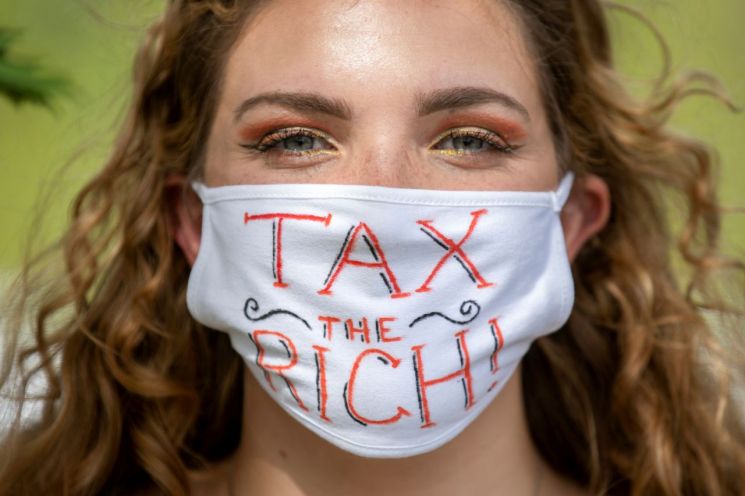
This White House report was released amid President Joe Biden's push for a "wealth tax" to raise taxes on high earners and large corporations to fund $3.5 trillion in social welfare spending.
Currently, the Democratic Party is reportedly discussing raising the corporate tax rate for companies earning over $5 million annually from 21% to 26.5%, and increasing the top individual income tax rate from 37% to 39.6%. They are also considering raising the capital gains tax rate from 20% to 25% and imposing a 3% surtax on individual incomes exceeding $5 million annually.
The opposition Republican Party opposes the $3.5 trillion spending plan, arguing that it would excessively increase the national debt and that tax hikes could dampen investment incentives.
© The Asia Business Daily(www.asiae.co.kr). All rights reserved.

















