No Mention of Dollar Payments for Yuan Bond Interest... Institutional Investors Have Already Cut Losses
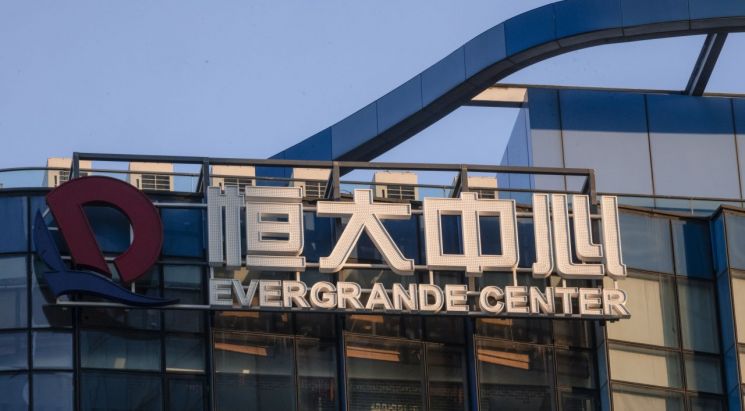
[Asia Economy reporters Park Byung-hee and Lee Min-woo] China’s largest private real estate developer, Evergrande Group, which has been shaking the global financial markets, faces a critical crossroads on the 23rd (local time) between bankruptcy and a dramatic turnaround. On this day, Evergrande must pay approximately $83.5 million (about 99.3 billion KRW) in interest on its 5-year maturity dollar bonds and $47.5 million in interest on its yuan-denominated bonds. Evergrande announced on the 22nd that it plans to pay the interest on the yuan bonds. However, it did not mention whether it would pay the interest on the dollar bonds, which reportedly have a 30-day grace period. In the worst-case scenario, the possibility of Evergrande’s bankruptcy cannot be ruled out.
After the Chuseok holiday, the domestic stock market started lower, showing caution about the potential impact of the Evergrande crisis.
Market experts pointed out that although the New York stock market rebounded overnight and the Evergrande-related anxiety has eased, it is not yet a level to be fully reassured.
Seo Sang-young, a researcher at Mirae Asset Securities, advised, "Evergrande’s announcement that it will pay interest on the yuan bonds maturing in September 2025, traded on the Shenzhen Stock Exchange, on the 23rd as scheduled has reduced market anxiety, but this is a temporary patch as the extreme bank loan issues remain unresolved. It is important to note that the anxiety sentiment is still ongoing."
Opinions are divided on what impact Evergrande’s bankruptcy would have on the global financial markets.
Evergrande’s debt exceeds $300 billion. However, the size of its international bonds is about $20 billion, which is relatively small. Evergrande owes most of its debt to mainland Chinese companies and financial institutions. Therefore, while it could cause significant shocks to the Chinese market and economy, the general view is that it is unlikely to trigger a global credit crunch like the 2008 Lehman Brothers crisis.
Allianz stated in a letter to investors, "The Evergrande crisis has reaffirmed negative views on the real estate market," but added, "We do not expect widespread market shocks." Allianz is known to have already liquidated Evergrande bonds over the past few months.
BlackRock, the world’s largest asset management firm, has maintained a long-term optimistic view of the Chinese market but is reported to have made few investments in the real estate sector. Unlike during Lehman, major institutional investors have already cut their losses. This is why the Evergrande crisis is not expected to lead to a global credit crunch.
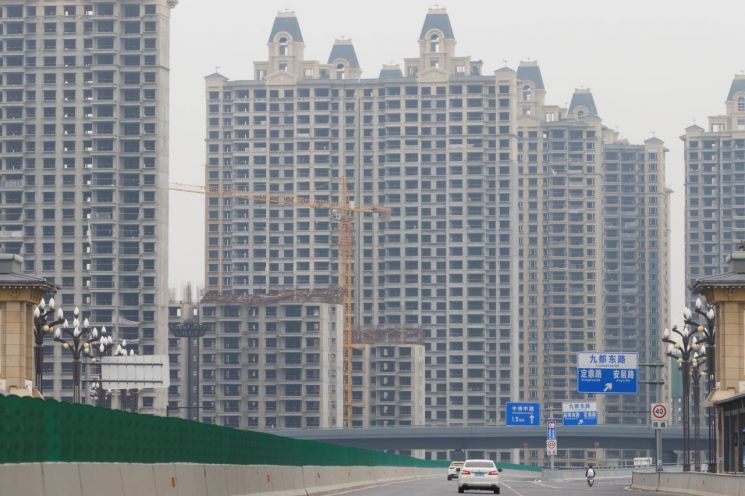
The Wall Street Journal (WSJ) reported on the 23rd that some major institutional investors, including Bridgewater Associates and PIMCO, view Evergrande’s default as a long-term positive for China’s credit market. The Evergrande crisis is seen as a growing pain in the development of China’s capital markets, providing an opportunity to address the chronic problem of excessive debt and restore market confidence.
Christian Strack, head of bond research at PIMCO, said, "While the Evergrande crisis will certainly cause a lot of uncertainty and volatility in the short term, it was a problem that needed to be resolved anyway, so ultimately it will be a positive for China’s credit market."
However, Jim Chanos, founder of the hedge fund Kynikos Associates, which has long held a negative view on Chinese investments, points out that the Evergrande crisis is not simply limited to the Chinese real estate market.
Chanos warned that the crisis could spread to broader issues concerning China’s economic model, potentially causing a major shock. He explained, "Debt underpins all of China’s economic growth. If you try to resolve this debt bubble, there are many risk factors involved." He added, "Evergrande’s bankruptcy signifies the end of China’s real estate-driven growth model. This is a problem with the economic growth model itself, and real estate accounts for a significant portion of China’s gross domestic product (GDP)."
Chanos added that while the risk of contagion into a global crisis like Lehman is low, for Chinese investors, this could be a more severe crisis than the Lehman event.
© The Asia Business Daily(www.asiae.co.kr). All rights reserved.
!["The Woman Who Threw Herself into the Water Clutching a Stolen Dior Bag"...A Grotesque Success Story That Shakes the Korean Psyche [Slate]](https://cwcontent.asiae.co.kr/asiaresize/183/2026021902243444107_1771435474.jpg)

















