[Asia Economy Reporter Yujin Cho] "The situation may not end next year either."
Ola K?llenius, CEO of Germany's Mercedes-Benz, recently made this forecast regarding the global semiconductor supply crisis at the IAA Motor Show held in Munich, Germany. The vehicle semiconductor supply shortage, which became apparent earlier this year, is expected to worsen, leading to large-scale production disruptions continuing into next year.
CEO K?llenius predicted that sales would inevitably decline in the third quarter of this year due to semiconductor shortages. He said, "The third quarter will suffer the most severe impact," adding, "We hope recovery will begin in the fourth quarter, but uncertainties remain in restoring production systems." He further anticipated, "Structural issues in semiconductor demand and supply will affect us until next year and may only ease in 2023."
Mercedes-Benz suffered a significant blow as COVID-19 resurged in Malaysia, where it operates semiconductor chip testing and packaging plants. Malaysia, home to global semiconductor companies such as Infineon, NXP, and STMicroelectronics, has seen intensified supply shortages as factories repeatedly halted production lines due to the spread of the COVID-19 Delta variant.
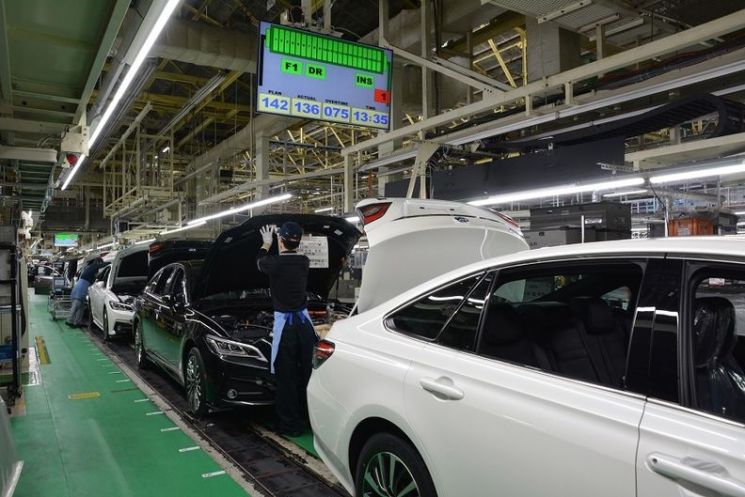
◇ Japan's Toyota to cut production by an additional 40% next month = Earlier, Japan's Toyota also predicted that the semiconductor supply shortage would continue into next year. Toyota announced that it would reduce global production by about 40% from target volumes next month, following similar cuts this month due to semiconductor shortages. Since early this month, Toyota has suspended production lines at key plants such as Takaoka in Toyota City, Aichi Prefecture, for several weeks.
Toyota pointed out, "The supply chain bottleneck triggered by factory closures in Southeast Asia due to the spread of the COVID-19 Delta variant is the cause of production declines, and supply shortage issues are emerging not only in Malaysia but also in Vietnam."
U.S. General Motors (GM) also decided to reduce production last month at eight plants in the United States, Canada, and Mexico due to semiconductor shortages, and Ford has decided to cut production of some models, including the popular F-150 pickup truck.
◇ China also on alert, urging domestic companies to increase production = China, the world's largest automobile market, is also on high alert. On the 13th, the Ministry of Industry and Information Technology of China held a press conference stating, "The semiconductor supply chain is expected to remain tight for the time being," urging domestic semiconductor companies to resume production to resolve supply issues for specific chips.
Spokesperson Tian Yulong emphasized, "The COVID-19 pandemic has slowed semiconductor production expansion, causing supply-demand imbalances," and particularly noted, "The situation has become more complicated as factories in major semiconductor manufacturing regions like Taiwan have shut down."
The Ministry of Industry and Information Technology has formed a separate team to address the semiconductor supply shortage and is providing support to resolve supply issues between the most affected automotive industry and semiconductor manufacturers.
◇ Intense competition among semiconductor manufacturers = Amid the supply chain crisis, semiconductor companies are actively expanding production. U.S. semiconductor company Intel plans to invest up to $95 billion (about 110 trillion KRW) to build two new semiconductor plants, intensifying the competition with TSMC and Samsung Electronics.
Intel's investment also represents a bet on the future growth potential of the vehicle semiconductor market, which has struggled with supply shortages since the COVID-19 pandemic. Intel expects the vehicle semiconductor market to double over the next ten years. In particular, due to increasing demand for advanced technologies and the paradigm shift to electric vehicles, the proportion of semiconductors in vehicle production costs is expected to soar from 4% in 2019 to over 20% in the future.
Earlier, rival company and the world's number one foundry, Taiwan's TSMC, announced plans to invest $100 billion over the next three years to build six factories in the United States, and Samsung Electronics also announced last month that it would significantly expand production capacity, intensifying global competition in the semiconductor market.
Luke Jungk, an analyst at U.S. Baird Securities, said, "This semiconductor crisis will be an important opportunity that triggers a power struggle between automakers and semiconductor manufacturers regarding semiconductor prices, purchase volumes, and inventory holding costs of key components in the automotive supply chain."
© The Asia Business Daily(www.asiae.co.kr). All rights reserved.

















