Recent Increase in Defaults Among Chinese Companies... Evergrande Group's Real Estate Overheating Encourages Government's 'Common Prosperity' Policy Backlash
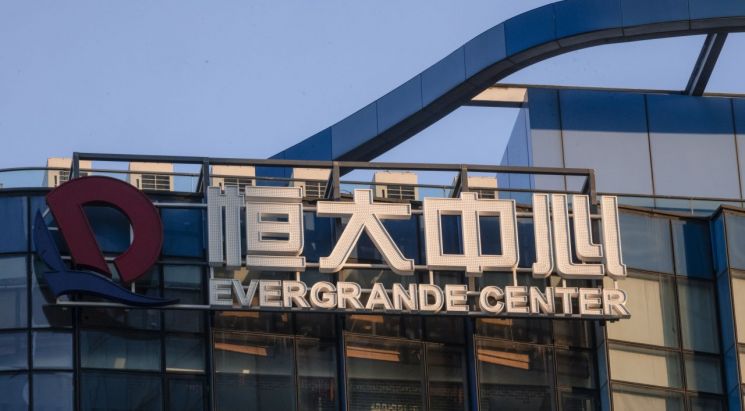
[Asia Economy Reporter Park Byung-hee] The fate of Evergrande Group, China's largest private real estate developer that is shaking the global financial markets, will face a critical moment on the 23rd (local time). On that day, Evergrande must pay approximately $83.5 million (about 99.3 billion KRW) in interest on its 5-year maturity dollar bonds. However, it is known that there is a contractual grace period of 30 days. The problem is that Evergrande is currently reported to be unable to afford this payment.
Evergrande urgently needs government support to overcome its liquidity crisis. However, there are forecasts that the Chinese government will not intervene and will allow Evergrande's bankruptcy. This is because the Chinese government has recently emphasized reducing overall economic debt, resolving wealth inequality, and promoting common prosperity.
In recent years, the number of corporate bankruptcies has increased as the Chinese government has refrained from providing support.
According to Bloomberg, the scale of onshore and offshore bond defaults in China exceeded $25 billion (about 29.6 trillion KRW) in the first half of this year. It is rapidly approaching last year's record high annual figure of $29.9 billion.
According to data compiled by Shanghai DZH, a Chinese financial information company, the default scale in the first half of the year reached 116 billion yuan (about 21.2 trillion KRW), and it is expected to surpass last year's record high of 187 billion yuan.
In the past, the Chinese government actively supported companies facing bankruptcy to prevent financial crises, but since 2018, cases of allowing defaults have sharply increased. According to Shanghai DZH, until 2017, the annual scale of corporate defaults in China did not exceed 50 billion yuan, but in 2018 it tripled to exceed 100 billion yuan, and in 2019 it surpassed 150 billion yuan.
This is analyzed as the government’s recognition that helping companies to avoid immediate crises led to moral hazard and, in the long term, undermined trust in the Chinese market.
Recently, Chinese President Xi Jinping’s emphasis on common prosperity also strengthens the expectation that Evergrande’s default will be allowed to proceed.
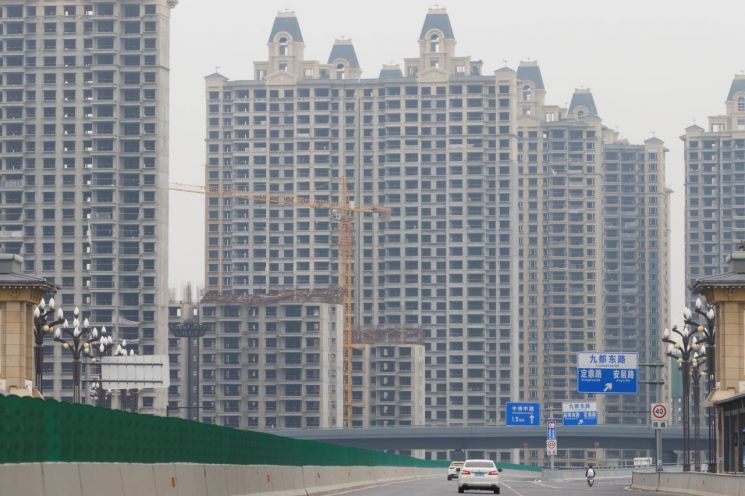
Housing prices in China have risen for a long time due to speculation, which has caused increased household debt and widened the wealth gap. The rapid growth of Evergrande is rooted in the overheating of the Chinese real estate market through borrowing and speculation, which is currently the target of the Chinese government’s efforts to resolve. The Chinese government aims to stabilize housing prices by eradicating speculation and hopes that more people will be able to purchase homes at reasonable prices. Through this, it hopes to resolve wealth inequality and realize common prosperity. There are also criticisms that rescuing Evergrande Chairman Xu Jiayin does not align with President Xi’s emphasis on common prosperity.
In August last year, the Chinese government introduced three regulatory measures to limit borrowing ratios to prevent real estate developers from fueling speculative booms through excessive borrowing. The debt ratio excluding prepayments must not exceed 70%, the net debt ratio must be below 100%, and the short-term cash debt ratio must be maintained below 1. Evergrande is currently reported to have violated all three regulatory measures.
Therefore, to demonstrate its determination not to tolerate further overheating of the real estate market caused by speculation and borrowing, there are forecasts that the Chinese government will allow Evergrande’s bankruptcy.
However, rising public dissatisfaction due to Evergrande could be a burden for President Xi, who is seeking a third term. In fact, protests by citizens who suffered losses from Evergrande have been continuing daily in China. Accordingly, there are also forecasts that the Chinese government will seek ways to protect consumers while allowing Evergrande’s shareholders and creditors to bear losses.
Capital Economics estimated that more than 1.4 million apartments sold by Evergrande remain unfinished, amounting to about $200 billion. Capital Economics expects the government to transfer these to other developers to complete the construction.
© The Asia Business Daily(www.asiae.co.kr). All rights reserved.
![Clutching a Stolen Dior Bag, Saying "I Hate Being Poor but Real"... The Grotesque Con of a "Human Knockoff" [Slate]](https://cwcontent.asiae.co.kr/asiaresize/183/2026021902243444107_1771435474.jpg)

















