Many Sleeping Lands Still Exist... Local Governments Actively Encourage Use
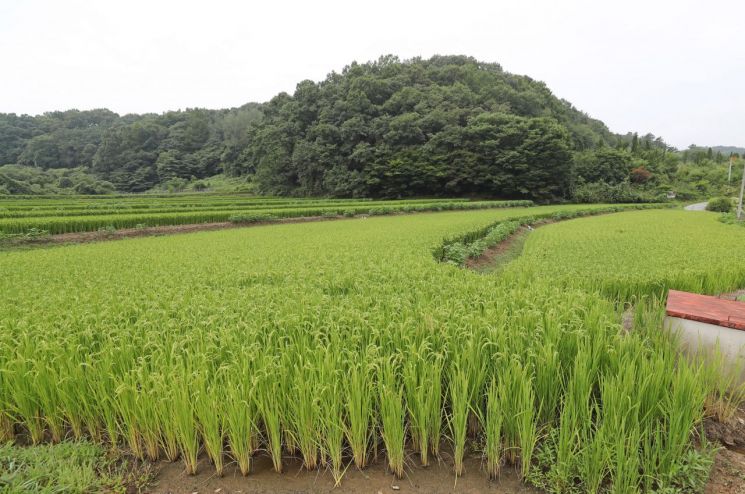
Along with the surge in real estate prices, the "Finding Ancestor's Land" service is gaining popularity. This service helps descendants locate land by utilizing the cadastral information system when inheritance is not properly executed due to neglect in property management or sudden accidents, making it impossible to identify the land status.
This year alone, the number of people who found their ancestor's land has reached 110,000.
Since many lands registered during the Japanese colonial period still have no changes in ownership, local governments are actively encouraging the use of the "Finding Ancestor's Land" service.
According to the National Spatial Information Center of the Ministry of Land, Infrastructure and Transport on the 20th, from the beginning of this year until August, there were 349,947 applicants for the "Finding Ancestor's Land" service. Among them, 113,496 descendants successfully found their ancestor's land. The total land area found amounted to 480.20㎢, covering 455,295 parcels.
According to Daegu City, there were 15,260 service applications in the first half of this year, and 17,954 parcels totaling 19,064,000㎡ of land were returned to descendants.
Since the service was computerized in 2010, Daegu City has identified 166,061 parcels of land, covering 208㎢. This is approximately 72 times the size of Yeouido.
Jeollabuk-do provided land ownership status for 1,524 applicants of the "Finding Ancestor's Land" service this year, covering 2,883 parcels and about 3.21 million square meters, assisting individuals in exercising their property rights.
In particular, in Jeollabuk-do, about 70,000 parcels of land remain in the province that were registered as owned in the cadastral records during the Japanese colonial period's land (forest) survey project and have had no ownership changes since. Many descendants still do not know the location of their ancestors' land and thus cannot exercise their property rights.
Applications for the "Finding Ancestor's Land" service can be made by heirs of deceased landowners. If the decedent died before December 31, 1959, the head of the household successor can apply; if the decedent died on or after January 1, 1960, the spouse or direct descendants can apply.
Regardless of the land location or residence, applicants can visit the nearest city or district office and submit documents proving they are heirs or representatives to receive immediate results from the national land information system.
Applicants must have documents proving their descendant status, such as a family register transcript. For decedents who died after 2008, a family relation certificate and basic certificate must be prepared.
If a representative applies, they must bring a power of attorney from the heir, a copy of the heir's ID, and a copy of the representative's ID. In the case of minors, a legal guardian can apply on their behalf.
© The Asia Business Daily(www.asiae.co.kr). All rights reserved.
![Clutching a Stolen Dior Bag, Saying "I Hate Being Poor but Real"... The Grotesque Con of a "Human Knockoff" [Slate]](https://cwcontent.asiae.co.kr/asiaresize/183/2026021902243444107_1771435474.jpg)
















