[Asia Economy Reporter Yujin Cho] Recently, Apple received a court ruling in a U.S. antitrust lawsuit that inevitably impacts its App Store revenue. Although Apple avoided the worst verdict of violating antitrust laws, experts say it is still too early to be relieved. This is because the U.S. government's antitrust regulatory moves targeting the four major big tech companies?Apple, Google, Amazon, and Facebook?are accelerating.

The U.S. District Court in Oakland, California, ruled in the lawsuit filed by Epic Games, the developer of the game "Fortnite," against Apple, ordering Apple to allow external payments within 90 days. Until now, Apple has forced the use of its internal App Store payment system for paid content purchases, taking up to a 30% commission in the process.
The court stated in its ruling that Apple's blocking of external payments hides important information from consumers and unlawfully restricts consumer choice. As a result, app developers can now implement their own payment systems, and Apple’s revenue from in-app purchases will be impacted.
The court did not accept Epic Games' claim that Apple's App Store operation method violated antitrust laws, which was the biggest issue in the lawsuit. Epic Games argued that Apple and Google, merely intermediaries, used their dominant market positions to demand excessive revenue sharing, and that this vulnerable distribution structure worsened developers' business conditions.
In the 185-page ruling, the court found no elements of monopolistic behavior such as hindering innovation or creating entry barriers in the market and ruled in favor of Apple on this point.
However, the court stated, "While it cannot conclude that Apple violated antitrust laws, it does not rule out the possibility of proving such a violation," leaving room for further consideration. This means it is difficult to say that Apple has completely cleared itself of antitrust allegations based on this ruling.
Moreover, Epic Games is appealing the court's decision that Apple is not an antitrust company, and foreign media analyze that it will take several more years for this lawsuit to reach a final conclusion.
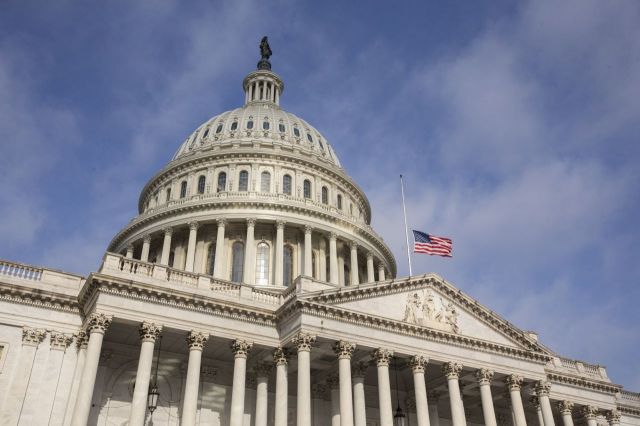
The U.S. government and Congress are pushing antitrust legislation targeting the four major big tech companies, including Apple. In April, the House Judiciary Committee passed an antitrust bill package aimed at curbing the market dominance of big tech companies, and the two major antitrust regulatory agencies?the Department of Justice and the Federal Trade Commission (FTC)?are conducting investigations into big tech companies.
Representative David Cicilline said, "Big tech companies have enjoyed monopoly power over important sectors of our economy, and this situation must end," adding, "I hope legislation addressing the concerns we have raised will be created."
The bill includes provisions to prevent big tech companies from engaging in monopolistic behavior by abusing their dominant market positions and to expand the authority of agencies enforcing antitrust laws by increasing their budgets. It also includes measures to block mergers and acquisitions (M&A) aimed at maintaining market dominance, such as Facebook's past acquisition of Instagram.
After showing a defensive stance on big tech regulation, the U.S. officially started regulatory moves at the end of last year by dividing supervisory authority over these four companies between the Department of Justice and the FTC. The reason was the rapid growth of the digital market during the COVID-19 pandemic, which caused these companies to become excessively large in a short period.

The Biden administration has also signaled aggressive legal enforcement on market competition by targeting these companies since its inception. Amazon was sued for antitrust violations by the Washington D.C. prosecutor's office in May, marking the first lawsuit under the Biden administration. Bloomberg News evaluated that this antitrust lawsuit against Amazon opened a new front in the antitrust investigation of big tech companies. Some speculate that there is a possibility of ultra-strong measures such as corporate breakup lawsuits or legislation to reduce business scope, as seen in the past with AT&T's corporate breakup case.
The Biden administration completed its antitrust oversight appointments by nominating Jonathan Kanter, known as a "big tech critic," as head of the Department of Justice's Antitrust Division. Earlier, in June, the Biden administration appointed Lina Khan, a Columbia Law School professor, as chair of the FTC, and Tim Wu, a Columbia University professor, as special assistant to the president for technology and competition policy at the White House National Economic Council.
© The Asia Business Daily(www.asiae.co.kr). All rights reserved.



















