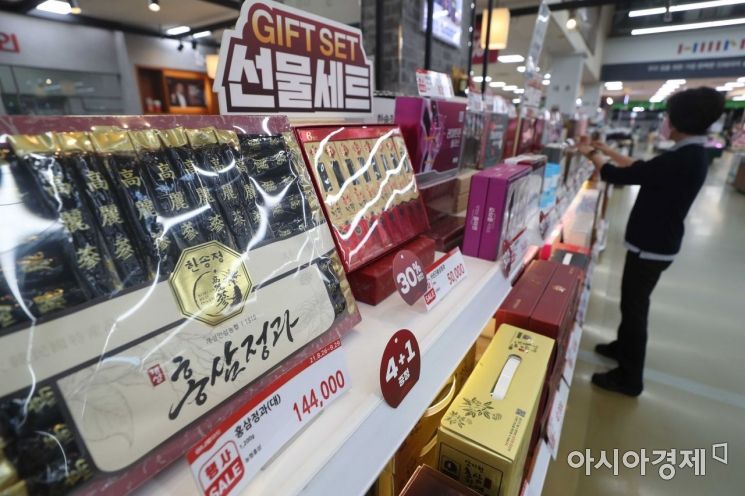
 A citizen visiting Nonghyup Hanaro Mart Yangjae Branch in Seocho-gu, Seoul, three days before the Chuseok holiday is looking over Chuseok gift sets. Photo by Mun Ho-nam munonam@
[Asia Economy Reporter Seungjin Lee] As non-face-to-face holidays have become the trend due to COVID-19, the number of people expressing their feelings through gift sets has greatly increased. However, as the joy of giving and receiving gifts grows, packaging waste inevitably piles up. Here is a summary of the proper way to separate and dispose of gift set packaging waste.
Ice Packs
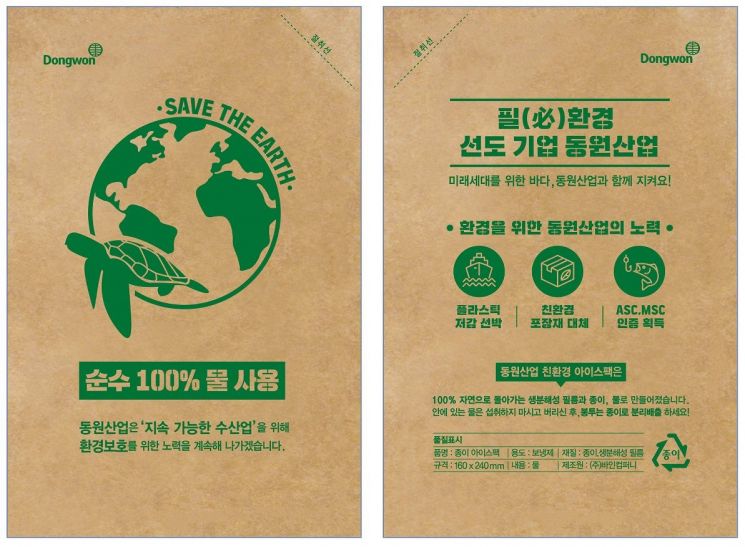
With the increase in fresh food gifts delivered via courier services due to COVID-19, the use of cooling materials such as ice packs has also risen significantly. Many companies now use paper for packaging materials and eco-friendly substances like water, salt, and starch for the contents. In such cases, the contents can be poured down the drain, and the packaging materials can be recycled as paper.
However, if the ice pack contains 'gohabsuseong suji' (superabsorbent polymer), the situation is different. This material can cause environmental pollution and may return to humans through various routes. Superabsorbent polymer has excellent cold retention but is a type of microplastic that does not biodegrade and is difficult to recycle. The correct way to dispose of ice packs containing superabsorbent polymer is to 'dispose of the entire pack without opening the packaging.' It is easy to think that the plastic packaging should be separated for recycling, but instead, it should be thrown away in a general waste bag just like regular trash.
Styrofoam
The net-shaped packaging that wraps fruit is made of styrofoam (expanded polystyrene), which can be recycled but is not economically viable, so it can be disposed of as general waste. However, some local governments have systems in place for separating fruit packaging waste, so it is most accurate to check once more with the community center or apartment management office.
Styrofoam used for packaging agricultural, fishery, and livestock products, as well as cushioning materials for electronic products, can be separated and recycled. On the other hand, products coated or glued with other materials, construction interior and exterior styrofoam, and colored styrofoam plates must be disposed of in general waste bags.
Nonwoven Fabric Bags
Nonwoven fabric bags used to hold ham or cooking oil sets must be disposed of as general waste. Nonwoven fabric bags containing silver foil cooling materials inside for fresh food are the same. Mixed material products such as gold or silver foil cannot be recycled. Wrapping cloths frequently used in gift sets are also general waste. Textile materials cannot be recycled. Since nonwoven fabric bags and wrapping cloths are often too valuable to throw away after one use, reusing them for other purposes is also a recycling method.
Courier Boxes/Gift Boxes
Courier boxes must have shipping labels and tape removed first. To avoid contamination, flatten the boxes and gather them together for separate disposal. Plastic frames or cushioning caps used to secure products must, of course, be disposed of as plastic waste. Whether paper or plastic, if foreign substances are attached, they must be cleaned before recycling. Coated paper boxes must be disposed of as general waste.
Twine used to tie products must be disposed of in general waste bags. Air caps (bubble wrap) can be recycled if there is no tape or foreign substances attached. They should be placed in transparent or translucent plastic bags and disposed of as plastic waste, and there is no need to remove the air.
© The Asia Business Daily(www.asiae.co.kr). All rights reserved.


















