"The Conclusion That Additional Judicial Review Is Necessary"
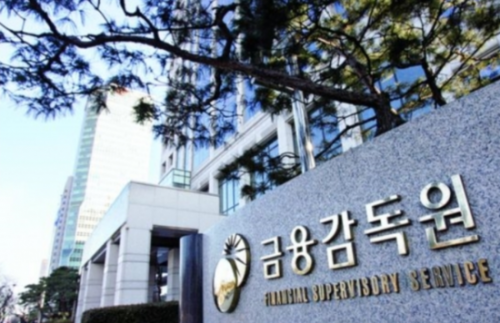
[Asia Economy Reporter Park Sun-mi] The Financial Supervisory Service (FSS) decided on the 17th to appeal the first-instance court ruling that canceled the heavy disciplinary action against Sohn Tae-seung, Chairman of Woori Financial Group.
On the 17th, the FSS announced the decision to appeal, stating, "After close consultation with the Financial Services Commission and internal review and legal advice within the FSS, we concluded that it is necessary to receive an additional judgment from the court," and added, "We also comprehensively considered the fact that other lawsuits on the same issue are ongoing."
In January last year, the FSS imposed a heavy disciplinary action of a written warning on Sohn, who was the president of Woori Bank at the time of selling overseas interest rate-linked derivative-linked funds (DLF), holding him responsible for the losses caused by the DLF incident. Financial institution executives who receive a written warning cannot be employed by financial institutions for three years. Sohn’s side filed a lawsuit against the FSS to cancel the heavy disciplinary action, and the court ruled in favor of the plaintiff in the first-instance judgment last month. The court stated that under the Financial Company Governance Act, the FSS has no legal grounds to sanction financial companies or their executives for violating compliance obligations rather than the obligation to establish internal control standards.
Recently, the financial sector has also prepared an "Internal Control System Development Plan," which includes content requesting that when financial accidents occur, financial companies directly take disciplinary actions against related personnel and prepare improvement plans, and that financial authorities only suggest improvement directions instead of direct intervention.
The FSS’s decision to appeal is interpreted to have been influenced by the first-instance court’s acknowledgment in its ruling that Woori Bank was somewhat lacking internally in establishing internal control norms, even though the court sided with Sohn’s side. The FSS closely examined detailed matters such as the criteria for the obligation to establish internal control standards to decide whether to appeal.
Meanwhile, political circles and civic groups have pressured the FSS to appeal, arguing that financial company heads responsible for private equity fund damages should not be given a free pass. On the 14th, 12 members of the Democratic Party, including Lee Yong-woo and Oh Ki-hyung of the National Assembly’s Political Affairs Committee, issued a statement saying, "The FSS must appeal and see the judgment on legal misunderstandings through to the end." Civic groups also insisted in a joint statement that the FSS must appeal to protect financial consumers.
The FSS’s appeal has also turned on a red light for reducing the severity of sanctions against other financial company executives who received heavy disciplinary actions for similar reasons. This is because there is no justification to lower the disciplinary level of other financial executives unless a legal conclusion is reached. Woori Financial Group, which is undergoing the "complete privatization" process targeted for completion within the year, now faces significant burdens due to the ongoing legal dispute.
The Korea Deposit Insurance Corporation (KDIC), the largest shareholder, is in the process of selling its remaining 10% stake in Woori Financial Group, which is approaching full privatization after 20 years. Concerns are emerging that this dispute could hinder KDIC’s ability to recover public funds at a favorable price.
Meanwhile, a Woori Bank official said regarding the FSS’s appeal decision, "Regardless of whether the appeal trial proceeds, we will actively cooperate with the FSS’s policies and do our best to protect financial consumers."
© The Asia Business Daily(www.asiae.co.kr). All rights reserved.

















