Government Finalizes 6th Comprehensive Airport Development Plan
Gadeokdo and Saemangeum New Airports to Begin Development
Total Investment of 8.7 Trillion Won Over 5 Years for Airport Development
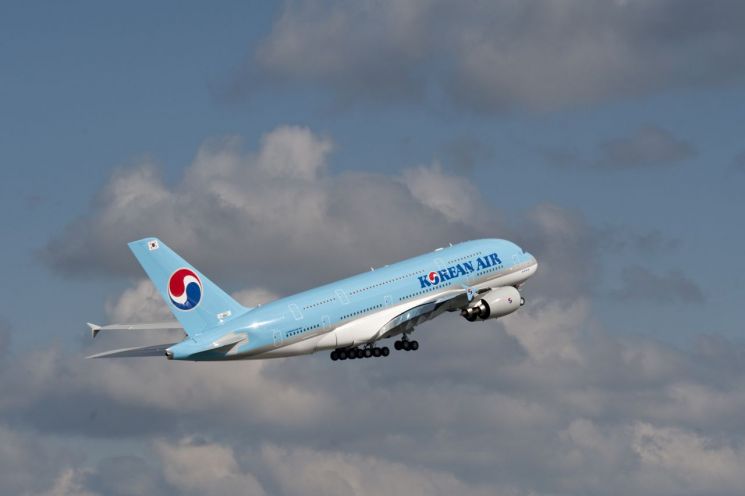
The government will invest 8.7 trillion won in airport development projects over five years until 2025. The Jeju Second Airport will be comprehensively reviewed considering Jeju region's air traffic demand, safety, and environmental impact. The new Gadeokdo Airport has been newly included in this plan.
The Ministry of Land, Infrastructure and Transport announced on the 17th that it finalized the 6th Comprehensive Airport Development Plan, which includes these details, after deliberation by the Aviation Policy Committee. The Comprehensive Airport Development Plan is the highest-level statutory plan in the airport sector, established every five years under Article 3 of the Airport Facilities Act.
The budget for the 6th Comprehensive Airport Development Plan, implemented from 2021 to 2025, is about 8.7 trillion won, which is a reduction from the 9.2 trillion won scale of projects included in the 5th Comprehensive Airport Development Plan.
Regarding new airport development, approximately 4 trillion won will be invested in construction projects such as Ulleung Airport and Saemangeum New Airport during the plan period from 2021 to 2025. Planned projects like Gadeokdo New Airport will be reflected after the total project cost is confirmed through preliminary feasibility studies. For facility expansion and maintenance, about 4.7 trillion won will be invested in ongoing projects such as the 4th phase construction of Incheon Airport.
The investment costs will be borne by the state and airport corporations. The state will invest in non-revenue sectors such as runways, taxiways, aprons, and air navigation safety facilities, while airport operators will share costs for revenue-generating sectors such as terminals and parking lots.
Regarding the much-discussed Jeju Second Airport, it was specified that "the promotion direction will be reviewed comprehensively considering aviation safety assurance, the necessity of facility capacity expansion, environmental impact, and other factors."
Previously, the Ministry of Land, Infrastructure and Transport stated in the 5th Comprehensive Airport Development Plan (2016?2020) that "the construction of Jeju Second Airport will be promptly promoted to open around 2025." Compared to this, the ministry's stance on Jeju Second Airport appears to have softened.
However, the ministry included the phrase "continuously promoting improvements in airport congestion, safety assurance, and passenger convenience" regarding airport infrastructure projects in the Jeju region. This suggests that the ministry still places importance on the necessity of the Second Airport project.
Additionally, the Gadeokdo New Airport, which is being promoted under a special law, is planned as "an airport capable of fully handling passenger and cargo demand 24 hours a day to contribute to balanced national development and regional growth."
Regarding the relocation of Daegu Airport, the plan includes exploring harmonious operation methods for the civil-military airport through preliminary feasibility studies and ensuring timely handling of civilian air traffic demand.
Furthermore, the integration and relocation of Muan Airport and Gwangju Airport will be promoted to utilize Muan Airport as the central airport of the southwestern region.
Small airports such as Heuksan, Baengnyeong, Seosan, and Ulleung will also be promoted according to relevant procedures.
However, proposals from local governments such as the construction of a private airport in southern Gyeonggi, facility improvements at Wonju Airport, and installation of civil aviation facilities at Pocheon Airfield will be additionally reviewed after comprehensively considering the overall conditions including inter-local government consultations.
The ministry also presented aviation demand forecasts for the next 30 years.
Based on forecasts from international organizations and scenario analyses by specialized research institutes, three scenarios?optimistic, neutral, and contraction?were presented. According to the neutral scenario, passenger traffic is expected to grow at an annual rate of 2.0% (international 2.8%, domestic 0.7%) and cargo at 1.5% annually (international 1.6%, domestic 0.7%) until 2050.
Accordingly, passenger demand is estimated to reach 170 million in 2025 and 270 million in 2050. Cargo demand is expected to reach 5.43 million tons in 2025 and 7.87 million tons in 2050, according to the ministry.
However, amid ongoing uncertainties due to the COVID-19 pandemic, the ministry plans to continuously monitor demand trends over the next 2 to 3 years and make adjustments as needed.
Joo Jong-wan, Director of Airport Policy at the Ministry of Land, Infrastructure and Transport, said, "Through various opinion-gathering processes including the operation of a public participation group, we have reflected the directions our airports should take?such as inclusion, growth, and innovation?in the mid- to long-term policy directions and key tasks. We will strive to enhance trust in airport policies and minimize conflicts and conflicts of interest during airport development."
© The Asia Business Daily(www.asiae.co.kr). All rights reserved.

















