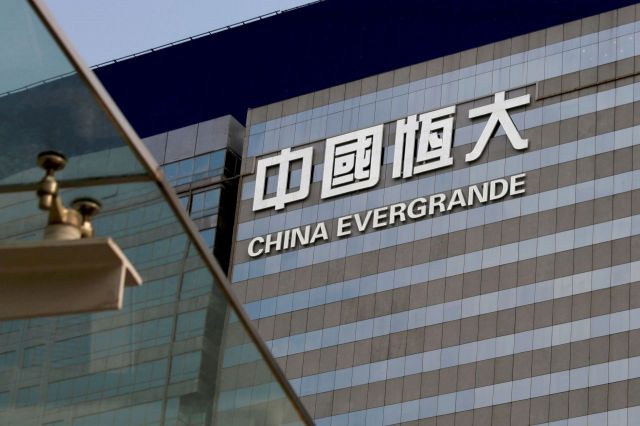
[Asia Economy Reporter Kim Suhwan] China’s largest real estate company, Hengda Group, announced on the 16th that it will suspend trading of all onshore bonds for one day.
On the 16th, Hengda Group stated in a press release that it would resume trading from the 17th.
This suspension of bond trading came after Hengda’s credit rating was downgraded.
The day before, Chinese credit rating agency Chengxin International downgraded Hengda’s credit rating from AA to A.
Last week, the international credit rating agency Fitch also downgraded Hengda’s bond credit rating to junk (non-investment grade). This was due to the escalating risk of Hengda’s bankruptcy and the expectation that it would be unable to pay bond interest.
Hengda must pay $669 million in interest this year. In particular, it must pay $83.5 million in interest by the 23rd, as Fitch warned.
Currently, Hengda’s total debt amounts to 1.95 trillion yuan (approximately 350 trillion won).
Yesterday, Bloomberg reported that China’s Ministry of Housing and Urban-Rural Development informed major banks in a meeting this week that Hengda would be unable to pay bank loan interest due on the 20th.
If Hengda Group actually goes bankrupt, it will significantly impact China’s financial market and damage international credibility, so the Chinese government is reportedly considering countermeasures. On the 14th, reports emerged that the Chinese government had formed a team of accounting experts to inspect Hengda Group’s asset status.
As Hengda’s bankruptcy risk grows, investors’ demands to withdraw their investment funds are reportedly spreading. Hengda had previously received deposits for unfinished homes from more than 1.5 million homebuyers, who are now worried they may not even get their deposits back.
Hengda Group’s bankruptcy risk has been attributed to its octopus-like business expansion relying on borrowing.
Founded in 1997, Hengda grew into China’s second-largest real estate developer and subsequently expanded into finance, healthcare, travel, sports, and electric vehicles. This business expansion also led to a significant increase in debt.
Professor Li Chang’an of the University of International Business and Economics said to the Global Times, “Hengda expanded into too many areas unrelated to its core businesses such as new energy, sports, and finance, reaching the limits of its liquidity.”
Immediately after the announcement of the bond trading suspension, Hengda Group’s stock price plunged about 7.5% on the Hong Kong Stock Exchange.
© The Asia Business Daily(www.asiae.co.kr). All rights reserved.
![User Who Sold Erroneously Deposited Bitcoins to Repay Debt and Fund Entertainment... What Did the Supreme Court Decide in 2021? [Legal Issue Check]](https://cwcontent.asiae.co.kr/asiaresize/183/2026020910431234020_1770601391.png)
















