Over 50 Arrested for Drug Sales and Purchases in Busan
Promoted via SNS and Paid with Cryptocurrency
Drug Offenders in First Half of This Year Up 8.6% from Last Year
Teen Drug Offenders Surge 156.5%
Experts Stress Importance of Fundamental Solutions to Prevent Drug Addiction
[Asia Economy Reporter Lim Ju-hyung] Recently, a group of eight individuals involved in drug trafficking in Busan, along with over 50 buyers, were massively apprehended by the police, causing shock. They showed a meticulous approach by transporting drugs via express bus parcel services and actively using social networking services (SNS) that guarantee anonymity, as well as virtual currencies.
With the advancement of the internet, drug trafficking exploiting IT technology is increasing. In particular, there are concerns that if adolescents and young adults, who are familiar with SNS, are exposed to drugs, it could lead to bigger social problems in the future. Experts suggest that the fundamental solution to prevent the spread of drugs lies in addiction prevention and rehabilitation treatment.
◆A group promoting drugs via SNS and delivering them using the 'throwing' method
According to the Busan Metropolitan Police Agency, on the 13th, eight people including a man in his 30s, Mr. A, were all arrested on charges of drug sales. The police also identified about 50 buyers who purchased drugs from them and booked them without detention.
Since November last year, the group of eight, including Mr. A, posted advertisements for drug sales on SNS and conducted promotional activities. They shared information using slang terms referring to drugs on SNS while recruiting buyers.
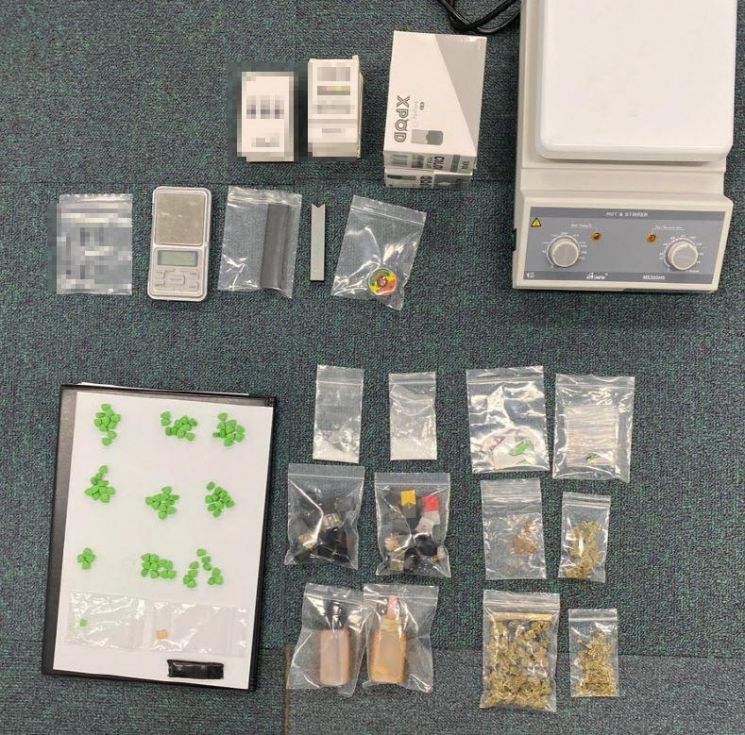
 The drug offenders arrested by the police operated systematically, distributing roles such as contact person and courier. / Photo by Yonhap News
The group systematically engaged in drug trafficking by dividing roles such as contact person, delivery person, and drug supplier. They only allowed customers to contact them via SNS nicknames and accepted payments exclusively in virtual currency.
When transporting drugs, they used a so-called 'throwing' method, where drugs were secretly hidden at designated locations for buyers to pick up themselves. For areas outside the metropolitan area with low transportation accessibility, they used express bus parcel services for delivery.
Police investigations revealed that most buyers who purchased drugs from Mr. A and others were young adults in their 20s and 30s, including many office workers and students.
◆The number of drug offenders is increasing and the age is getting younger
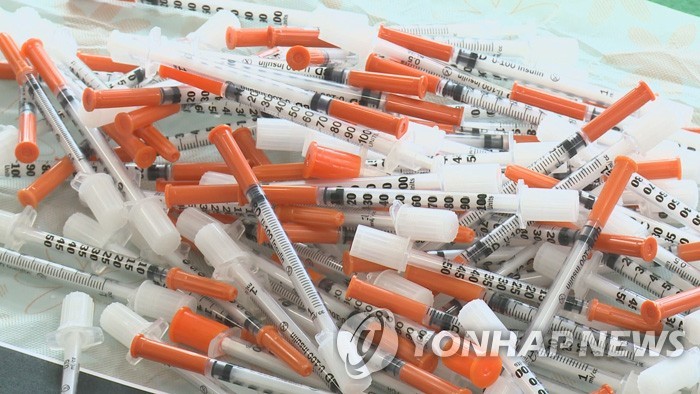
This is not the first case where a large number of people attempting to trade illegal drugs were caught. Earlier in May, 41 teenagers were arrested by the police for illegally obtaining the narcotic painkiller 'Fentanyl' from hospitals and pharmacies in the Busan and Gyeongnam regions and either using or selling it. The teenage suspects sold the drugs to their peers and used drugs in parks, shopping areas, restrooms, and even inside schools.
The number of drug offenders is increasing every year, and the age group is gradually getting younger. According to the drug offender crackdown data compiled jointly by the government, including the National Police Agency, Ministry of Foreign Affairs, Ministry of Food and Drug Safety, Supreme Prosecutors' Office, Customs Service, and Korea Coast Guard, the number of people caught in the first half of the year was 7,565, an increase of about 8.6% compared to the same period last year. The number of teenage drug offenders aged 19 or younger surged by a staggering 156.5% to 277 during the same period.
 A promotional post for drug trafficking uploaded on a social networking service (SNS). / Photo by SNS capture
The reason drug offenders are getting younger is due to the development of the internet, which has introduced SNS and payment methods that guarantee secrecy.
They attract buyers' attention by posting specific slang terms referring to drugs on popular SNS platforms such as Facebook and Twitter, then lure them into secret messenger rooms to induce anonymous virtual currency payments.
According to crackdown data, during the first half of this year, internet drug offenders accounted for about 25% of the total, up 5.4 percentage points from 19.6% the previous year. Also, the proportion of offenders using virtual currency, which is difficult to trace, increased more than threefold from 1.8% last year to 6.6%.
◆"Preventing addiction among drug buyers and supporting rehabilitation is the fundamental solution"
Experts emphasize that new methods of drug sales and distribution exploiting new technologies will always emerge, and the fundamental way to reduce the number of drug offenders lies in addiction prevention and rehabilitation treatment.
Jeon Kyung-soo, president of the Korean Society of Drug Science, said, "With the emergence of new methods such as drug promotion and sales using SNS, the dangers of drugs are increasing. This is a problem that requires countermeasures." He added, "To eradicate drugs, it is important to catch drug offenders, but the fundamental solution is to establish preventive measures so that people who are first exposed to drugs do not continue to be introduced."
He continued, "To reduce drug offenders, it is most important to reduce the number of addicted patients who are reusing drugs, thereby reducing demand. This will decrease the sales of drug dealers and reduce supply. Also, rehabilitation education programs should be supported to prevent re-addiction among those already addicted."
© The Asia Business Daily(www.asiae.co.kr). All rights reserved.



















