National Gugak Center 70th Anniversary Unreleased Collection Exhibition
First Public Display of 113 Artifacts from 21 Donors
Focus on Instruments, Music, and Lives of Artists and Collectors
1964 First Overseas Performance in Japan
Original Pamphlets, Tickets, and Schedules Preserved
1973 110-Day European Tour
Audio Commentary by Composer Isang Yun
Hoam Lee Byung-chul's Brother-in-law Heo Soon-gu's Love for Gugak
Cash Gugak Scores Donated from 1950s to 1970s
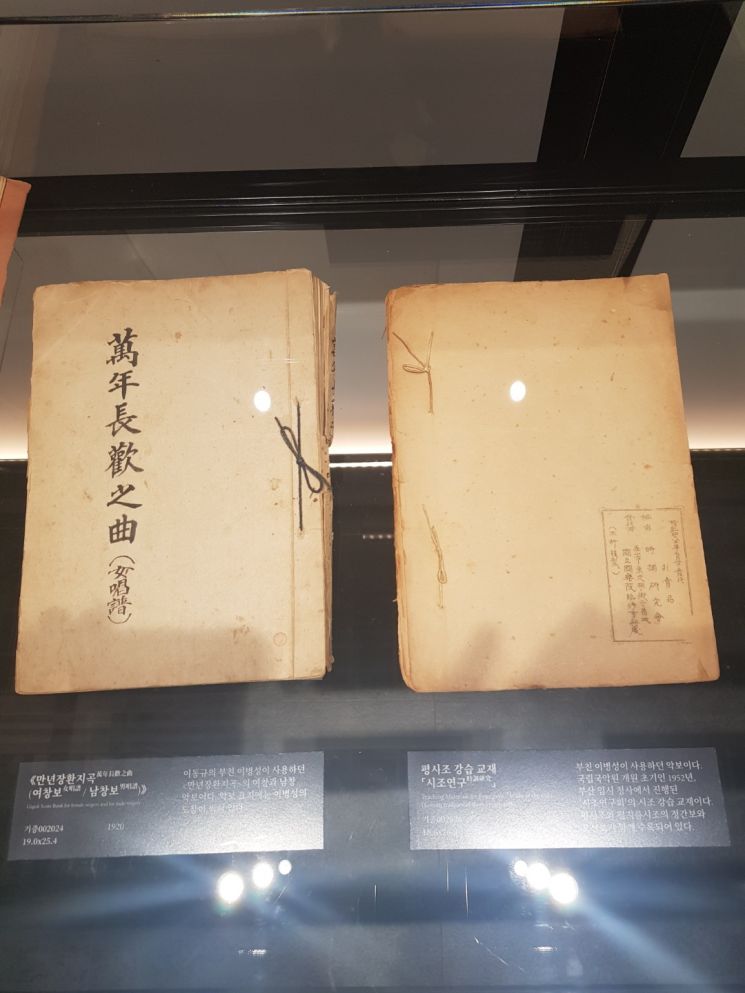 Sheet music used by Lee Byung-seong, the father of singer Lee Dong-gyu. It was used as a sijo training material for the 'Sijo Research Society' held at the temporary Busan office of the National Gugak Center in 1952, shortly after its opening.
[Asia Economy Reporter Donghyun Choi] The National Gugak Center was established in 1951 in Busan, the temporary capital during the Korean War. This was due to the unwavering passion to preserve Korean traditional music even as the enemy advanced to the Nakdong River front, the last line of defense for the Republic of Korea. The 'Sijo Research' booklet witnessed at the Gugak Museum in Seocho-gu, Seoul, clearly reflects this fact. 'Sijo Research' was used as a sijo training textbook by the 'Sijo Research Association' held at the National Gugak Center's temporary office in Busan in 1952. It was used by Lee Byung-seong (1909?1960), a master of gagok who contributed to sijo research even during the national crisis, and was donated by his son, the jeongga (正歌) master and singer Lee Dong-gyu, who continues the tradition into the fifth generation.
70th Anniversary of the National Gugak Center, First Public Display of Unreleased Donations
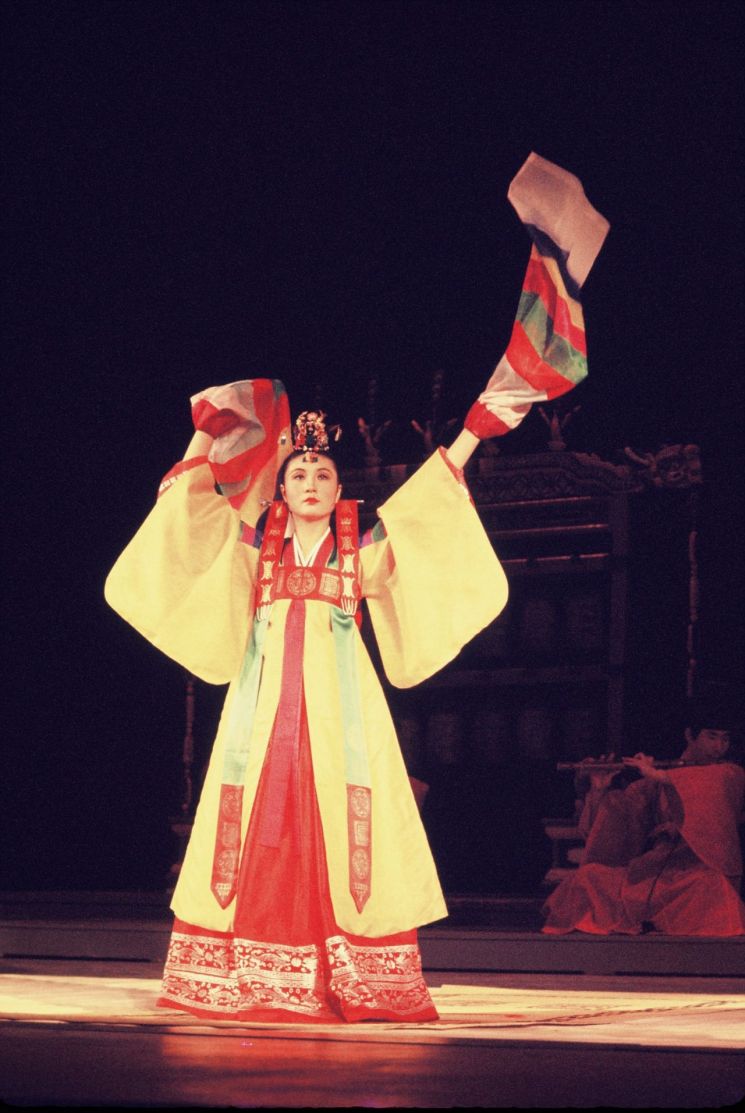
An exhibition that allows a comprehensive view of the history and globalization process of Korea's indigenous traditional music, Gugak (國樂), has opened. Marking the 70th anniversary of the National Gugak Center, the theme of this special exhibition is 'National Gugak Center Unreleased Collections Exhibition: Collections Donated by 21 Individuals.' Since its establishment, the National Gugak Center has collected 180,000 artifacts from 103 donors, and for the first time, 113 artifacts from 21 donors, which had never been publicly displayed before, are exhibited at the Gugak Museum in Seocho-gu, Seoul.
This exhibition goes beyond the stories behind the artifacts to explore the relationships between Gugak artists and donors. While previous exhibitions at the Gugak Museum focused on themes such as instruments or music, this time the focus is on the lives of artists and collectors. The 21 donors are categorized into National Gugak Center personnel, artists and enthusiasts, and scholars and composers, weaving together diverse stories. Kim Young-woon, director of the National Gugak Center, said, "Although the artifacts held by the Gugak Center are valuable, they have not yet been widely recognized socially. Through this exhibition and others, we plan to gradually promote Korean traditional music not only domestically but also globally."
A Glimpse of the Globalization of K-Gugak
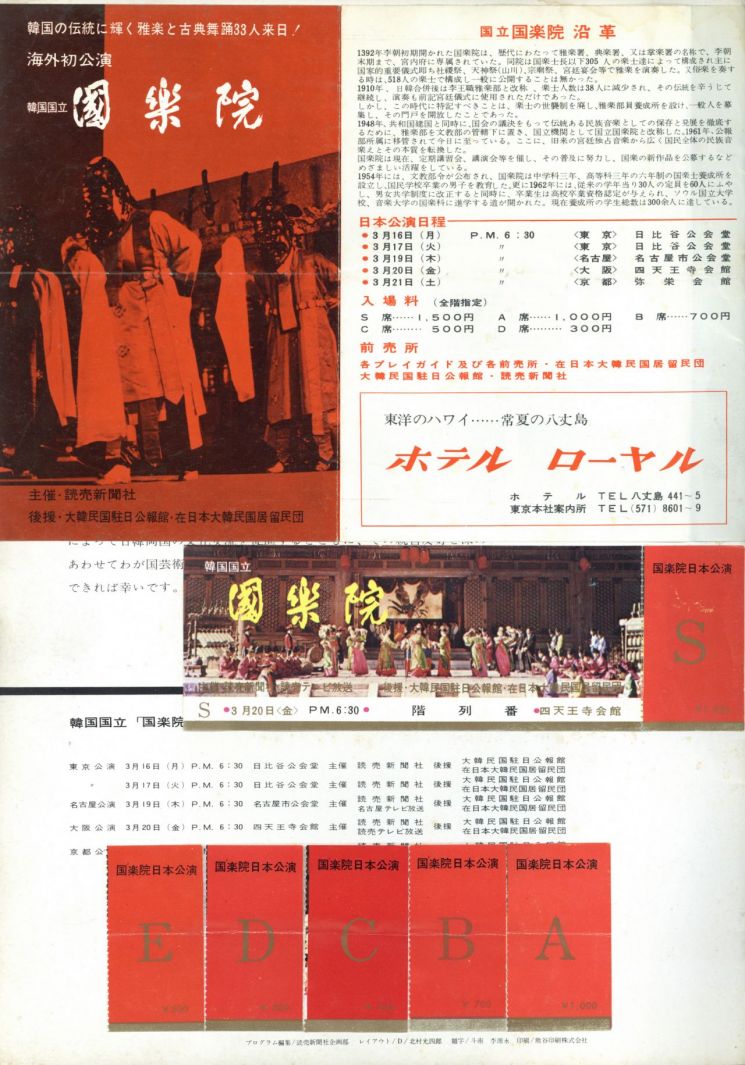
The period when Korean Gugak officially entered the international stage was the 1960s. The National Gugak Center's performance in Japan from March 16 to 21, 1964, was its first overseas debut. The museum displays pamphlets, newspaper articles, performance tickets, and schedules from that time. These artifacts were donated by Yoon Yi-geun, former director of the National Namdo Gugak Center, and Gugak scholar Jang Sa-hoon, who participated in the performance.
In April of the same year, the private traditional arts group Samcheonri Gamudan performed at Carnegie Hall and Lincoln Center Philharmonic Hall in New York, invited by the Asia Society. The museum exhibits the performance poster and hotel receipt from that time. The poster is only slightly damaged at the edges but clearly shows the venue, time, and illustrations. The hotel receipt is in such good condition that it looks freshly issued. Additionally, visitors can listen through headphones to news and interviews from the local radio station that covered part of the live performance. These artifacts were donated by Hae Ui-man (1931?2014), who served as a U.S. military personnel during the Korean War and naturalized as a Korean citizen in 1995. He organized and led Samcheonri Gamudan at that time.
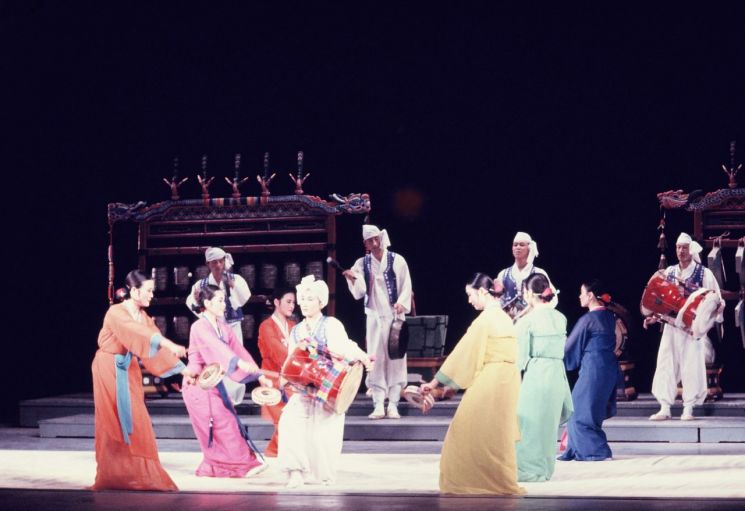 The National Gugak Center is performing Nongak Sogo Dance and Janggu Dance during their 1973 European tour.
Records produced during the National Gugak Center's 110-day European tour from August 29 to December 16, 1973, can also be seen. Particularly impressive are the donated items related to the Center's jeongak (court and elegant music) and jeongjae (court dance) performances. At the October 1973 performance in Bonn, Germany, composer Isang Yun (1917?1995), upon hearing about the European tour, volunteered to host and provide commentary, introducing Korean music directly to the audience. Visitors can listen to recordings of composer Yun's live commentary from that time. All related artifacts were donated by Park Sook-ja, former artistic director of the National Gugak Center Dance Troupe, who participated as a dancer in the performance.
Hoam Lee Byung-chul’s Brother-in-Law Heo Soon-gu’s Extraordinary Love for Gugak
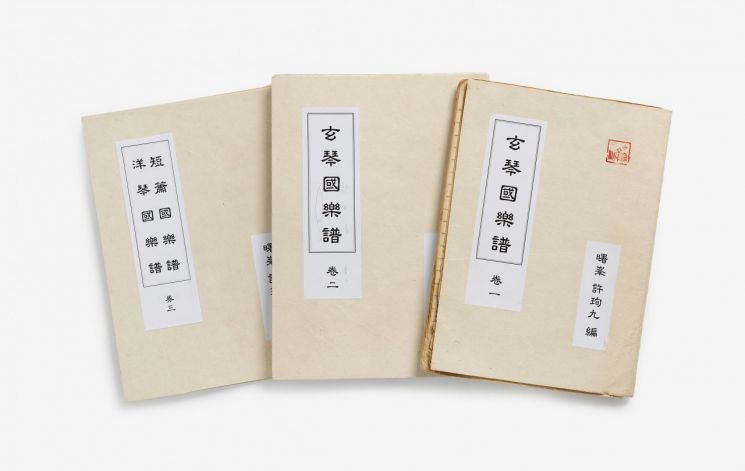
The extraordinary love for Gugak of Heo Soon-gu (1903?1978), brother-in-law of Samsung Group founder Lee Byung-chul, can also be glimpsed. Heo Soon-gu established Munsungdang, Jinju’s first department store, in 1927 and was an early shareholder of Daegu Samsung Sanghoe in 1938. A patron of Pungnyu (elegant music and arts) in the Gyeongbuk region, he supported local Gugak artists and left behind numerous handwritten scores and instruments.
In the exhibition hall, three volumes of 'Hyeongeum Gugakbo' donated in 2013 by Heo Soon-gu’s sons, Heo Byung-cheon and Heo Dong-su, are displayed. These are estimated to have been produced between 1950 and 1970. These artifacts are valued as precious materials that provide insight into the Pungnyu music culture of the Daegu and Gyeongbuk regions. Additionally, visitors can see the sogo drum of folk song master Im Jeong-ran, performance photos of 'Seonmu' created by dancer Lee Seon-ok, and the danso flute and instrument case used by danso master Chusan Jeon Yong-seon.
© The Asia Business Daily(www.asiae.co.kr). All rights reserved.














